India-Poland strategic partnership: Tusk calls Modi 'beacon of hope', cites zero conflicts
Synopsis
Polish PM Donald Tusk's New Delhi visit wasn't just a courtesy call — it was a deliberate deepening of a strategic partnership anchored in August 2024. With a 'zero conflicts' declaration, a G20 coordination pact, and a personal 'beacon of hope' tribute to Modi, Warsaw is signalling that India is a central pillar of its non-NATO diplomatic outreach.
Key Takeaways
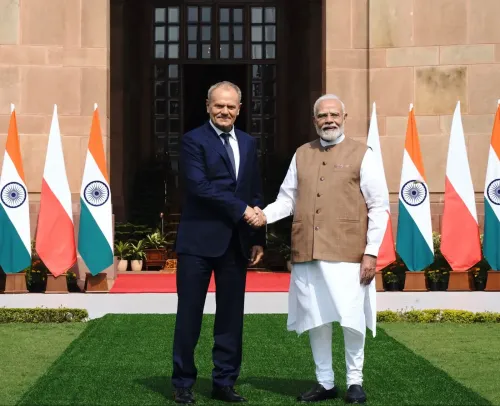
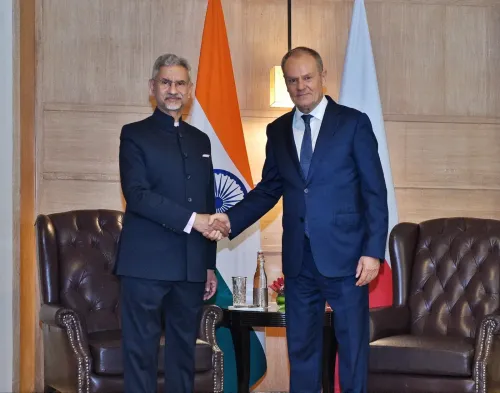
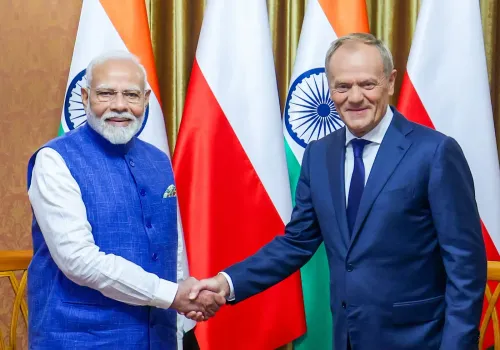
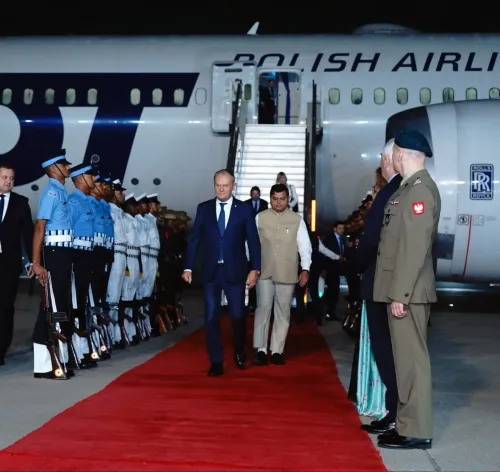
Polish PM Donald Tusk met PM Narendra Modi at Hyderabad House, New Delhi on 22 October 2026 .
Tusk declared India and Poland have 'no conflict of interest' , calling the friendship built on trust, shared values and non-violence .
The bilateral strategic partnership was first established during Modi's visit to Warsaw in August 2024 .
Tusk recalled Poland's evacuation assistance to Indian students in Ukraine during Russia's offensive as a practical example of solidarity.
Both leaders agreed to coordinate closely at G20 summits, supporting each other in multilateral forums.
Tusk referenced the 'Good Maharaja' legacy — Poland's WWII-era gratitude to India — as a historical anchor for the modern relationship.
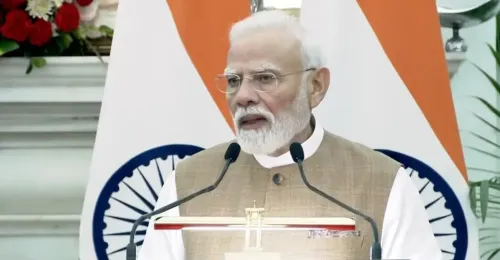
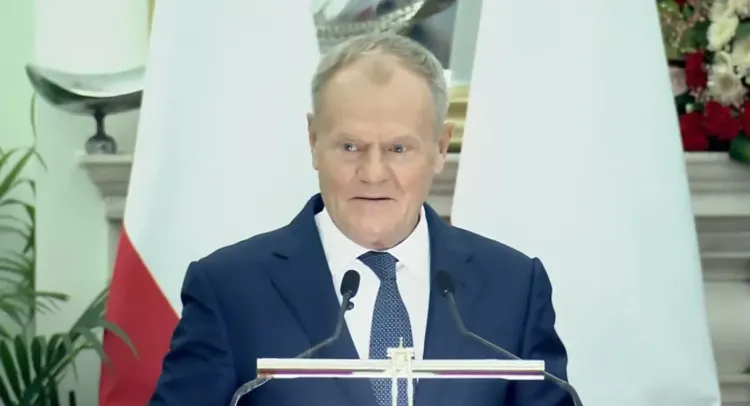
Polish Prime Minister Donald Tusk on Thursday, 22 October 2026, declared that India and Poland share 'no conflict of interest' and are forging their bilateral relationship on a foundation of trust, shared values, and a mutual commitment to non-violence. Tusk made the remarks at a joint press conference with Prime Minister Narendra Modi following their bilateral talks at Hyderabad House in New Delhi.
A Fruitful Strategic Dialogue
Tusk described the discussions with Modi as 'fruitful and important,' noting that the two leaders reviewed the progress of their strategic partnership — a framework first established during Modi's visit to Warsaw in August 2024. 'Today, with the Prime Minister, we summarised its very first results, and we emphasised the definition of the priorities for the years to come in terms of our cooperation,' Tusk said.
The Polish leader characterised the relationship in notably warm terms, stating that the two nations are 'divided by nothing, maybe by geographic distance,' and that synergies between them are 'quite simple.' He specifically invoked India's tradition of non-violence as a shared philosophical touchstone, drawing a direct parallel to Poland's Solidarity movement.
Modi Hailed as 'Beacon of Hope'
In a striking personal endorsement, Tusk praised Modi's global stature, calling him 'a beacon of hope for all of us' in times of 'destabilisation, uncertainty, political uncertainty and instability.' He added that he was 'truly proud' to call Modi a personal friend. The effusive praise reflects Warsaw's efforts to deepen ties with major non-Western democracies amid the ongoing security turbulence in Europe.
Tusk also lauded India's economic trajectory, placing it alongside Poland's own growth story. 'The last 35 years has been an unprecedented economic success and dynamic growth of all of our countries... The world looks up to us with envy, to you, how you develop as India,' he said.
Ukraine Crisis, Indian Students and the 'Good Maharaja' Legacy
A notable moment in the press interaction came when Tusk recalled Poland's assistance to Indian students stranded in Ukraine following Russia's military offensive. He described Poland's intervention as 'solidarity, trust and friendship in practice' and pledged that the two nations would never let each other down.
The exchange also touched on the historic figure of the 'Good Maharaja' — a reference to Maharaja Jam Saheb Digvijaysinhji of Nawanagar, who sheltered hundreds of Polish refugee children in India during World War II. Tusk described this as a symbol not merely of goodwill but of 'very practical assistance that required a lot of devotion,' underscoring the deep historical roots of Indo-Polish empathy.
G20 Cooperation and Future Priorities
Both leaders signalled intent to coordinate closely in multilateral forums. Tusk said Poland and India would support each other at G20 summits, sitting 'side by side, shoulder to shoulder.' He expressed appreciation for Modi's offer of close cooperation in the G20 format, framing it as being 'to the benefit of both our countries and to the benefit of the world.'
This visit marks a significant diplomatic moment as Poland — a frontline NATO state bordering Ukraine — seeks to diversify its strategic partnerships. With sectoral cooperation, G20 alignment, and a bilateral strategic framework now in place, the India-Poland relationship appears set for a more substantive phase in the years ahead.
Point of View
Laden with trade disputes or geopolitical tension. Poland's outreach to India is a calculated hedge: a frontline NATO state, increasingly bearing the security costs of the Ukraine war, is quietly building a parallel network of partnerships with large non-Western democracies. For India, the relationship offers a window into European security dynamics and EU policymaking without the conditionality that Western capitals sometimes attach. The invocation of the 'Good Maharaja' and the Solidarity movement's debt to Gandhian non-violence is diplomatic craftsmanship — it grounds a modern strategic alignment in deep historical memory, making the partnership harder to unpick with a change of government in either capital.
NationPress
22 Oct 2026
Frequently Asked Questions
What did Polish PM Donald Tusk say about India-Poland relations during his New Delhi visit?
Tusk declared on 22 October 2026 that India and Poland have 'no conflict of interest' and are building their friendship on trust, shared values, and a commitment to non-violence. He described the bilateral strategic partnership as progressing well since its establishment during PM Modi's Warsaw visit in August 2024.
What is the India-Poland strategic partnership?
The strategic partnership was formally established when PM Modi visited Warsaw in August 2024. It provides a structured framework for bilateral cooperation across economic, diplomatic, and multilateral domains, with both sides reviewing its first results during Tusk's October 2026 visit to New Delhi.
Why did Donald Tusk reference the 'Good Maharaja' during his New Delhi press conference?
Tusk invoked the 'Good Maharaja' — a reference to Maharaja Jam Saheb Digvijaysinhji of Nawanagar, who sheltered hundreds of Polish refugee children in India during World War II — as a symbol of the deep historical roots of Indo-Polish solidarity. He framed it as evidence of 'practical assistance that required a lot of devotion,' not merely symbolism.
How did Poland help Indian students during the Russia-Ukraine conflict?
According to Tusk, Poland extended assistance to Indian students who were stranded in Ukraine following Russia's military offensive. He described this as 'solidarity, trust and friendship in practice' and cited it as a modern example of the historic empathy between the two nations.
What did India and Poland agree on regarding G20 cooperation?
Both leaders agreed to support each other in G20 forums, with Tusk saying the two countries would sit 'side by side, shoulder to shoulder' at G20 summits. He expressed appreciation for Modi's offer of close partnership in the G20 format, framing it as beneficial to both nations and to global stability.