Kishan Reddy Champions India's Tech Push: Chips, Quantum, Space
Synopsis
Union Minister G. Kishan Reddy has spotlighted India's technology self-reliance push — covering the Rs 76,000 crore semiconductor mission, the Rs 6,003 crore National Quantum Mission, IN-SPACe-led space liberalisation, and ongoing policy discussions on private nuclear energy participation.
Key Takeaways
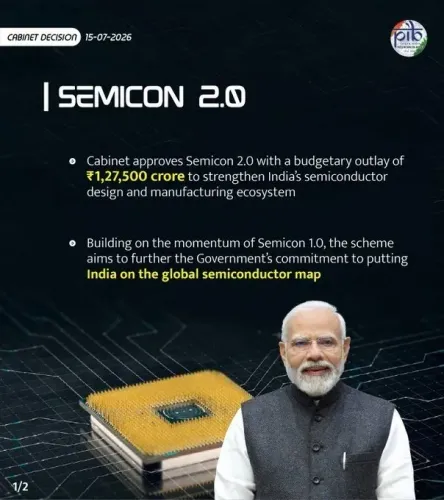
India Semiconductor Mission was launched in 2021 with an outlay of Rs 76,000 crore to build domestic chip manufacturing capacity.
National Quantum Mission was approved in April 2023 with Rs 6,003 crore to advance quantum computing, communication, and sensing.
IN-SPACe , set up in 2020 , opened India's space sector to private companies for satellite and launch activities.
Policy discussions since 2022 on potential amendments to the Atomic Energy Act to allow private nuclear energy participation are ongoing but unresolved.
Kishan Reddy framed all four initiatives as part of PM Modi 's overarching innovation and self-reliance vision.
India's ambition to build its own semiconductors, master quantum technology, and open its space and nuclear sectors to private enterprise got a fresh political underline on Thursday, October 22, 2026, when Union Coal and Mines Minister G. Kishan Reddy laid out the breadth of the country's technology self-reliance drive in a post framing it squarely as Prime Minister Narendra Modi's vision in action.
From Mission Documents to Manufacturing Floors
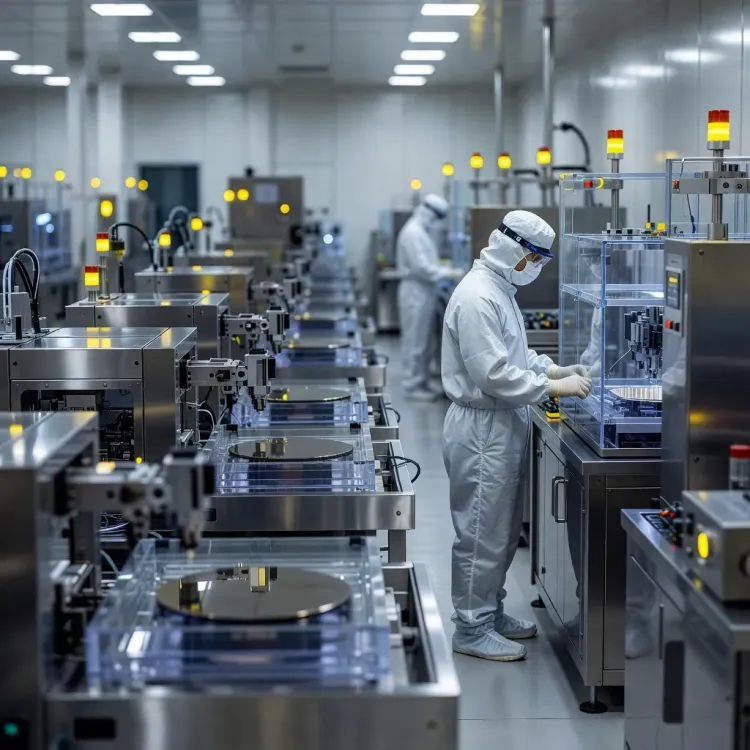
The policy scaffolding behind Reddy's post has been years in the making. The India Semiconductor Mission, launched in 2021 with a staggering outlay of Rs 76,000 crore, is the centrepiece — a deliberate bet that India can build domestic chip fabrication and assembly capacity rather than remain dependent on imports. Semiconductors sit at the heart of every modern device, from smartphones to defence systems, which is precisely why their absence from India's industrial map has long been treated as a strategic vulnerability.
Quantum technology is the next frontier being bankrolled by New Delhi. The National Quantum Mission, approved in April 2023 with a funding envelope of Rs 6,003 crore, is designed to push India into competitive territory on quantum computing, communication, and sensing — capabilities that will define the next generation of secure communications and scientific discovery.
Space and Nuclear: Opening the Gates to Private Capital
The liberalisation story is just as significant. The creation of IN-SPACe — the Indian National Space Promotion and Authorisation Centre — in 2020 broke the decades-old government monopoly on space activities, allowing private companies to design, build, and launch satellites and rockets. India's space startup ecosystem has since expanded rapidly, with homegrown firms now competing for commercial launch contracts.
Nuclear energy is the more politically complex frontier. Policy discussions have been ongoing since 2022 on potential amendments to the Atomic Energy Act that could widen private-sector participation — a move that would mark a generational shift in how India manages its civilian nuclear programme. No finalised legislative proposal has yet been confirmed.
Why Reddy Is Talking Tech
Reddy's portfolio sits in coal and mines, not science and technology — so the post is explicitly political framing: a BJP Telangana state president amplifying the Centre's innovation narrative ahead of what remains an intensely competitive political environment in the state. The message is deliberate: 'bold ideas to real-world technologies' — innovation as electoral identity, not just policy.
Across successive Union Budgets, the pattern has been consistent — public funding anchors each mission, regulatory reform crowds in private capital, and the branding tightens around Atmanirbhar Bharat, or self-reliant India. The semiconductor, quantum, and space pushes are three distinct programmes, but they are being marketed as one coherent arc.
The proof will come on the manufacturing floor: which approved semiconductor fabrication units actually break ground, how many quantum research prototypes transition to deployable systems, and whether the legislative calendar finds room for private nuclear participation. India has announced the vision. Execution is where the scoreboard starts.
Point of View
Quantum, space, and nuclear into a single innovation arc is rhetorically powerful but glosses over the very different maturity levels of each programme. The real test of this political framing will be whether approved semiconductor fabs move from announcement to production, and whether the nuclear energy liberalisation debate produces actual legislation — both of which remain open questions that the next parliamentary session could either answer or defer.
NationPress
22 Oct 2026
Frequently Asked Questions
What is the India Semiconductor Mission and its budget?
The India Semiconductor Mission was launched in 2021 with a government outlay of Rs 76,000 crore to attract semiconductor fabrication and assembly units and reduce India's dependence on chip imports.
What is the National Quantum Mission India?
The National Quantum Mission was approved in April 2023 with Rs 6,003 crore in funding to develop India's capabilities in quantum computing, quantum communication, and quantum sensing.
What is IN-SPACe and what does it do?
IN-SPACe, or the Indian National Space Promotion and Authorisation Centre, was set up in 2020 to regulate and enable private sector participation in India's space activities, including satellite building and rocket launches.
Can private companies enter India's nuclear energy sector?
As of now, private participation in India's nuclear energy sector is restricted under the Atomic Energy Act. Policy discussions on potential amendments to allow private players have been ongoing since 2022, but no finalised legislative proposal has been confirmed.
Why is Coal Minister Kishan Reddy talking about technology?
G. Kishan Reddy is also the BJP's Telangana state president, and his post is political framing — amplifying the Central government's innovation and Atmanirbhar Bharat narrative rather than making a ministerial announcement within his coal and mines portfolio.