CM Fadnavis announces dedicated chemical industry policy for Maharashtra
Synopsis
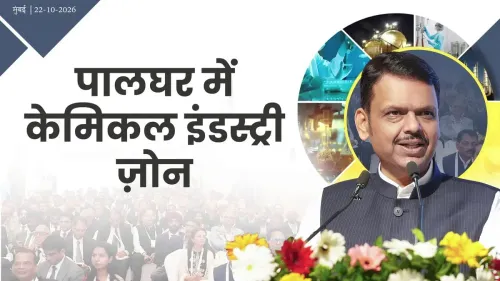
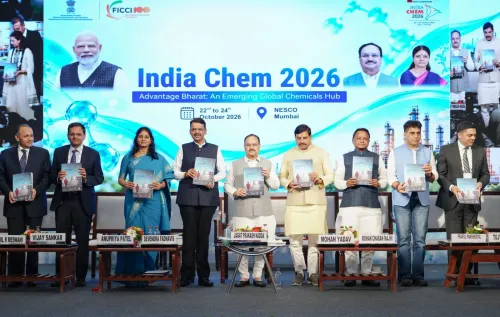
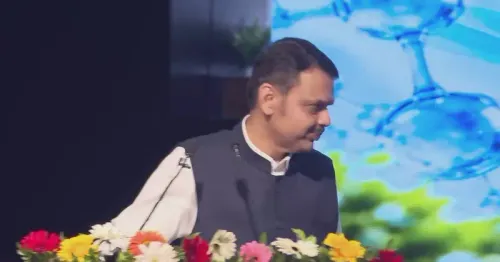
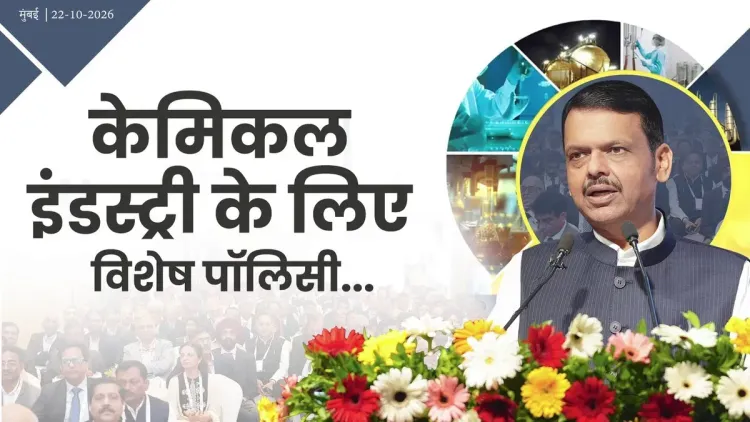
At the inauguration of India Chem 2026 in Mumbai, Chief Minister Devendra Fadnavis announced that the Maharashtra government is crafting a dedicated, standalone policy for the chemical industry — a strategic move to attract investment and compete with chemical-sector leader Gujarat.
Key Takeaways
Devendra Fadnavis announced at India Chem 2026 in Mumbai on 22 October 2026 that Maharashtra is preparing a dedicated chemical industry policy.
The policy will be 'special and independent' — a standalone framework rather than a provision inside a general industrial policy.
Maharashtra has historically lacked a sector-specific chemical policy, ceding investment advantage to Gujarat and its established petrochemical clusters.
The announcement aligns with the central government's Make in India initiative and the PCPIR cluster development framework notified in 2007 .
Chemical manufacturers and industrial investors attending India Chem 2026 were the direct audience for the commitment.
The draft policy document, including details of incentives and cluster plans, is still awaited.
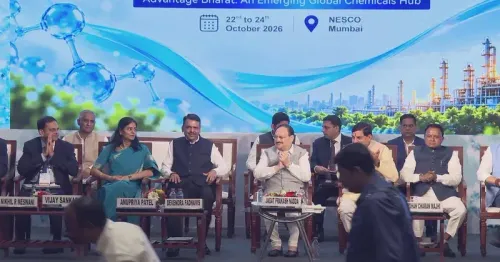
A state with a long industrial spine and an eye on its neighbours just signalled it wants a bigger share of India's chemical economy. At the inauguration of India Chem 2026 in Mumbai on 22 October 2026, Maharashtra Chief Minister Devendra Fadnavis announced that the state government is preparing a dedicated, standalone policy for the chemical industry — a move that puts Maharashtra squarely in the race for investment that has, for years, flowed more readily to Gujarat.
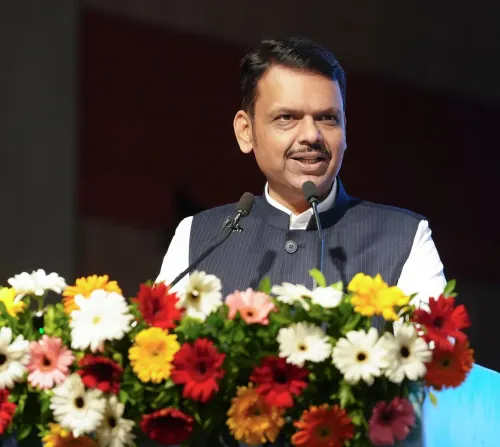
Speaking at the high-profile industry conclave, Fadnavis declared — in both Marathi and Hindi — 'महाराष्ट्र सरकार रासायनिक उद्योगांसाठी विशेष आणि स्वतंत्र धोरण तयार करत आहे' ('The Maharashtra government is formulating a special and independent policy for the chemical industry'). The statement was unambiguous: chemicals are no longer just a footnote in a broader industrial framework. They get their own policy chapter.Why a standalone chemical policy matters now
Maharashtra is no stranger to sector-focused industrial policies, but chemicals have historically been bundled into general manufacturing frameworks rather than given their own dedicated architecture. That gap has had real consequences. Gujarat, which hosts dedicated petrochemical and chemical clusters and has long maintained targeted policy support for the sector, has consistently attracted the lion's share of chemical investment in India's west coast corridor.
The competitive pressure is structural. Under the central government's Petroleum, Chemicals and Petrochemicals Investment Regions (PCPIR) policy — notified in 2007 — states were encouraged to develop integrated chemical clusters with plug-and-play infrastructure. A state-level standalone policy would be the companion instrument: defining incentives, land allocation, environmental clearance pathways, and investor-facing commitments specific to the sector.
India Chem 2026 as the launch platform
The choice of India Chem 2026 as the announcement venue was deliberate. The event brings together chemical manufacturers, industrial investors, and policymakers under one roof — precisely the audience that will decide whether Maharashtra's forthcoming policy document translates into ground-level investment or remains aspirational paperwork. A commitment made on this stage carries reputational weight.
The announcement also aligns with the broader Make in India push — launched nationally in 2014 — which identified chemicals and petrochemicals as priority manufacturing sectors. States that back the national goal with their own enabling frameworks tend to win the actual projects. Maharashtra, with its existing port infrastructure, skilled workforce, and financial capital, has clear locational advantages it has not always fully monetised in chemicals.
What chemical manufacturers will watch for next
The announcement establishes intent; the policy document will establish credibility. Industry will scrutinise whether the forthcoming framework includes specific provisions — land banks inside chemical clusters, single-window clearances, fiscal incentives, and linkages to port logistics. The timeline for releasing a draft, and whether it invites stakeholder consultation, will signal how serious and how fast the government intends to move.
For a sector that moves investment decisions in cycles measured in years, not months, the window to shape decisions about new plants and expansions is open right now. Maharashtra has announced it is stepping through that window. The policy will tell the market how far it intends to go.
Point of View
And a standalone policy is the institutional instrument needed to change that calculus. The broader significance is that it reinforces a pattern where state governments, rather than waiting for central nudges, are actively building their own enabling frameworks to capture the industrial momentum the Make in India programme created. The real test will be the policy's specifics: vague intent documents rarely shift investment flows, but a framework with clear incentives, timeline commitments, and cluster infrastructure has a demonstrated record of doing so.
NationPress
22 Oct 2026
Frequently Asked Questions
What did CM Devendra Fadnavis announce at India Chem 2026?
CM Fadnavis announced at the inauguration of India Chem 2026 in Mumbai on 22 October 2026 that the Maharashtra government is preparing a dedicated, standalone policy specifically for the chemical industry.
What is India Chem 2026?
India Chem 2026 is a major industry event bringing together chemical manufacturers, investors, and policymakers, held in Mumbai. CM Fadnavis chose its inauguration to announce Maharashtra's forthcoming chemical industry policy.
Why does Maharashtra need a separate chemical industry policy?
Maharashtra has historically addressed the chemical sector within broader industrial frameworks rather than a dedicated policy, leaving it at a competitive disadvantage compared with states like Gujarat that have long maintained sector-specific chemical and petrochemical policies.
How does this relate to the Make in India initiative?
The Make in India initiative, launched by the central government in 2014, identified chemicals and petrochemicals as priority manufacturing sectors. A state-level standalone policy directly supports that national goal by providing targeted incentives and infrastructure for chemical investment.
When will Maharashtra's chemical industry policy be released?
CM Fadnavis announced the government is in the process of formulating the policy, but no specific release date or timeline for a draft has been confirmed. Industry observers will watch for the draft document and its provisions on incentives and cluster development.