Tamil Nadu Budget 2026-27: TVK govt tables maiden budget on August 5

Synopsis
Tamil Nadu's TVK government tables its maiden revised Budget on 5 August, inheriting a fiscal position far worse than the outgoing DMK's interim estimates — with outstanding debt at ₹13.18 lakh crore and a fiscal deficit potentially touching ₹1.64 lakh crore. How Finance Minister N. Marie Wilson navigates welfare commitments against a ₹11,600 crore financing gap will define the new administration's economic credibility.
Key Takeaways
Marie Wilson will table Tamil Nadu's revised Budget for 2026-27 in the State Assembly on 5 August 2026 at 10 am .
The Agriculture Budget will be presented on 6 August by Agriculture Minister Vinoth .
The previous DMK interim Budget projected a revenue deficit of ₹48,697 crore and a fiscal deficit of ₹1.22 lakh crore .
The TVK government's White Paper revised the fiscal deficit estimate sharply upward to nearly ₹1.64 lakh crore and the revenue deficit to around ₹90,500 crore .
Tamil Nadu's total outstanding debt stands at ₹13.18 lakh crore , with a potential financing gap of about ₹11,600 crore .
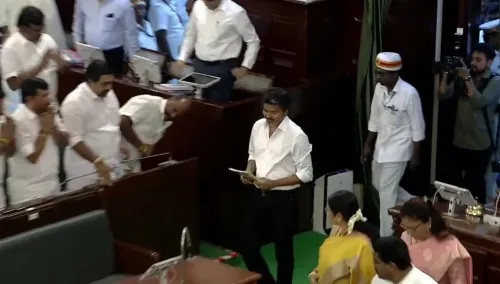
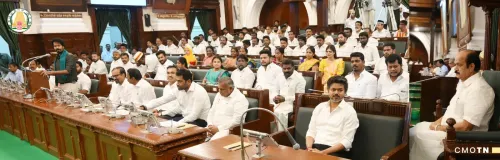
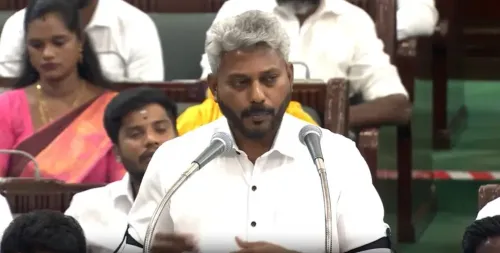
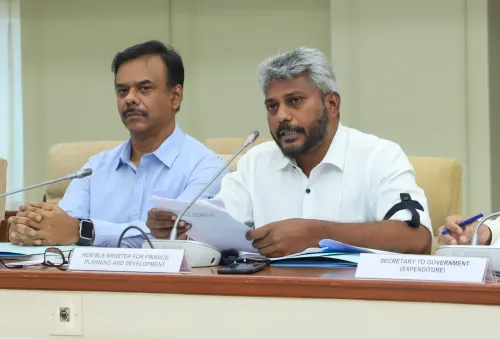
Finance Minister N. Marie Wilson will table the revised Budget for the 2026-27 financial year in the Tamil Nadu Legislative Assembly on 5 August 2026 at 10 am, marking the maiden budget of the TVK government since it assumed office earlier this year. The announcement was made on Tuesday, 21 July by Assembly Speaker J.C.D. Prabhakar. A separate Agriculture Budget will be introduced the following day, on 6 August, by Agriculture Minister Vinoth.
What the Budget Is Expected to Cover
The revised Budget is anticipated to lay out the new administration's fiscal priorities, expenditure roadmap, and policy direction for the remainder of the current financial year. It will be closely scrutinised for new taxation measures, resource mobilisation strategies, and sector-specific allocations that could shape Tamil Nadu's economic agenda. Capital expenditure commitments and welfare programme funding will be among the key areas under the spotlight.
The Fiscal Inheritance: A Challenging Picture
The TVK government inherited a strained fiscal position from the previous Dravida Munnetra Kazhagam (DMK) administration. The DMK had presented an interim Budget for 2026-27 ahead of the Assembly elections, estimating revenue receipts at ₹3.44 lakh crore and revenue expenditure at ₹3.93 lakh crore, projecting a revenue deficit of ₹48,697 crore. The fiscal deficit was pegged at ₹1.22 lakh crore.
After assuming office, the TVK government released a White Paper on the state's finances, painting a significantly grimmer picture. According to the document, Tamil Nadu's total outstanding debt had risen to ₹13.18 lakh crore. The White Paper warned that the revenue deficit could widen sharply to around ₹90,500 crore, while the fiscal deficit could climb to nearly ₹1.64 lakh crore — well above the interim Budget's estimates.
The Financing Gap
The White Paper further noted that the state's maximum borrowing capacity was estimated at ₹1.52 lakh crore, potentially leaving a financing gap of approximately ₹11,600 crore. This comes amid broader concerns about state-level fiscal stress across India, with several large states grappling with rising debt-to-GSDP ratios and compressed capital expenditure headroom.
What to Watch on August 5
The revised Budget will be the TVK government's first opportunity to formally articulate its economic vision and demonstrate how it intends to bridge the fiscal gap without compromising welfare commitments or infrastructure spending. Analysts and opposition leaders alike will be watching for concrete revenue mobilisation proposals and any revision to the deficit figures flagged in the White Paper. The budget session is set to open a defining chapter for the new administration's economic credibility.
Point of View
600 crore financing gap and a fiscal deficit nearly ₹42,000 crore wider than the interim estimate, the August 5 budget must now deliver credible answers, not just revised projections. Tamil Nadu has historically maintained relatively strong capital expenditure despite fiscal pressure, but with borrowing headroom constrained, the new administration faces a genuine trade-off between welfare commitments it campaigned on and the fiscal consolidation the numbers demand. The budget will reveal whether TVK governs differently from the coalition it replaced — or simply inherits its contradictions.
NationPress
20 Oct 2026
Frequently Asked Questions
When will Tamil Nadu present its budget for 2026-27?
Tamil Nadu will present the revised Budget for 2026-27 on 5 August 2026 at 10 am in the State Assembly, with the Agriculture Budget to follow on 6 August. The announcement was made by Assembly Speaker J.C.D. Prabhakar on 21 July.
Who will present the Tamil Nadu budget on August 5?
Finance Minister N. Marie Wilson will table the revised Budget for 2026-27. Agriculture Minister Vinoth will present the separate Agriculture Budget on 6 August.
Why is the TVK government's maiden budget significant?
It is the first full financial statement of the TVK government since it assumed office in 2026, and it must address a fiscal position considerably worse than the previous DMK administration's interim estimates. The revised fiscal deficit is projected at nearly ₹1.64 lakh crore, against the interim figure of ₹1.22 lakh crore.
What did Tamil Nadu's White Paper reveal about the state's finances?
The White Paper released by the TVK government after taking office stated that Tamil Nadu's total outstanding debt had risen to ₹13.18 lakh crore. It projected the revenue deficit could widen to around ₹90,500 crore and the fiscal deficit to nearly ₹1.64 lakh crore, with a potential financing gap of about ₹11,600 crore.
What was the DMK's interim budget estimate for Tamil Nadu in 2026-27?
The previous DMK government's interim Budget estimated revenue receipts at ₹3.44 lakh crore and revenue expenditure at ₹3.93 lakh crore, projecting a revenue deficit of ₹48,697 crore and a fiscal deficit of ₹1.22 lakh crore for 2026-27.