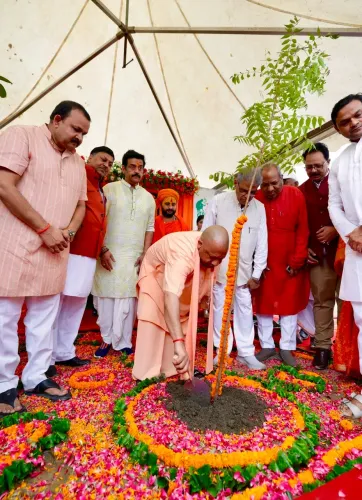
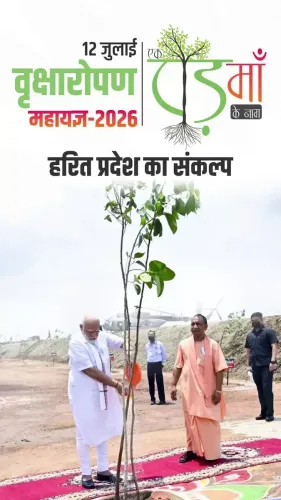
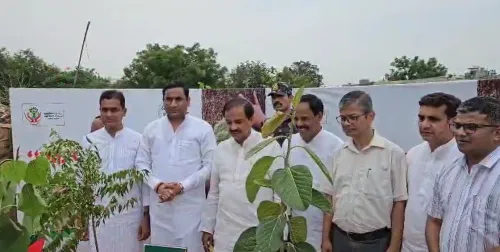
CM Yogi Launches 35-Crore Sapling Drive 'Ek Ped Maa Ke Naam' 2026
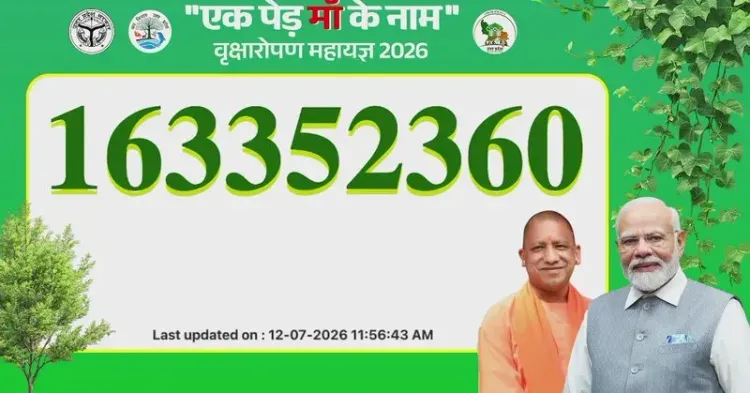
Synopsis
The Chief Minister's Office of Uttar Pradesh launched the Vriksharopan Mahayagya 2026 on 12 July, targeting 35 crore saplings under 'Ek Ped Maa Ke Naam' — the state's annual monsoon afforestation drive that asks citizens to plant a tree as a tribute to their mothers.
Key Takeaways
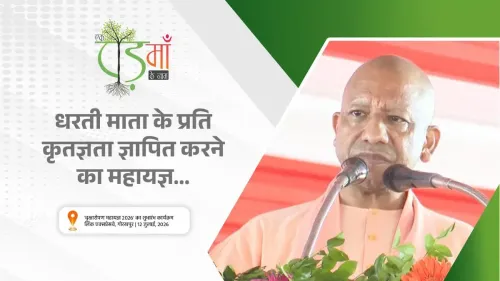
The CMO of Uttar Pradesh announced a live broadcast of the Vriksharopan Mahayagya 2026 on 12 July 2026 .
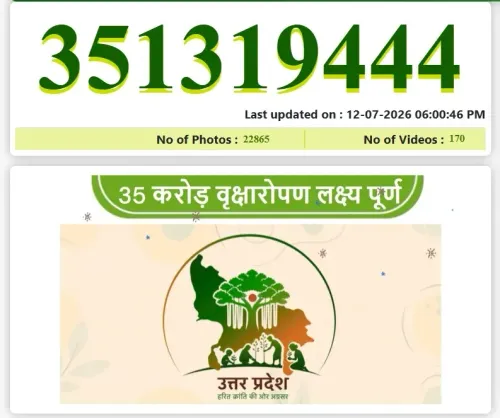
The drive targets 35 crore (350 million) saplings under the 'Ek Ped Maa Ke Naam' campaign.
The campaign was first launched in 2021 and has been held annually during the monsoon season.
CM Yogi Adityanath has overseen large-scale plantation drives in Uttar Pradesh since 2017 .
The state forest department and citizens across 75 districts are the primary participants in the mobilisation.
Post-campaign survival rate data and district-wise achievement reports are the key metrics to watch.
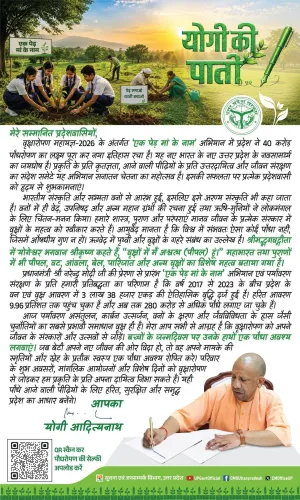
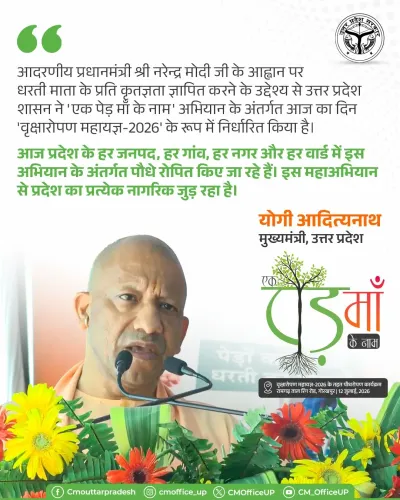
The Chief Minister's Office of Uttar Pradesh on Sunday, 12 July 2026, announced a live broadcast of the Vriksharopan Mahayagya 2026, the state's mass tree-plantation observance conducted under the 35 crore sapling campaign 'Ek Ped Maa Ke Naam' (One Tree in Mother's Name). The event marks the latest edition of Uttar Pradesh's annual monsoon afforestation drive, which blends environmental targets with cultural sentiment by asking citizens to dedicate planted saplings to their mothers.
Context
The CMO's post, shared as a pinned live update, announced the Vriksharopan Mahayagya 2026 — literally a 'great tree-planting ritual' — streaming in real time. The campaign's stated target of 35 crore (350 million) saplings positions it as one of the largest single-day plantation mobilisations announced by any Indian state government. Chief Minister Yogi Adityanath, who has led the state since 2017, has made mass plantation drives a signature annual event of his administration.
Policy Backdrop
The 'Ek Ped Maa Ke Naam' campaign was first launched by the Uttar Pradesh government in 2021 as part of its monsoon plantation mission. It draws on both India's National Forest Policy and the Green India Mission, which set national benchmarks for expanding forest and tree cover. By framing tree-planting as a tribute to mothers, the state government has sought to drive citizen participation beyond the usual institutional actors such as the forest department and local bodies.
Uttar Pradesh, India's most populous state, has conducted successive large-scale plantation programmes since 2017, with each year's drive typically announced during the monsoon season when sapling survival rates are highest. The Vriksharopan Mahayagya format — drawing on the imagery of a sacred collective ritual — has been used to give the drives a community-participation character.
Stakeholders and Impact
The primary stakeholders in the campaign are the citizens of Uttar Pradesh and the state forest department, which coordinates logistics across the state's 75 districts. Schools, gram panchayats, urban local bodies, and voluntary organisations are typically mobilised to meet district-level targets. If the 35 crore sapling goal is met and survival rates are sustained, the drive could contribute meaningfully to the state's green-cover targets under national climate commitments.
The cultural framing of the campaign — dedicating a tree to one's mother — has historically helped generate social media amplification and ground-level participation, particularly in rural areas where the emotional resonance of the message is strong.
What's Next
Attention will now turn to official post-campaign reports on sapling survival rates and district-wise achievement against the 35 crore target. Independent assessments of survival rates from previous years' drives have at times differed from government figures, making mid-year and end-of-season reviews a key accountability measure. The state government is expected to release progress data as the monsoon season advances through July and August 2026.
Point of View
Combining hard numerical targets with cultural symbolism to maximise public participation. Announcing the event as a live broadcast signals a deliberate effort to build real-time accountability and visibility around what might otherwise be a routine bureaucratic exercise. The 35-crore target, if credibly verified post-season, would represent a significant data point in India's state-level contribution to national forest-cover goals. The credibility of such drives, however, continues to rest on independent verification of sapling survival rates — a metric that has historically lagged behind planting figures.
NationPress
10 Oct 2026
Frequently Asked Questions
What is 'Ek Ped Maa Ke Naam'?
'Ek Ped Maa Ke Naam' (One Tree in Mother's Name) is a Uttar Pradesh government campaign that encourages citizens to plant a sapling and dedicate it to their mothers, launched in 2021 as part of the state's annual monsoon afforestation drive.
What is the target of UP's 2026 tree plantation drive?
The Uttar Pradesh government has set a target of 35 crore (350 million) saplings under the Vriksharopan Mahayagya 2026, announced on 12 July 2026.
What is Vriksharopan Mahayagya in Uttar Pradesh?
Vriksharopan Mahayagya is Uttar Pradesh's annual state-wide tree-planting observance, conducted during the monsoon season and framed as a large-scale public-participation ritual to meet the state's green-cover targets.
When did UP start its mass plantation drives?
Uttar Pradesh has conducted yearly mass plantation programmes since 2017, when Chief Minister Yogi Adityanath took office, aligning them with national forest policy goals.
How does UP verify its tree plantation numbers?
The state government typically releases post-campaign reports on saplings planted, though independent assessments of sapling survival rates — a key accountability measure — are watched closely each season.