Uri to Op Sindoor: The security doctrine defining Modi's record 4,399 days
Synopsis
On 10 June 2025, Modi surpasses Nehru's 4,398-day record to become India's longest-serving elected PM. The milestone is inseparable from a security doctrine that moved from dismantling domestic terror networks and abrogating Article 370 to launching cross-border precision strikes — culminating in Operation Sindoor's nine-target assault on Pakistan's terror infrastructure in May 2025.
Key Takeaways
PM Narendra Modi completes 4,399 consecutive days in office on 10 June 2025 , surpassing Jawaharlal Nehru's record of 4,398 days .
The NIA and ED dismantled Pakistan-backed funding networks in J&K , with investigators finding 20–30% of funds used to fuel violence.
The Uri Surgical Strikes on 29 September 2016 destroyed 7 launch pads and killed approximately 40 terrorists across the LoC.
The Pulwama attack on 14 February 2019 killed 40 CRPF personnel and triggered the Balakot air strike on a Jaish-e-Mohammed training camp.
The Pahalgam attack on 22 April 2025 killed 26 tourists , prompting Operation Sindoor — strikes on 9 terror facilities in Pakistan and PoK on 7–9 May 2025 .
Article 370 was abrogated on 5 August 2019 , bringing J&K fully under the Indian Constitution.
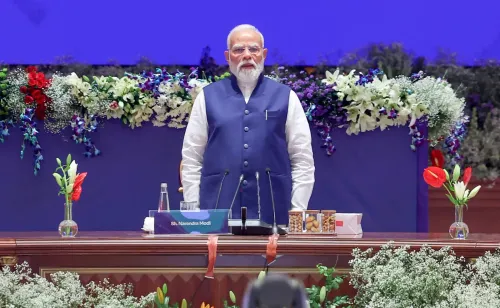
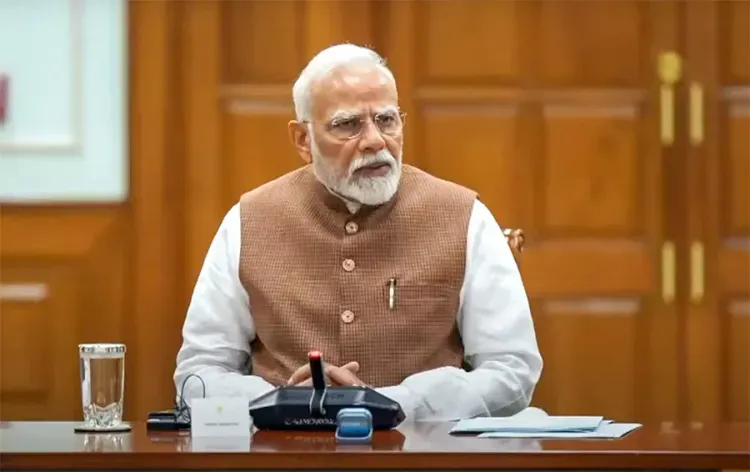
Prime Minister Narendra Modi will complete 4,399 consecutive days in office on 10 June 2025, surpassing the record of 4,398 days held by India's first Prime Minister Jawaharlal Nehru to become the country's longest-serving elected Prime Minister. Among the defining features of his tenure has been a systematic and increasingly assertive national security doctrine — one that evolved from dismantling domestic terror networks to launching cross-border precision strikes.
Dismantling Homegrown Terror and the J&K Funding Networks
In the early years of the Modi government, security agencies moved against homegrown outfits including the Indian Mujahideen, which was effectively dismantled. Attention then turned to Jammu and Kashmir, where the administration directed the National Investigation Agency (NIA) and the Enforcement Directorate (ED) to trace the financial pipelines sustaining separatism. Investigators found that funds had flowed for years through Pakistan-backed channels — with 20 to 30 per cent of the money reportedly used to fuel violence, while the rest allegedly went into the personal accounts of separatist leaders.
As financial networks were exposed and dried up, the separatist movement in J&K lost momentum. Concurrently, security forces drew up lists of top terrorist commanders. The killing of Hizbul Mujahideen poster figure Burhan Wani in an encounter set off a chain of operations that eliminated several senior commanders, leaving the outfit largely dysfunctional. The government paired its offensive posture with outreach programmes aimed at winning over ordinary residents.
Article 370 Abrogation and Its Security Dividend
A landmark constitutional move came on 5 August 2019, when the government abrogated Article 370, bringing Jammu and Kashmir fully under the Indian Constitution. Central laws — including criminal statutes applicable across the rest of India — were extended to the Union Territory. While the decision initially triggered protests, the gradual weakening of terror networks improved the security environment over time. Tourism recovered and economic activity returned to a region long scarred by Pakistan-sponsored terrorism, according to officials.
Uri Surgical Strikes: The First Doctrinal Shift
On 18 September 2016, four heavily armed terrorists attacked an Army brigade headquarters in Uri, Jammu and Kashmir, killing 19 soldiers. The government's response came within 11 days: on 29 September 2016, teams from the Indian Army's Para (Special Forces) crossed the Line of Control (LoC) into Pakistan-occupied Kashmir (PoK) and struck multiple terror launch pads. According to official accounts, seven launch pads were destroyed and approximately 40 terrorists were killed in what became known as the Uri Surgical Strikes — the first publicly acknowledged cross-LoC ground operation by India.
Pulwama and the Balakot Air Strike
On 14 February 2019, a Jaish-e-Mohammed (JeM) suicide bomber struck a Central Reserve Police Force (CRPF) convoy in Pulwama, killing 40 personnel. The attack drew widespread national outrage. The government authorised an aerial strike on a Jaish training facility in Balakot, destroying the camp. 'The Modi government's actions have been decisive. But the government also took care to ensure that such actions do not escalate into a full-blown war with Pakistan,' an official said.
Pahalgam Attack and Operation Sindoor
On 22 April 2025, heavily armed terrorists linked to Lashkar-e-Taiba (LeT) and its proxy The Resistance Front attacked tourists at Baisaran Valley in Pahalgam, killing 26 civilians from various parts of India. The attackers reportedly singled out victims on the basis of religious identity before shooting them at point-blank range in front of their families — an act that an Intelligence Bureau official described as triggering extreme public tension and concerns about communal unrest.
The government responded by formally recalibrating its doctrine: any future Pakistan-sponsored terror attack would henceforth be treated not merely as cross-border terrorism but as an act of war against India. On the night of 7–9 May 2025, the Indian armed forces launched Operation Sindoor, deploying precision-guided missiles to strike and destroy nine terror training facilities in Pakistan and PoK. Among the targets were the JeM headquarters in Bahawalpur — linked by investigators to the planning of the Pulwama attack and other strikes — and the Lashkar primary training facility at Muridke, where terrorists involved in the Mumbai 26/11 attacks were reportedly trained.
'Operation Sindoor not just inflicted damage on Pakistan's terror infrastructure, but also called out Pakistan's nuclear bluff,' an official said. As Modi completes his record tenure, Operation Sindoor stands as the most consequential expression of a doctrine built over eleven years — one that security officials say has permanently altered the cost-benefit calculus for state-sponsored terrorism targeting India.
Point of View
But it rests on a doctrine that has grown progressively harder to walk back. Each escalation — surgical strikes, Balakot, Operation Sindoor — has raised the floor for what any future Indian government can accept as a proportionate response, narrowing diplomatic room. The abrogation of Article 370 improved the security environment in J&K by official metrics, but the Pahalgam attack in April 2025 demonstrated that hardened infrastructure alone cannot guarantee tourist safety. The more consequential question is whether Operation Sindoor's framing — terror as an act of war — creates a durable deterrent or a precedent that locks India into an escalatory spiral the next time Pakistan tests the threshold.
NationPress
26 Oct 2026
Frequently Asked Questions
How many days has PM Modi served as Prime Minister?
PM Narendra Modi completes 4,399 consecutive days in office on 10 June 2025, surpassing Jawaharlal Nehru's record of 4,398 days to become India's longest-serving elected Prime Minister. Modi first took oath of office on 26 May 2014.
What was Operation Sindoor?
Operation Sindoor was a precision military strike launched by Indian armed forces on the night of 7–9 May 2025, targeting nine terror training facilities in Pakistan and Pakistan-occupied Kashmir. The operation followed the Pahalgam attack of 22 April 2025 and struck key Jaish-e-Mohammed and Lashkar-e-Taiba infrastructure, including the JeM headquarters in Bahawalpur and the LeT facility at Muridke.
What were the Uri Surgical Strikes?
The Uri Surgical Strikes were a cross-LoC ground operation carried out on 29 September 2016 by Indian Army Para (Special Forces), eleven days after a terror attack killed 19 soldiers at Uri. Seven launch pads were destroyed and approximately 40 terrorists were killed, according to official accounts.
What happened in the Pahalgam terror attack?
On 22 April 2025, terrorists linked to Lashkar-e-Taiba and The Resistance Front attacked tourists at Baisaran Valley in Pahalgam, Jammu and Kashmir, killing 26 civilians. Witnesses reported that the attackers identified victims by religious identity before shooting them at close range in front of their families.
How did the abrogation of Article 370 affect security in J&K?
The abrogation of Article 370 on 5 August 2019 brought Jammu and Kashmir fully under the Indian Constitution and extended central laws to the Union Territory. Officials say the move, combined with the dismantling of Pakistan-backed funding networks, gradually weakened terror infrastructure and helped revive tourism and economic activity in the region.