Are US Tariffs Crushing Coimbatore–Tirupur Industries?
Synopsis
Coimbatore and Tirupur, once vibrant industrial hubs, are now grappling with severe job losses due to steep US tariff hikes. With exports plummeting, industry leaders fear a bleak future unless alternatives are sought. Can these cities recover?
Key Takeaways
Coimbatore and Tirupur are facing severe challenges due to US tariff hikes.
Job losses in the textile and engineering sectors have exceeded two lakh .
Annual textile exports have dropped from $1.7 billion to nearly $1 billion .
Industry leaders are advocating for diversification into other markets.
Future job security hinges on the ability to adapt to changing global trade dynamics.
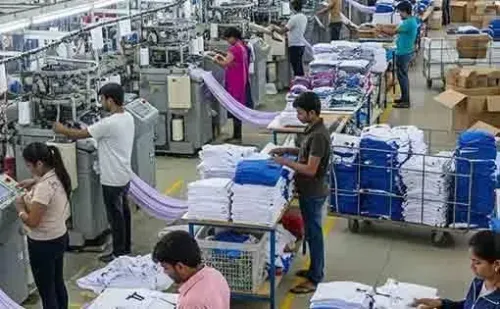
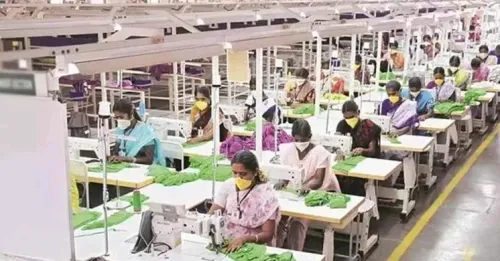
Chennai, Jan 17 (NationPress) Once hailed as one of India’s dynamic industrial centers, Coimbatore and Tirupur are currently enduring a challenging period, grappling with the repercussions of substantial tariff increases implemented by the United States. These hikes are severely impacting employment and exports.
These twin cities, which have been a source of livelihood for hundreds of thousands of workers from Tamil Nadu and neighboring states, have been in turmoil since the US raised tariffs on Indian goods to 50 percent in August last year.
Industry experts estimate that job losses have surpassed two lakh in the textile and engineering sectors alone. When including related industries such as castings, pumps, and industrial valves, the total number of affected individuals is believed to exceed three lakh.
The repercussions are evident, with factory closures, reduced shifts, and dwindling order volumes being commonplace, especially among small and medium exporters. The fallout on export levels has been equally alarming.
Dhanabalan, vice-president of apparel export operations and business development at a private textile mill, noted that annual textile exports from Coimbatore and Tirupur to the US market once reached approximately $1.7 billion. “Today, that figure has plummeted by nearly a billion dollars,” he stated.
“If the 50 percent tariff on Indian products remains in place, textile exports to the US could become virtually nonexistent within a year.”
Industry leaders highlight that the headline tariff isn't the only challenge. Besides the 50 percent levy, exporters must contend with other standard duties, all of which are included in the delivered duty paid (DDP) price.
This significantly escalates the overall cost of Indian products in the US market. In contrast, rival exporters like China and Bangladesh benefit from a cost advantage of nearly 30 percent on DDP terms, rendering Indian goods significantly less competitive.
Concerns have intensified following reports that US President Donald Trump is contemplating a proposal to impose a staggering 500 percent tariff on nations that continue to procure Russian oil.
“If a 50 percent tariff is already untenable, a 500 percent tariff is virtually impossible to absorb,” Dhanabalan cautioned.
“Should such a proposal be enacted, exports to the US will decline further, leading to a sharp rise in job losses.”
With uncertainty clouding the US market, exporters are calling on the Indian government and industry organizations to actively fortify alternative markets.
“The European Union and the UK should be prioritized as critical markets moving forward,” Dhanabalan added, emphasizing that diversification is now vital for the survival of the region’s export-dependent industries.
As global trade tensions escalate, the future of the industrial workforce in Coimbatore and Tirupur remains precarious.
aal/rad
Point of View
It is crucial to recognize the escalating challenges faced by Coimbatore and Tirupur. The ongoing tariff hikes not only threaten local employment but also signal a need for urgent intervention from government and industry stakeholders to explore alternative markets and safeguard the livelihoods of countless workers.
NationPress
2 Oct 2026
Frequently Asked Questions
What is causing job losses in Coimbatore and Tirupur?
Job losses are primarily due to the steep tariff hikes imposed by the United States, which have significantly impacted exports in the textile and engineering sectors.
How many people are affected by these job losses?
Industry estimates suggest that job losses have surpassed two lakh in the textile and engineering sectors, with total affected individuals exceeding three lakh when related industries are included.
What are the implications of the US tariffs on exports?
The tariffs have led to a dramatic decline in annual textile exports from Coimbatore and Tirupur, dropping from around $1.7 billion to nearly a billion dollars, severely affecting local industries.
What alternatives are being considered to mitigate the impact?
Exporters are advocating for a focus on alternative markets, particularly the European Union and the UK, to lessen dependence on the US market.
What could happen if tariffs continue to rise?
If tariffs persist at current rates or increase further, industry leaders warn that exports could dwindle to virtually nothing, exacerbating job losses.