CM Dhami: Uttarakhand Enters 'Leader' Tier in Startup Rankings
Synopsis
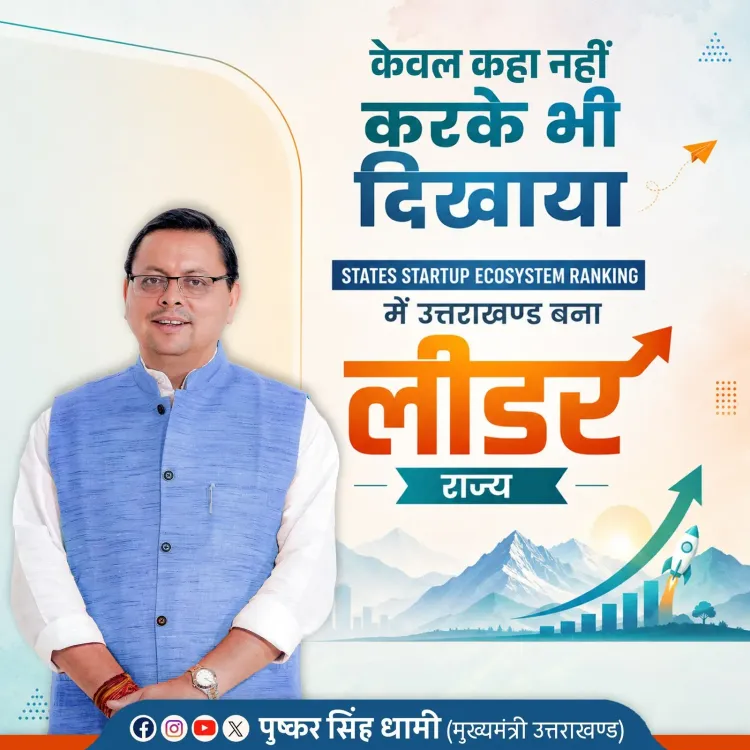
Uttarakhand has secured a place in the 'Leader' category of DPIIT's States' Startup Ecosystem Ranking, CM Pushkar Singh Dhami announced on August 8, 2026, crediting state policies aimed at turning youth into job creators and building a competitive startup hub.
Key Takeaways
Uttarakhand has entered the 'Leader' category in the DPIIT States' Startup Ecosystem Ranking, announced by CM Pushkar Singh Dhami on August 8, 2026 .
The DPIIT has conducted States' Startup Ecosystem Rankings since 2019 to benchmark state-level startup support and spur policy competition.
The ranking evaluates states on policy frameworks, incubation infrastructure, funding access, and startup outcomes.
CM Dhami's stated goal is to make Uttarakhand's youth job creators , not just job seekers, through innovation and entrepreneurship.
The achievement aligns with the national Startup India programme launched in 2016 to build a federal entrepreneurship framework.
The next ranking cycle and state budget allocations for incubators and funding will test whether Uttarakhand can sustain the 'Leader' position.
Uttarakhand has broken into the elite 'Leader' category of the States' Startup Ecosystem Ranking, Chief Minister Pushkar Singh Dhami announced on Saturday, August 8, 2026 — a jump that signals the hill state's quiet but deliberate push to recast itself as more than a pilgrimage and tourism economy.
From job seekers to job creators: Dhami's core pitch
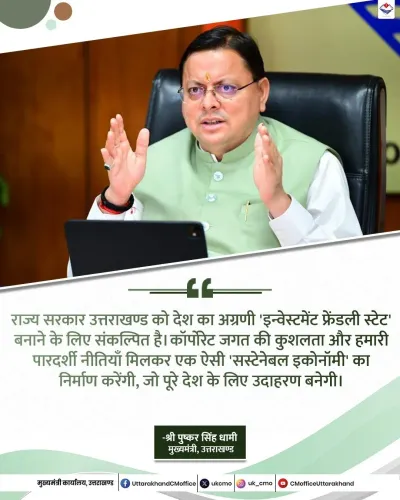
In his post, CM Dhami framed the ranking not as an end point but as proof of direction. 'Hamara lakshya hai ki Uttarakhand ke yuva job seeker hi nahin balki job creator bhi banein' — 'Our goal is that Uttarakhand's youth become not just job seekers but also job creators,' he wrote, adding that the state aims to establish itself as one of India's leading startup hubs on the strength of innovation and talent.
The ambition is pointed: a state long dependent on government employment and seasonal tourism is now betting on entrepreneurship as a structural lever for youth opportunity. Dhami credited 'continuous efforts and effective policies' of his government for the ranking result.
What the 'Leader' category actually means
The Department for Promotion of Industry and Internal Trade (DPIIT), under the Union Ministry of Commerce and Industry, has conducted periodic States' Startup Ecosystem Rankings since 2019 to benchmark and spur competition among states. The exercise grades states across categories — from 'Aspiring' and 'Emerging' up through 'Performers' to 'Leaders' — based on metrics covering policy frameworks, incubation infrastructure, funding access, and startup outcomes.
Reaching the 'Leader' tier places Uttarakhand alongside states that have made measurable, systemic investments in their startup ecosystems — not just passed a policy on paper. For a smaller hill state competing against industrially mature peers, the placement carries real weight.
Uttarakhand's startup push within the national Startup India arc
The backdrop is the national Startup India programme, launched in 2016, which created a federal framework that states were then expected to localise with their own incentives, incubation centres, and regulatory reforms. Uttarakhand's state government has progressively aligned its policies with this framework — offering support to young entrepreneurs and working to build an ecosystem that converts the state's educated youth into founders rather than applicants.
The DPIIT ranking mechanism was designed precisely to create this kind of competitive pressure: states that climb categories attract investor attention, central scheme benefits, and the reputational pull that draws incubators and accelerators to set up shop. Uttarakhand's 'Leader' tag is, in that sense, both a report card and a marketing asset.
The next test will come with the release of the subsequent ranking cycle and whether the state's budget allocations for incubators and seed funding keep pace with the ambition CM Dhami has staked out publicly.
Point of View
The ranking provides a concrete, third-party validated metric ahead of any future electoral cycle — startup policy is increasingly a middle-class and youth-facing signal, not just an economic one. The 'job seeker to job creator' framing also mirrors Prime Minister Modi's national pitch, suggesting deliberate alignment of state messaging with the Centre's economic identity. Whether Uttarakhand can sustain the ranking will depend on budget follow-through on incubation and funding infrastructure, which remains the gap between policy ambition and ecosystem depth for smaller states.
NationPress
22 Sept 2026
Frequently Asked Questions
What is the DPIIT States' Startup Ecosystem Ranking?
It is a periodic ranking conducted by the Department for Promotion of Industry and Internal Trade (DPIIT) since 2019 to evaluate and compare how well Indian states support startup ecosystems, covering policy, incubation, funding, and outcomes.
What does the 'Leader' category mean in the startup ranking?
The 'Leader' category is the top tier in the DPIIT ranking framework, recognising states that have made systemic, measurable investments in startup support — including strong policies, incubation infrastructure, and funding access.
What has Uttarakhand done to promote startups?
The Uttarakhand state government has aligned its policies with the national Startup India framework, offering incentives for young entrepreneurs, working to build incubation infrastructure, and creating a regulatory environment to encourage innovation and entrepreneurship.
What is Startup India and how does it relate to state rankings?
Startup India is a national programme launched in 2016 to promote entrepreneurship and ease of doing business. The DPIIT state rankings were introduced to push states to localise and strengthen this framework through their own targeted policies.
What is CM Dhami's goal for Uttarakhand's youth and startups?
CM Pushkar Singh Dhami has stated that his government's goal is to make Uttarakhand's youth not just job seekers but job creators, and to establish the state as one of India's leading startup hubs through innovation and talent.