Is Vande Mataram Just a Bengal Issue? Amit Shah Critiques Opposition in Rajya Sabha
Click to start listening
Synopsis
Home Affairs Minister Amit Shah passionately defends Vande Mataram as a national symbol, dismissing attempts by the Opposition to confine its relevance to West Bengal elections. He emphasizes its historical significance and ongoing importance for national unity and identity, urging the nation to embrace its legacy for future generations.
Key Takeaways
- Amit Shah defends Vande Mataram as a national anthem beyond regional politics.
- The song symbolizes the spirit of freedom and unity in India.
- Historical context highlights its importance during colonial rule.
- Encourages future generations to embrace and celebrate national heritage.
- Calls for recognition of shared cultural identity in nation-building.
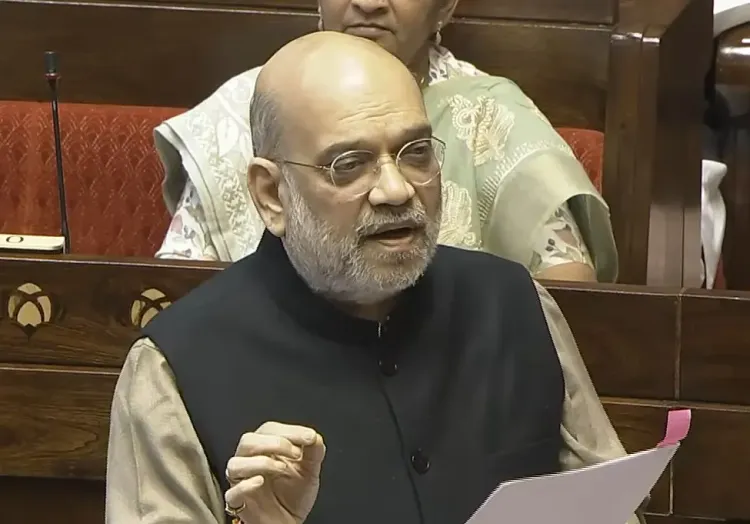
New Delhi, Dec 9 (NationPress) Home Affairs Minister Amit Shah vehemently criticized the Opposition on Tuesday for associating the celebration of 150 years of Vande Mataram with the forthcoming West Bengal Assembly elections, asserting that this iconic song transcends regional boundaries.
As he commenced the discussion on the commemoration of 150 years of Vande Mataram in the Rajya Sabha, Shah declared, "This esteemed House convenes to honor the essence of Vande Mataram, to celebrate its magnificence, and to preserve its legacy for eternity. This dialogue is crucial, particularly for our nation's children, teens, youth, and future generations, as they must grasp Vande Mataram's role in our freedom movement, the patriotism it encapsulates, and the dedication it represents towards our nation and its culture. May this comprehension motivate their involvement in constructing a prosperous India."
He criticized the Opposition, stating, "Certain members raised inquiries in the Lok Sabha yesterday, questioning the necessity of discussions surrounding Vande Mataram. The significance of engaging with Vande Mataram was vital in the past; it is essential now, and it will always hold importance for the envisioned great India of 2047."
Shah further admonished the Opposition for linking the national anthem to the impending West Bengal Assembly elections, stating, "Vande Mataram is not confined to Bengal."
"Some believe that because elections are nearing in Bengal, the discussion of Vande Mataram is timely; they aim to undermine its splendor by connecting it to the Bengal elections," he remarked.
"While it is true that the creator of Vande Mataram, Bankim Babu, hailed from Bengal, and that Anand Matth originated there, Vande Mataram was never restricted to Bengal or even our nation. It was sung globally by our freedom fighters. Even today, when our soldiers at the border or police officers protecting our country sacrifice their lives, Vande Mataram is often their final expression of devotion," he added.
The Home Minister expressed that Vande Mataram, which became a symbol of national unity during the freedom struggle, is now emerging as an "inspiration for an Atmanirbhar and Viksit Bharat."
"Neither the British nor those who adopted British customs could suppress this anthem. Vande Mataram rejuvenated a nation that had lost its divine strength," Shah noted.
Discussing the historical context of Vande Mataram, Shah stated, "This land has faced invasions and attempts to distort our culture and history for centuries. During British rule, efforts were made to impose a new civilization and culture upon us."
"Amid such challenges, Bankim Chandra Babu composed Vande Mataram. His work subtly illustrated our ancient civilization, our cultural nationalism, and the tradition of venerating the nation as a mother. The notion of revering the nation as a mother, deeply rooted in our heritage, was beautifully articulated in his writing," he elaborated.
He further emphasized that the chant of Vande Mataram became a rallying cry for liberating Maa Bharti from the shackles of oppression.
"It served as a clarion call for independence. It became a profound source of motivation during the freedom struggle. For the martyrs who made the ultimate sacrifice, Vande Mataram inspired them with the determination to be reborn in India and once again give their lives for Maa Bharti. Through centuries, this ancient nation drew strength from Vande Mataram to keep progressing along its cultural path. Many found their inspiration in this very song," he added.
"Through the discussions surrounding Vande Mataram in both Houses, and the celebration of its essence, our future generations will appreciate its importance and regard it as a cornerstone for nation-building," Shah concluded.
Point of View
It is essential to recognize Amit Shah's assertions about Vande Mataram's significance. This discussion not only highlights the cultural heritage of India but also emphasizes the need for unity amidst political narratives. The call to celebrate and honor our national symbols resonates deeply, reminding us that our collective identity is rooted in shared history and values.
NationPress
12/12/2025
Frequently Asked Questions
What is Vande Mataram?
Vande Mataram is a national song in India, composed by Bankim Chandra Chatterjee. It played a significant role during India's freedom struggle, symbolizing patriotism and unity.
Why did Amit Shah criticize the Opposition?
Amit Shah criticized the Opposition for attempting to link the discussion of Vande Mataram to the West Bengal elections, asserting that the song holds a national significance that transcends regional politics.
What was the historical context of Vande Mataram?
Vande Mataram was composed during a time of colonial oppression, serving as a rallying cry for India's independence and symbolizing cultural nationalism.
How does Vande Mataram inspire Indians today?
Vande Mataram continues to inspire a sense of national pride and unity, encouraging citizens to contribute to the development and progress of India.
What is the significance of the 150-year celebration?
The 150-year celebration of Vande Mataram serves to honor its legacy and educate future generations about its importance in India's history and freedom struggle.