How is India's Vast Consumer Base Helping to Mitigate US Tariffs?
Click to start listening
Synopsis
Explore how India's robust consumer base is acting as a buffer against US tariffs imposed by President Trump. This strategy is showing promising results, allowing India to negotiate firmly. Discover the economic landscape and implications for India's future growth.
Key Takeaways
- India's consumer spending accounts for about three-fifths of its economy.
- The government has eliminated income tax for low earners to boost spending.
- India's economy showed a growth rate of 8.2% in Q3.
- Resilience in domestic demand is key to mitigating external pressures.
- India is reforming sectors to attract foreign investments.
Washington, Jan 3 (NationPress) Prime Minister Narendra Modi is leveraging India’s extensive consumer market to stabilize the economy amidst the pressures exerted by US President Donald Trump’s tariffs on trade relations between New Delhi and Washington, as reported by a prominent financial publication.
This tactic is beginning to demonstrate positive outcomes, enabling India to maintain its stance in negotiations despite the US implementing tariffs as high as 50 percent in 2025, ranking among the steepest imposed on any American trading associate, according to The Wall Street Journal.
In the capital city, consumer expenditure has started to react positively to governmental initiatives. Shrey Dixit, a 22-year-old engineering student, mentioned that his family opted to purchase a second car following India's significant reduction in sales taxes last September. “I am thrilled that we could acquire the vehicle we desired at a lower price,” he shared with the financial outlet.
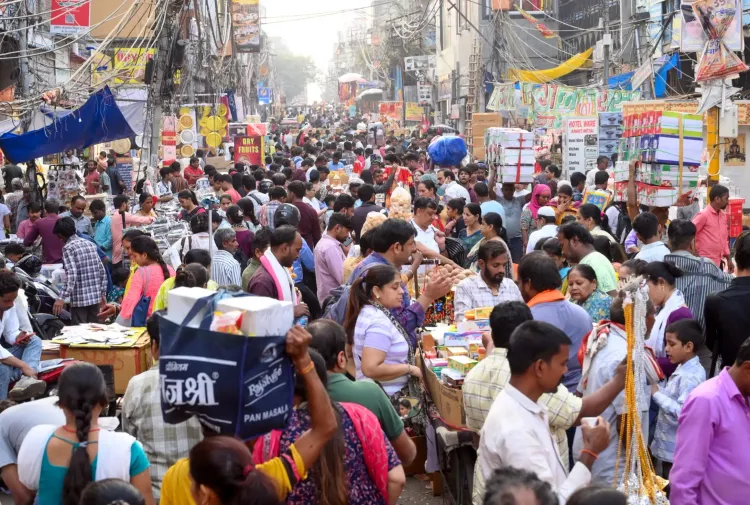
In contrast to economies that are primarily export-oriented, consumer spending constitutes approximately three-fifths of India’s economy, providing New Delhi with enhanced protection from US pressures. India is also less reliant on the favor of Washington compared to nations like Japan and South Korea, which have made hefty investment promises to the US to alleviate trade frictions, the outlet noted.
Initially, Trump enacted a 25 percent tariff on India in August, citing the trade imbalance, subsequently adding another 25 percent to limit India’s procurement of discounted Russian oil. However, India had already commenced strengthening domestic demand, the article stated.
The Wall Street Journal reported that the government eliminated income tax liabilities for individuals earning up to around $13,300 annually, while the central bank has reduced interest rates multiple times.
During the Diwali festival last October, PM Modi encouraged citizens to purchase local products and share their purchases on social media, according to the publication. India’s economy expanded by 8.2 percent in the July-September period, with the central bank attributing this growth to robust consumer demand and government expenditures.
India has resisted US demands to liberalize its market for American dairy and ethanol products, emphasizing its obligation to safeguard agriculture, which sustains over 250 million individuals, as reported by The Wall Street Journal.
While certain sectors closely tied to the US market have faced challenges, economist Biswajit Dhar remarked, “Overall, it’s going to be sort of business as usual.” Exports to the US decreased following the imposition of tariffs, yet India has been exploring new markets, aided by last year’s depreciation of the rupee.
Moreover, India is addressing longstanding US concerns by reforming its nuclear sector to permit private investment and fully opening the insurance industry to foreign stakeholders.
Economists caution that growth may decelerate in the concluding quarter of India’s fiscal year ending in March, despite the central bank raising its full-year growth forecast to 7.3 percent. The World Bank has indicated that India is on track to surpass Japan as the world’s fourth-largest economy.
Point of View
I believe that India's strategy to leverage its consumer market amidst external pressures showcases resilience. The government's proactive measures may not only mitigate the impact of US tariffs but also position India for sustained economic growth in the future. It is crucial for our economy to continue adapting while protecting our domestic interests.
NationPress
03/01/2026
Frequently Asked Questions
What are the current US tariffs on India?
The US has imposed tariffs of up to 50% on India, among the highest on any American trading partner, affecting various sectors.
How is India responding to US tariffs?
India is relying on its vast consumer base and has implemented measures like tax cuts and interest rate reductions to bolster domestic demand.
What economic impact has been observed in India?
India's economy grew by 8.2% in the July-September quarter, showcasing resilience despite US pressures.
What are the implications for India's agriculture sector?
India has resisted US demands to open its market for dairy and ethanol products to protect its agriculture, which supports over 250 million people.
What is the outlook for India's economy amid these challenges?
Economists suggest that while growth may slow in the last quarter, India is positioned to become the world's fourth-largest economy.