Vijayawada secretariat employees clash with police; CI dies of cardiac arrest
Synopsis
A mass protest by Andhra Pradesh's village and ward secretariat employees in Vijayawada on 27 September turned violent as police resorted to a cane charge, detaining at least 141 people. The day's most sobering moment: Circle Inspector Ahmed Ali died of cardiac arrest while on duty at the protest site. The YSRCP has accused the TDP-led government of breaking poll promises and using force against workers fighting for legitimate pay and promotion demands.
Key Takeaways
Village and ward secretariat employees clashed with police at Dharna Chowk, Vijayawada on 27 September 2026 during the 'Chalo Vijayawada' protest.
Circle Inspector Ahmed Ali died of a cardiac arrest while on duty at the protest site.
Police resorted to a cane charge ; at least 141 protesters were detained , including women.
Employees are demanding promotions and two pending salary increments , alleging Chief Minister N.
Chandrababu Naidu broke his promise to double their pay.
YSRCP condemned the crackdown and demanded unconditional release of all detainees.
Sudhakar Babu alleged plans to remove nearly 30,000 employees and restructure 15,004 secretariats into 7,715 groups .
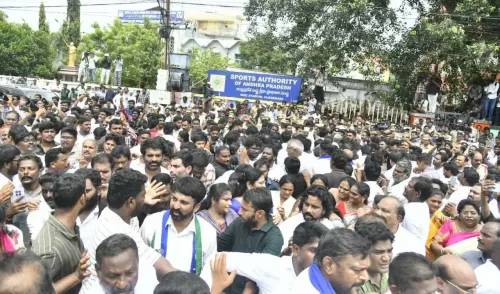
Village and ward secretariat employees clashed with police at Dharna Chowk in Vijayawada on Sunday, 27 September 2026, during a mass protest called under the banner of 'Chalo Vijayawada' to press for long-pending demands including promotions and pending salary increments. The demonstration turned tense as police moved to detain protesters, triggering a scuffle that left several employees and police personnel injured. In a separate tragedy, Circle Inspector Ahmed Ali collapsed at the protest site and died of cardiac arrest while on duty.
How the Clashes Unfolded
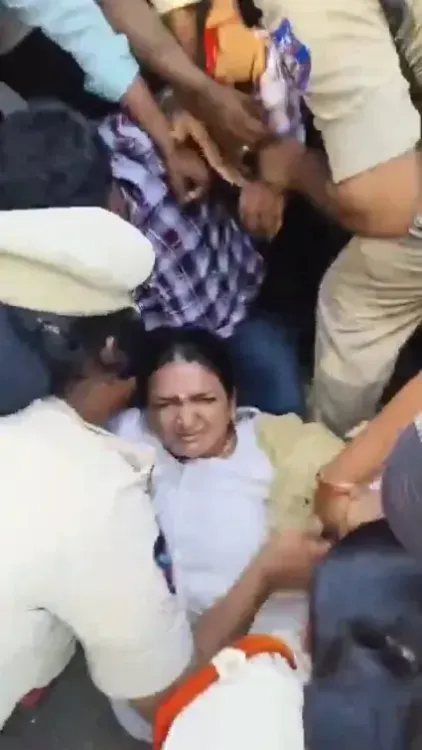
A large number of employees, including women, converged on Dharna Chowk in response to the protest call. Demonstrators raised slogans demanding that the Andhra Pradesh government address pending promotions and other service-related grievances. When police attempted to detain protesters — physically lifting some into police vehicles — the crowd resisted, leading to a direct confrontation. Officers resorted to a cane charge to bring the situation under control. According to reports, at least 141 persons were detained during the operation.
Death of Circle Inspector Ahmed Ali
Circle Inspector Ahmed Ali suffered a cardiac arrest while performing his duties at Dharna Chowk. He collapsed on the ground and was immediately rushed to a nearby hospital by fellow police personnel. He was declared dead on the way to the hospital. The incident added gravity to an already fraught situation and drew condolences from across the political spectrum.
YSRCP Condemns Crackdown
The YSR Congress Party (YSRCP) strongly condemned the police action. YSRCP MLC Lella Appi Reddy alleged that the Telugu Desam Party (TDP)-led coalition government had reneged on its electoral promises and was deploying police against workers pressing for legitimate demands. He said, 'They were fighting for their just demands and the police had shown high-handedness in preventing the leaders and active participants of the village and ward secretariat and behaved in a harsh manner at the Dharna Chowk where they were protesting.'
Appi Reddy further alleged that many protest leaders were prevented from reaching the venue, and those who did were beaten up. He criticised the absence of ministerial oversight, noting that Chief Minister N. Chandrababu Naidu and his son Nara Lokesh were away and no minister stepped in to engage with the protesters. He also alleged that Naidu had promised to double employees' pay on assuming office but had failed to honour that commitment.
Demands and the Secretariat System at Stake
YSRCP SC Cell State President and former MLA T.J.R. Sudhakar Babu demanded the unconditional release of all detained employees. He said the workers' core demands — promotions and two pending salary increments — were reasonable and should have been resolved through dialogue rather than police force. He also criticised the decision to reorganise 15,004 secretariats into 7,715 groups and alleged that the state government was planning to remove nearly 30,000 employees. Sudhakar Babu argued that the secretariat system, which he credited as delivering 540 government services at people's doorsteps, was being systematically weakened. He noted that these same employees had served as frontline workers during the Covid-19 pandemic.
Political and Administrative Context
This comes amid growing friction between the TDP-led coalition and employee unions that were closely associated with the previous YSRCP government under former Chief Minister Y.S. Jagan Mohan Reddy, who had created the village and ward secretariat network. Critics argue the restructuring of the system carries political undertones beyond administrative rationale. The situation remains fluid, with employee unions expected to escalate their agitation if the state government does not engage in formal negotiations.
Point of View
Whether administratively justified or not, lands on a workforce that was created under its predecessor and remains loyal to it. The death of Circle Inspector Ahmed Ali on duty adds a human cost that neither side can afford to instrumentalise. The absence of any ministerial engagement while the chief minister was away speaks to a governance gap that, left unaddressed, could deepen the standoff significantly.
NationPress
28 Sept 2026
Frequently Asked Questions
What triggered the Vijayawada secretariat employees' protest on 27 September?
Village and ward secretariat employees gathered at Dharna Chowk in Vijayawada under the 'Chalo Vijayawada' call to press for promotions, two pending salary increments, and other long-pending service demands. They alleged that the TDP-led coalition government had failed to honour Chief Minister N. Chandrababu Naidu's poll promise to double their pay.
Who is Circle Inspector Ahmed Ali and how did he die?
Circle Inspector Ahmed Ali was a police officer deployed at Dharna Chowk during the protest. He collapsed on the ground after suffering a cardiac arrest while on duty and was rushed to a nearby hospital, where he was declared dead on arrival.
How many protesters were detained during the Vijayawada clashes?
At least 141 persons were detained during the police operation at Dharna Chowk, according to YSRCP MLC Lella Appi Reddy. Police physically lifted several protesters into vehicles and resorted to a cane charge after demonstrators resisted detention.
What is the YSRCP's position on the crackdown?
The YSRCP strongly condemned the police action, calling it repressive. YSRCP MLC Lella Appi Reddy and former MLA T.J.R. Sudhakar Babu demanded the unconditional release of all detainees and accused the TDP-led government of using force against workers pursuing legitimate demands.
What changes to the secretariat system are at the centre of the dispute?
The state government has reportedly decided to reorganise 15,004 village and ward secretariats into 7,715 groups. YSRCP leaders allege this move could result in the removal of nearly 30,000 employees and amounts to dismantling a system that delivered 540 government services at people's doorsteps.