What is the significance of the 'Vote-on-Account' in West Bengal Assembly today?
Synopsis
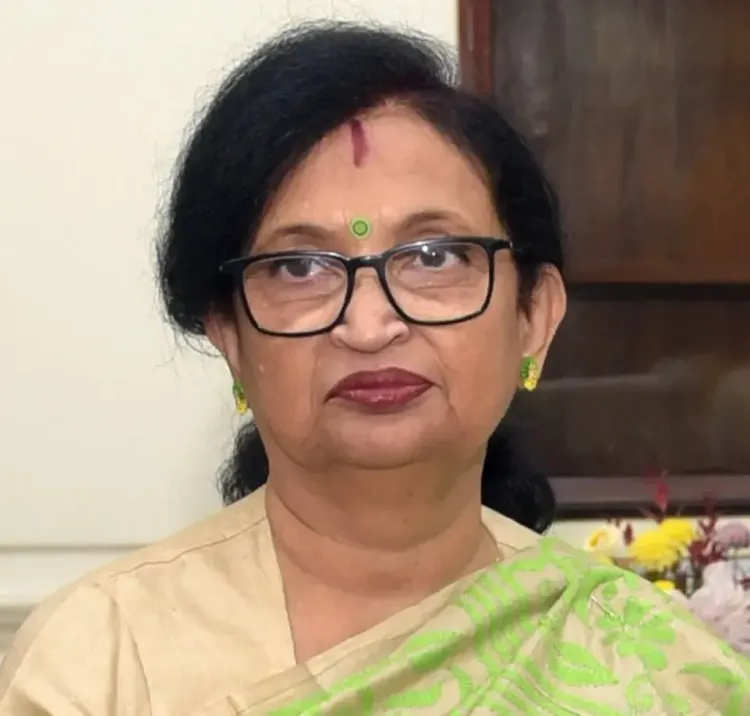
Kolkata is abuzz as Finance Minister Chandrima Bhattacharya prepares to unveil the interim budget, known as the 'Vote-on-Account', which could potentially increase the monthly allocations for the widely acclaimed Laxmir Bhandar scheme. This article explores the implications of these financial decisions as the state gears up for crucial elections.
Key Takeaways
Interim budget presented by Finance Minister Chandrima Bhattacharya.
Focus on increasing allocations for the Laxmir Bhandar scheme .
Current monthly doles are Rs 1,000 for general women and Rs 1,200 for SC/ST women.
State government may exceed its budgeted borrowings .
Accumulated debt projected to reach Rs 7,06,531.61 crore by March 31, 2026.
Kolkata, February 5 (NationPress) The Finance Minister of West Bengal, Chandrima Bhattacharya, is set to unveil a significant interim budget known as the Vote-on-Account during the session of the state Assembly this Thursday.
This interim budget is particularly noteworthy as the complete budget for the fiscal year 2026-27 will only be revealed by the new cabinet after the pivotal state Assembly elections, slated for later this year.
The primary focus of this interim budget will be the anticipated increase in funding for the 'Laxmir Bhandar', a monthly financial aid program for women in West Bengal.
Currently, women in the general category receive Rs 1,000 monthly, while those from the Scheduled Caste and Scheduled Tribe categories benefit from Rs 1,200 each month.
Political analysts suggest that the state government may consider raising this amount to strengthen its support among the dedicated women's vote bank for the Trinamool Congress, especially considering recent elections.
However, the exact increase in the amount remains uncertain. Over the past five years, the state government has disbursed Rs 74,000 crore to women through this initiative alone.
In the previous fiscal year, Rs 27,000 crore was allocated for the program.
The interim budget will be presented amid indications that the West Bengal government is poised to exceed its budgeted market borrowings for the current fiscal year of 2025-26, along with its projected accumulated debt by March 31, 2026.
According to the budget documents for 2025-26, the state government was expected to borrow Rs 81,972.333 crore from the open market.
Nevertheless, the Reserve Bank of India's current and projected borrowing data indicates that the total borrowings by the West Bengal government for 2025-26 will reach Rs 1,24,000 crore.
The revised estimates for 2025-26 suggest that the total accumulated debt for the state government may rise to Rs 7,06,531.61 crore by the end of the fiscal year on March 31, 2026.
Given that the total market borrowing for 2025-26 is expected to significantly exceed the projected borrowing figure, the accumulated debt is also likely to surpass initial expectations.
It's noteworthy that, by the close of the fiscal year 2010-11—the last under the 34 years of Left Front governance—the accumulated debt of the West Bengal government was just above Rs 1,90,000 crore.
Point of View
The unveiling of the interim budget in West Bengal highlights the government's approach to fiscal management ahead of critical elections. The potential increase in women's welfare schemes demonstrates a targeted strategy to secure votes while addressing the needs of a significant demographic. This situation merits close attention as it reflects broader trends in political finance and governance in India.
NationPress
22 Sept 2026
Frequently Asked Questions
What is the Vote-on-Account budget?
The Vote-on-Account budget is an interim financial statement presented by the government to meet its expenses until the full budget is passed, particularly during election years.
How does the Laxmir Bhandar scheme work?
The Laxmir Bhandar scheme provides monthly financial assistance to women, offering Rs 1,000 to those in the general category and Rs 1,200 for women from Scheduled Castes and Scheduled Tribes.
Why is the interim budget significant?
The interim budget is crucial as it may indicate potential increases in allocations for key welfare schemes, influencing voter sentiment ahead of elections.
What are the implications of exceeding the budgeted borrowings?
Exceeding budgeted borrowings can indicate financial strain on the government, potentially leading to increased debt and impacting future fiscal policies.
What was the accumulated debt of West Bengal at the end of 2010-11?
By the end of the fiscal year 2010-11, the accumulated debt of the West Bengal government was slightly over Rs 1,90,000 crore.