VP Dhankhar Launches Deep-Sea Fishing LoA at Bhubaneswar
Synopsis
Vice President Jagdeep Dhankhar launched India's Letter of Approval for sustainable deep-sea fishing at OUAT Bhubaneswar on 9 July 2026, enabling regulated Indian vessel operations beyond the 200-nautical-mile EEZ to harvest high-value species like tuna, with NCEL and major cooperatives among the first recipients.
Key Takeaways
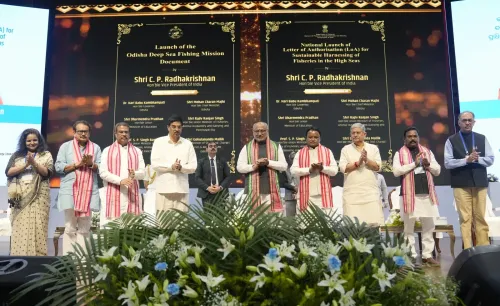
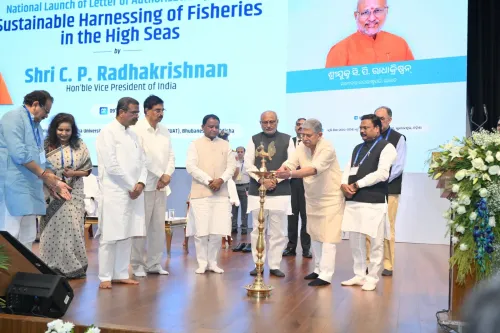
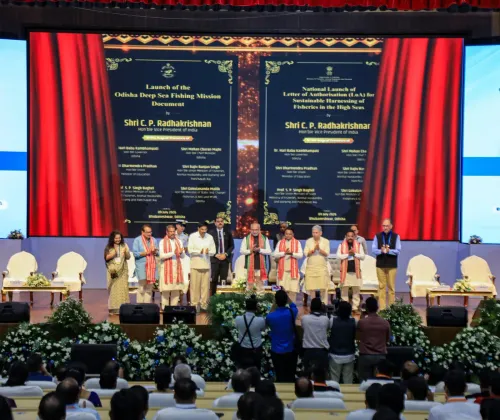
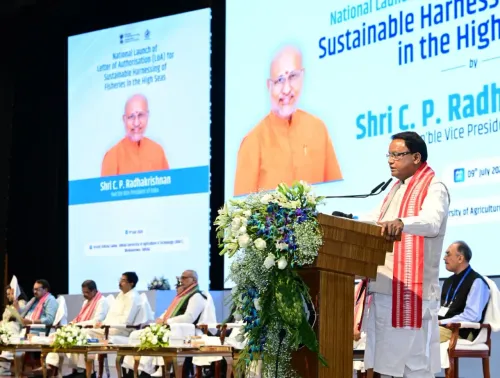
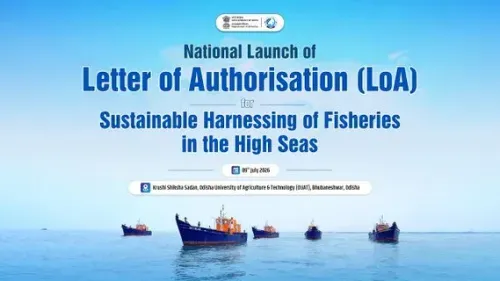
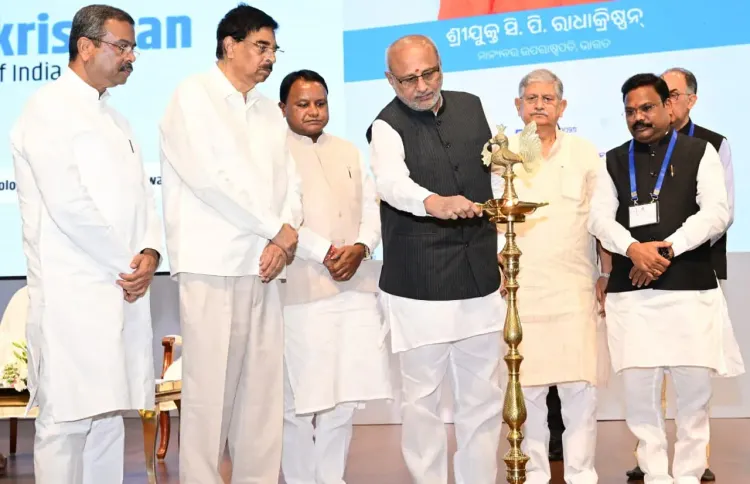
Vice President Jagdeep Dhankhar nationally launched the Letter of Approval (LoA) for Sustainable Deep-Sea Fishing at OUAT, Bhubaneswar on 9 July 2026 .
The LoA enables eligible Indian vessels to fish in international waters beyond India's 200-nautical-mile Exclusive Economic Zone (EEZ) .
Current fishing activity is largely limited to within 40–50 nautical miles of the coast; the policy opens access to high-value species such as tuna .
National Cooperative Exports Limited (NCEL) and other major fishing cooperatives and vessel owners have received special LoAs.
The initiative is framed under India's blue economy goals, with objectives of strengthening food security, nutrition, and seafood exports.
The launch builds on the Pradhan Mantri Matsya Sampada Yojana (PMMSY, 2020) and the National Policy on Marine Fisheries 2017 .
The Chief Minister's Office of Odisha announced on 9 July 2026 that Vice President Jagdeep Dhankhar has nationally launched the Letter of Approval (LoA) for Sustainable Deep-Sea Fishing at an event held at the Odisha University of Agriculture and Technology (OUAT) conference hall in Bhubaneswar, marking what the office described as a new golden chapter in India's marine fisheries and blue economy history.
Context
The post, written in Odia, states that a 'new golden chapter has been added to the history of India's marine fisheries and the progressive blue economy.' The Vice President's launch of the LoA is framed as opening regulated access to high-value fish such as tuna in international waters beyond India's coastline — an area that has largely remained untapped by Indian fleets.
Until now, the post notes, most fishing activity has been confined to within 40–50 nautical miles of the coast. The LoA policy is intended to enable Indian vessels to operate in deep international maritime zones in a 'controlled and responsible manner', with the stated goals of strengthening food security and nutrition.
Policy Backdrop
The LoA mechanism fits within a series of central government initiatives aimed at expanding India's blue economy. The Pradhan Mantri Matsya Sampada Yojana (PMMSY), launched in 2020, has been the flagship scheme for modernising fisheries infrastructure and boosting production. The National Policy on Marine Fisheries 2017 had earlier emphasised sustainable harvesting and expansion into deeper waters, while the Sagarmala Project (2015) laid groundwork for port-led marine economic development.
The LoA operationalises controlled entry into waters beyond India's Exclusive Economic Zone (EEZ) — the 200-nautical-mile maritime boundary within which India holds sovereign rights — under a sustainability and food-security mandate. This moves the policy from aspiration to implementation for eligible Indian vessels.
Stakeholders and Impact
Special LoAs have been distributed to several major fishing cooperatives and vessel owners, including the National Cooperative Exports Limited (NCEL). These approvals authorise eligible Indian fishing vessels to pursue high-value pelagic stocks — particularly tuna — in international waters outside the EEZ.
Fishing cooperatives, vessel owners, and marine fishermen across coastal states stand to benefit from expanded access. The policy is also expected to support India's seafood export targets by enabling the harvest of premium species currently sourced largely through imports or third-party arrangements.
What's Next
Attention will now turn to the roll-out of additional LoAs, the deployment of vessels to international fishing grounds, and early catch data from deep-sea operations. Integration with state-level fisheries plans — particularly in major coastal states — and alignment with the PMMSY's modernisation targets will determine the pace and scale of impact.
If the LoA framework delivers on its mandate, it could reposition India as a significant player in high-seas fisheries, with downstream benefits for protein supply, rural livelihoods, and foreign exchange earnings from seafood exports.
Point of View
The government signals a preference for institutional, regulated entry rather than purely private-sector expansion — a model consistent with the cooperative emphasis seen in recent agricultural and export policy. The choice of Bhubaneswar and OUAT as the launch venue underscores Odisha's strategic importance as a major maritime state and positions the event as a signal to coastal communities across India. Whether the LoA translates into meaningful vessel deployments and catch volumes will be the real test of whether blue economy rhetoric has finally acquired operational teeth.
NationPress
8 Oct 2026
Frequently Asked Questions
What is the Letter of Approval (LoA) for deep-sea fishing in India?
The Letter of Approval (LoA) is an official authorisation issued by the Indian government that permits eligible Indian fishing vessels and cooperatives to operate in international waters beyond India's 200-nautical-mile Exclusive Economic Zone (EEZ) for sustainable harvesting of high-value species like tuna.
Who launched the deep-sea fishing LoA and where?
Vice President Jagdeep Dhankhar launched the LoA for Sustainable Deep-Sea Fishing at the Odisha University of Agriculture and Technology (OUAT) conference hall in Bhubaneswar on 9 July 2026.
Which organisations received the deep-sea fishing LoA?
National Cooperative Exports Limited (NCEL) and several other major fishing cooperatives and vessel owners were among the first recipients of the special Letters of Approval.
How does this policy relate to India's blue economy?
The LoA is a key implementation step under India's blue economy framework, which aims to sustainably exploit ocean resources for economic growth. It builds on earlier schemes like the Pradhan Mantri Matsya Sampada Yojana (2020) and the National Policy on Marine Fisheries 2017.
What is India's Exclusive Economic Zone (EEZ) and why does it matter for fishing?
India's EEZ extends 200 nautical miles from its coastline, within which India holds sovereign rights over marine resources. Most Indian fishing has historically stayed within 40–50 nautical miles of the coast; the new LoA enables regulated access to international waters beyond the EEZ where high-value fish stocks like tuna are found.