Is Kerala Facing a Financial Crisis Due to the New Rural Jobs Law?
Click to start listening

Synopsis
Kerala is on the brink of a financial crisis with the Union government's new rural jobs law threatening to strip away vital funding. Local Self-Government Minister M.B. Rajesh warns of a potential loss of Rs 1,600 crore annually, jeopardizing the livelihoods of rural families and undermining a crucial social security framework. What does this mean for Kerala's future?
Key Takeaways
- Proposed changes threaten financial stability of Kerala.
- Loss of Rs 1,600 crore annually if new law is enacted.
- Shift in funding responsibilities from Centre to states.
- Concerns raised over removal of Mahatma Gandhi's name.
- Kerala's strong performance under MGNREGS highlighted.
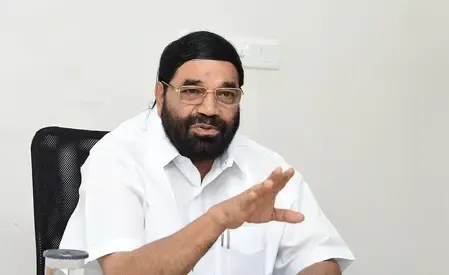
Thiruvananthapuram, Dec 16 (NationPress) The proposed changes by the Union government to the Mahatma Gandhi National Rural Employment Guarantee Scheme (MGNREGS) represent a serious threat to ordinary citizens and could drastically undermine Kerala's financial stability, with an estimated loss of nearly Rs 1,600 crore annually, according to Local Self-Government Minister M.B. Rajesh on Tuesday.
Rajesh highlighted that the employment guarantee scheme was established during the first UPA government under significant pressure from the Left, aiming to be a demand-driven, rights-based initiative.
However, he pointed out that there have been systematic efforts to undermine it beginning in the second UPA period, which intensified once the BJP took power. Over the past decade, there have been delays in wage payments, accumulation of arrears, and reductions in workdays to diminish worker participation. He believes that the current Bill represents the final move to dismantle the scheme entirely.
This new legislation abolishes the concept of a legal right to work, substituting it with employment based on Central targets and labor budgets.
Rajesh accused the Centre of evading its responsibility to ensure work availability.
He remarked that although the Bill mentions increasing workdays to 125, this only applies to areas designated by the Centre, not to all panchayats, rendering the assurance largely ineffective.
A significant concern for Rajesh was the alteration in the funding structure to a 60:40 ratio, shifting 40 percent of the total cost onto the states.
For Kerala, which typically spends about Rs 4,000 crore annually on MGNREGS, this would impose an additional financial burden of around Rs 1,600 crore.
Rajesh stated, “This is being imposed by a Centre already subjecting Kerala to financial constraints.” He added that states would also need to cover the complete expense of unemployment allowances and compensation for delayed wages.
He emphasized Kerala's impressive performance under MGNREGS, noting that in 2024–25, the state generated 9.07 crore person-days, expending over Rs 4,011 crore, and providing 100 days of work to over 5.19 lakh families, achieving second place nationally.
In the current financial year, Kerala has already surpassed the approved labor budget of 5 crore person-days by generating 5.53 crore days.
Rajesh criticized the central law that previously protected states generating work based on demand, arguing that the new Bill penalizes efficiency by obliging states to pay for excess work.
He also raised concerns about persistent reductions in Central allocations, challenges related to Aadhaar-based verification in tribal and remote regions, limitations on work during agricultural seasons, and provisions allowing the Centre to withhold funds based on preliminary complaints.
He condemned the removal of Mahatma Gandhi's name from the program, interpreting it as an effort by the Centre to erase the initiative's original ethos.
Rajesh concluded by stating, “The employment guarantee scheme prevented starvation during the Covid-19 crisis and protected millions of rural families. The Centre must retract this Bill,” warning that its enactment would dismantle one of India's most crucial social security frameworks.
Point of View
It's essential to recognize the profound implications of the proposed changes to MGNREGS. This policy shift could severely impact Kerala's rural economy, which relies heavily on the employment guarantee scheme. The concerns raised by Minister Rajesh reflect a broader issue of financial sustainability for states against a backdrop of shifting responsibilities from the Centre. It's crucial that we monitor how these developments unfold, as they not only affect Kerala but also set a precedent for rural employment policies nationwide.
NationPress
16/12/2025
Frequently Asked Questions
What is the MGNREGS?
The Mahatma Gandhi National Rural Employment Guarantee Scheme (MGNREGS) is a demand-driven, rights-based program aimed at providing at least 100 days of wage employment in a financial year to every rural household.
How will the new law affect Kerala financially?
The new law could lead to an annual financial loss of approximately Rs 1,600 crore for Kerala, as it shifts a significant portion of the funding responsibilities from the Centre to the state.
Why is the removal of Mahatma Gandhi's name significant?
The removal is seen as an attempt to erase the original spirit of the scheme, which was designed to protect vulnerable citizens and promote social security.
What are the potential consequences of the new funding structure?
The revised funding structure could place additional financial burdens on states, impacting their ability to provide essential services and support for rural employment.
How has Kerala performed under the MGNREGS?
Kerala has demonstrated impressive results under the MGNREGS, generating 9.07 crore person-days and providing meaningful employment to its rural population.