Wayanad Housing Controversy: Minister Rajan Stands Firm Against Critics
Synopsis
The debate surrounding the structural integrity of newly built houses in Wayanad, Kerala, has heated up, as Minister K. Rajan defends the government's position amid rising criticism from the opposition and social media. A call for transparency and accountability echoes throughout the community.
Key Takeaways
Cracks and leakages reported in new housing.
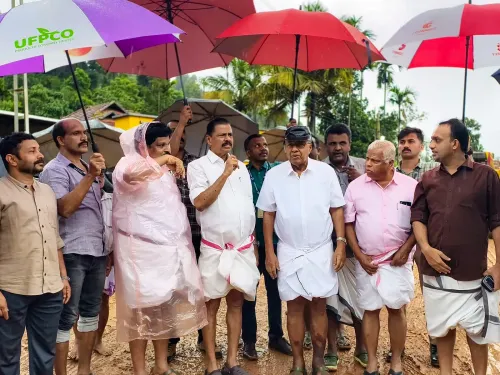
Rajan inspected affected homes.
Government promises residents can move in by early May.
Three-stage inspection process underway.
Calls for restraint against cyber harassment of affected individuals.
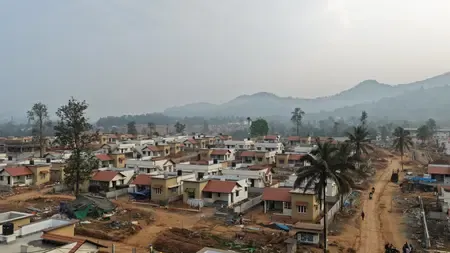
Thiruvananthapuram, April 20 (NationPress) — The uproar regarding the cracks and leakages in the newly constructed homes within a government township project in Kerala’s landslide-affected Wayanad escalated on Monday. Revenue and Housing Minister K. Rajan provided additional clarification as opposition parties and social media critics continued their onslaught.
During a press conference, Rajan confirmed that water seepage had been identified in two homes and that he personally examined them to ensure the impacted areas were accurately marked.
The minister dismissed allegations of trying to hide structural issues, asserting that the markings being erased were mere surface indicators and not actual cracks.
The controversy ignited following reports of cracks and leaks in three homes developed and delivered by the government.
Critics have accused the government of attempting to downplay the defects, with visuals circulating widely, intensifying public anxiety regarding the quality of construction and safety standards.
In the face of backlash, Rajan addressed personal criticisms, expressing pride in being labeled a “daily wage worker,” a comment that garnered both support and ridicule online.
He further condemned the cyber harassment aimed at Noufal, a disaster-affected resident connected to the issue, calling for restraint and sensitivity in public discussions.
Notably, a video of Rajan making personal observations about the cracks has gone viral, transforming into a source of comedy.
To reassure residents, the government announced that the inhabitants of 178 homes in the township would be able to move in by the first week of May.
Officials stated that a three-stage inspection process is underway and expected to conclude by April 30 to guarantee structural safety and livability.
The minister also criticized the opposition Congress for politicizing the matter rather than contributing positively to rehabilitation efforts.
As the controversy remains unresolved, it raises broader concerns regarding quality control in post-disaster housing projects, while the government strives to manage political fallout and restore public trust.
Point of View
The ongoing Wayanad housing issue highlights critical concerns about government accountability and public safety in post-disaster reconstruction. The situation demands transparency and a proactive approach to reassure residents and restore public confidence.
NationPress
16 Sept 2026
Frequently Asked Questions
What triggered the controversy in Wayanad?
The controversy began when cracks and leakages were reported in newly built houses within a government township project in Wayanad, Kerala.
What has Minister K. Rajan said about the allegations?
Minister K. Rajan clarified that the markings being erased were not actual cracks but surface indicators and rejected claims of trying to conceal structural flaws.
When can residents move into the new homes?
The government announced that residents of 178 homes in the township would be able to move in by the first week of May.
What measures are being taken to address safety concerns?
Officials are expediting a three-stage inspection process, which is expected to be completed by April 30 to ensure the safety and habitability of the homes.
How has the public reacted to the situation?
Public reaction has been mixed, with criticism of the government’s handling of the issue alongside support for the minister amid personal attacks.