Wayanad landslide toll hits 7; Kerala HC orders instant relief
Synopsis
Seven dead, one missing — and the Kerala High Court is now directly supervising relief in the Wayanad tunnel landslide. The court's order to treat hospitalisation costs as a charge on the project, before liability is even determined, is a rare judicial move that puts victims first and puts the state on notice.
Key Takeaways
The Wayanad tunnel road landslide death toll rose to seven after one more body was recovered on 10 July ; one person remains missing .
The Kerala High Court directed the state to immediately disburse ex gratia compensation and provide free treatment to all injured, with no payment demanded until discharge.
The Division Bench of Justice A.K.
Jayasankaran Nambiar and Justice A.K.
Preeta ordered bodies to be handed over to families without delay for last rites.
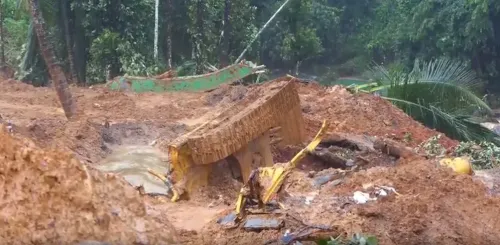
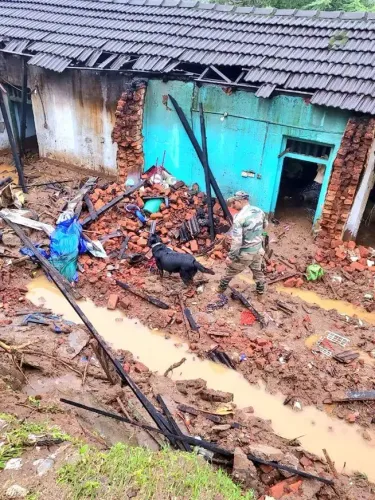
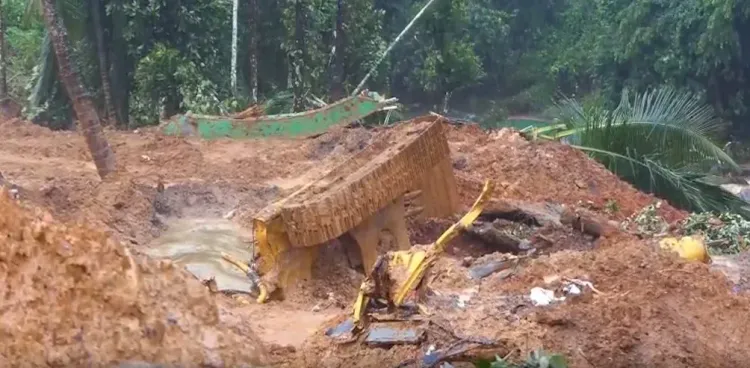
The mudslide struck on 7 July near Meenakshi Bridge, Kalladi , during work on the Anakkompoyil-Meppadi tunnel road project linking Wayanad and Kozhikode .
Construction at the site had been ordered to stop in May ; the court is monitoring the matter weekly under suo motu proceedings.
The state has announced a high-level expert probe into all aspects of the project.
The Kerala High Court on Friday, 10 July directed the state government to immediately disburse ex gratia compensation to families of the seven people killed in the Wayanad tunnel road landslide, provide free hospitalisation to the injured, and hand over the bodies of the deceased to their relatives without delay. The court's intervention came as rescue teams recovered one more body, pushing the confirmed death toll to seven, with one person still missing.
What the Court Directed
A Division Bench comprising Justice A.K. Jayasankaran Nambiar and Justice A.K. Preeta made it unambiguous that relief must take precedence over questions of liability. The Bench orally observed that families should not face unnecessary hardship in performing last rites, noting that bodies were being embalmed post-mortem for transport to the deceased's native places.
The court ordered that all treatment and hospitalisation expenses — including costs incurred by bystanders attending the injured — be borne by the state for the time being. 'Ensure that treatment happens without insisting on any payment till discharge from hospital,' the Bench said, adding that expenditure could initially be treated as a charge on the project, with recovery from those ultimately found responsible to be decided later.
The Disaster: What Happened
The mudslide struck on 7 July near Meenakshi Bridge at Kalladi, where work on the Anakkompoyil-Meppadi tunnel road project — connecting Wayanad and Kozhikode districts — was underway. Rescue teams have been conducting an intensive search at the site, deploying excavators and heavy machinery. According to the Kerala State Disaster Management Authority (KSDMA), unstable terrain and slushy conditions forced extensive manual search operations in the final stages.
Notably, construction activity at the project site had been ordered to stop in May, raising pointed questions about why workers were present when the landslide occurred on 7 July.
Judicial Oversight and Probe
The High Court's directions are part of its continuing suo motu proceedings that were initiated following the devastating 2024 Wayanad landslides. The Bench has now expanded its scrutiny to encompass the latest tunnel project tragedy, signalling close judicial oversight of rescue efforts and the circumstances that led to the disaster.
The court sought a fresh status report from the state by next week and stated it would monitor the matter on a weekly basis, with particular emphasis on prompt compensation payment and rehabilitation. The state government has separately announced a high-level expert probe into all aspects of the project.
Political and Administrative Response
The tragedy has drawn political and administrative scrutiny beyond the courtroom. With the High Court now closely watching every stage of relief, rehabilitation, and investigation, pressure is mounting on the state to demonstrate both accountability and speed of response. The court's framing — treating project expenditure as the initial charge for relief costs — effectively signals that the burden of the disaster will not fall on victims' families, regardless of how liability is eventually apportioned.
Point of View
Not routine oversight. It effectively insulates victims from bureaucratic delay while keeping pressure on the project's stakeholders. The more uncomfortable question is the construction stop ordered in May: if work had halted, why were workers at the site on 7 July? That gap between order and ground reality is where accountability must be sought, and it is precisely what the court's weekly monitoring is designed to force into the open.
NationPress
8 Oct 2026
Frequently Asked Questions
What happened in the Wayanad tunnel road landslide?
A massive mudslide struck on 7 July near Meenakshi Bridge at Kalladi, Wayanad, while work was underway on the Anakkompoyil-Meppadi tunnel road project connecting Wayanad and Kozhikode districts. By 10 July, seven people had been confirmed dead and one person remained missing, with rescue teams still conducting search operations.
What did the Kerala High Court order regarding the Wayanad landslide victims?
The Kerala High Court directed the state government to immediately disburse ex gratia compensation to the families of those killed, provide free hospitalisation and treatment to all injured without demanding payment until discharge, and hand over the bodies of the deceased to their families without delay. The court said treatment costs would initially be treated as a charge on the tunnel project.
Why is the Kerala High Court monitoring the Wayanad tunnel landslide?
The court is hearing the matter as part of suo motu proceedings it initiated following the devastating 2024 Wayanad landslides. The Bench has expanded its scrutiny to include the latest tunnel project tragedy and has stated it will monitor relief, rehabilitation, and the investigation on a weekly basis.
Was construction at the tunnel project site authorised at the time of the landslide?
According to information placed before the court, construction activity at the project site had been ordered to stop in May — weeks before the 7 July mudslide. The circumstances under which work was continuing at the time of the disaster are part of the ongoing investigation and judicial scrutiny.
What is the Anakkompoyil-Meppadi tunnel road project?
The Anakkompoyil-Meppadi tunnel road project is a infrastructure project in Kerala designed to connect Wayanad and Kozhikode districts. The site of the 7 July landslide, near Meenakshi Bridge at Kalladi, falls within this project's construction zone.