WBSEC meets today on Bengal urban civic body polls, EVM shortage looms
Synopsis
The WBSEC wants Bengal's urban civic polls wrapped up by December — but a court-ordered EVM freeze from Assembly election petitions is threatening to derail the timeline. With KMC wards set to jump from 144 to as many as 211 and Howrah's from 50 to 68, these are among the most complex civic elections the state has attempted. The Calcutta High Court's response next week could decide whether the schedule holds.
Key Takeaways
WBSEC convened a preparatory meeting on 2 September with District Magistrates to review readiness for West Bengal urban civic body polls.
The Commission is targeting completion of all urban civic body elections by end of 2025 .
EVM shortage is the primary concern — machines are frozen under Calcutta High Court orders linked to pending West Bengal Assembly election petitions.
KMC wards are set to increase from 144 to 211 ; HMC wards from 50 to 68 under the new delimitation proposals.
WBSEC has sought an urgent hearing before a division bench of Acting Chief Justice Tapabrata Chakraborty and Justice Atarup Banerjee ; matter expected next week.
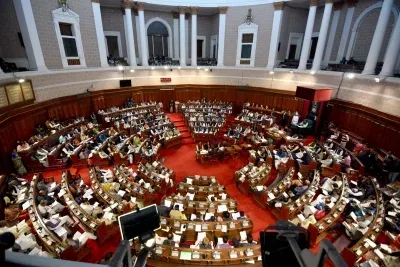
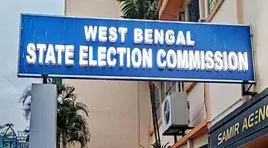
The West Bengal State Election Commission (WBSEC) convened a key preparatory meeting on 2 September to review the state's readiness for urban civic body elections — covering municipal corporations and municipalities — targeted for completion by December 2025. District Magistrates from all poll-bound districts were called in to assess ground-level preparedness, including the availability of Electronic Voting Machines (EVMs).
Key Developments
The meeting's agenda centred on the prevailing situation across urban civic bodies and a critical stocktaking of EVM availability. According to a WBSEC insider, the shortage of EVMs has emerged as the Commission's primary concern — a bottleneck that could delay the formal poll announcement.
The Commission has already approached the Calcutta High Court seeking an urgent hearing on the matter. A division bench comprising Acting Chief Justice Tapabrata Chakraborty and Justice Atarup Banerjee is expected to take up the case next week.
Why EVMs Are in Short Supply
'Several election petition cases related to the recent West Bengal Assembly polls earlier this year are pending in the Calcutta High Court. In all those cases, the court has ordered the Election Commission of India to preserve EVM machines, VVPATs and other materials from various centres. As a result, the announcement of the municipal body elections might be delayed due to the lack of EVMs. In the wake of such development, we have approached the Calcutta High Court for an urgent hearing in the matter,' the WBSEC insider said.
This is a direct consequence of post-election legal proceedings — a scenario that has rarely surfaced in this form before, and one that places the state election body in an unusual bind where judicial orders tied to one set of elections are effectively stalling the next.
KMC and HMC: The High-Stakes Contests
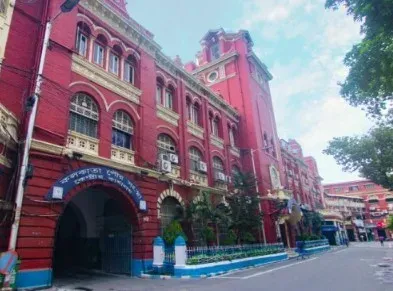
Among all the urban civic bodies due for elections, the most closely watched are the Kolkata Municipal Corporation (KMC) — the oldest municipal corporation in the state — and the Howrah Municipal Corporation (HMC). Both are currently in the delimitation phase.
In KMC, the draft delimitation proposal has suggested increasing the number of wards from 144 to 209, with the final count likely to reach 211. In HMC, the draft envisages raising wards from 50 to 68. The revised ward layouts will govern how voters are distributed, how polling stations are set up, and how administrative resources are allocated — changes that political observers consider pivotal to the electoral map of both cities, particularly Kolkata.
Impact on Electoral Preparations
The increase in ward counts has triggered a cascade of administrative adjustments — voter list revisions, booth rationalisation, and staff deployment planning — all of which are now compounded by the EVM availability question. The delimitation exercise alone makes these among the most logistically complex civic polls the state has held in recent years.
Whether the Calcutta High Court grants early relief on EVM release will likely determine whether the Commission can keep its year-end election schedule on track.
Point of View
Effectively making one court's preservation order another commission's operational crisis. WBSEC's predicament reveals a gap in India's election administration — there is no clear protocol for releasing EVMs when machines are simultaneously needed for fresh polls and held as evidence in pending petitions. The KMC delimitation jump from 144 to 211 wards also deserves scrutiny: a 46% increase in ward count reshapes political power in Kolkata in ways that go well beyond administrative tidiness, and the timing — just before elections — will inevitably draw partisan readings.
NationPress
2 Sept 2026
Frequently Asked Questions
Why has WBSEC called a meeting on 2 September for Bengal civic polls?
The West Bengal State Election Commission convened the meeting to review preparedness for urban civic body elections — including municipal corporations and municipalities — that it aims to complete by December 2025. District Magistrates from all poll-bound districts were asked to attend to assess ground conditions and EVM availability.
What is causing the possible delay in Bengal municipal elections?
A shortage of EVMs is the key risk. The Calcutta High Court has ordered the Election Commission of India to preserve EVMs, VVPATs, and related materials from various centres as evidence in pending election petition cases arising from the recent West Bengal Assembly polls. This freeze limits the machines available for fresh municipal elections.
How many wards will KMC and HMC have after delimitation?
The Kolkata Municipal Corporation is proposed to increase its wards from 144 to approximately 211, up from a draft figure of 209. The Howrah Municipal Corporation is proposed to go from 50 to 68 wards. Both corporations will hold their upcoming elections based on the new ward boundaries.
What has WBSEC done to resolve the EVM shortage?
WBSEC has approached the Calcutta High Court seeking an urgent hearing before a division bench of Acting Chief Justice Tapabrata Chakraborty and Justice Atarup Banerjee. The matter is expected to be heard next week, and the court's decision could determine whether the year-end election schedule remains viable.
Which urban civic bodies are most significant in the upcoming Bengal polls?
The Kolkata Municipal Corporation and the Howrah Municipal Corporation are considered the most significant, given their size, political weight, and the scale of the ongoing delimitation exercise. KMC is also the oldest municipal corporation in West Bengal.