Kerala IAS officer Prasanth's 'whitewashed tombs' post targets outgoing Chief Secretary Jayathilak

Synopsis
On the very day Kerala Chief Secretary A. Jayathilak retired after three decades in service, IAS officer N. Prasanth — recently reinstated after a suspension — published a 'whitewashed tombs' essay alongside Jayathilak's photograph, turning a routine farewell ceremony into the most-talked-about bureaucratic moment in the state's recent memory.
Key Takeaways
Prasanth posted a sharp essay titled 'Dharmo Rakshati Rakshitah' on 30 June , hours before Chief Secretary A.
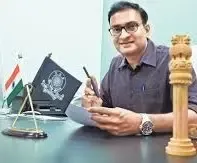
The post included a photograph of Jayathilak but did not name him, yet officials widely interpreted it as directed at the outgoing bureaucrat.
The essay quotes Matthew 23:27 — comparing hypocrites to 'whitewashed tombs' — and criticises sycophancy around powerful officials.
Prasanth had been suspended under the previous Pinarayi Vijayan government and was reinstated earlier in June 2025 by the new administration.
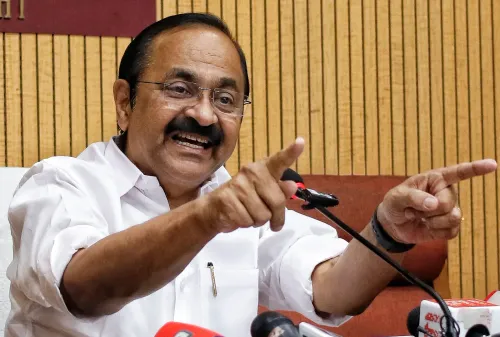
The farewell ceremony at Durbar Hall was attended by Chief Minister V.D.
Satheesan ; Prasanth's post dominated bureaucratic and political discourse on the day.
Senior Kerala IAS officer N. Prasanth on 30 June published a pointed social media essay hours before outgoing Chief Secretary A. Jayathilak formally retired after more than three decades in the civil service — a post that officials across bureaucratic and political circles widely read as a veiled but unmistakable indictment of the departing top bureaucrat.
The Post and Its Timing
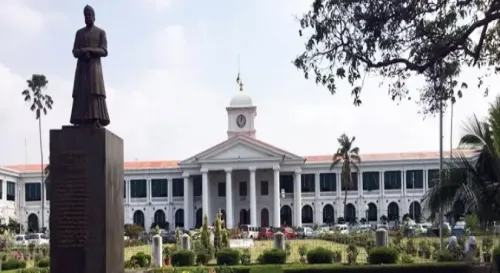
Prasanth shared a photograph of Jayathilak alongside a lengthy essay titled 'Dharmo Rakshati Rakshitah', touching on power, public office, and accountability. He did not name Jayathilak anywhere in the text, yet the accompanying image and the timing — on the very day the government was preparing a ceremonial farewell for Jayathilak at Durbar Hall in the Secretariat, attended by Chief Minister V.D. Satheesan — left little ambiguity among those who read it.
The essay draws from Poonthanam's 'Jnanappana', the 'Bhagavad Gita', and 'The Gospel of Matthew' to argue that authority is temporary and that officials who spend decades in the corridors of power can grow convinced their influence is permanent — until time erodes it.
The 'Whitewashed Tombs' Passage
Among the essay's most striking sections is a reference to Matthew 23:27, which compares hypocrites to 'whitewashed tombs' — outwardly presentable but concealing decay within. Prasanth used the passage to criticise what he described as a culture of sycophancy around powerful officials, alleging that farewell ceremonies routinely sanitise an officer's record, recasting arrogance as administrative firmness and wrongdoing as efficiency.
The essay further contends that future generations must not mistake fear for respect, silence for consent, or the absence of punishment for innocence. It adds that personal forgiveness should never preclude legal accountability wherever laws have been violated.
A Long-Running Bureaucratic Feud
The post is the latest episode in a prolonged and acrimonious rivalry between the two IAS officers. Their differences had repeatedly entered the public domain during the previous administration led by Pinarayi Vijayan, when Prasanth levelled a series of allegations against sections of the bureaucracy through social media. Those developments triggered disciplinary proceedings and a prolonged suspension under the Vijayan government.
Prasanth was reinstated into service earlier in June 2025 after the new government assumed office — making his return to public commentary, and this particular post, all the more conspicuous.
The Farewell That Was Overshadowed
As Jayathilak laid down office on Tuesday evening, the formal ceremony at Durbar Hall proceeded with customary tributes. But Prasanth's essay ensured that the outgoing Chief Secretary's final day in service was accompanied not only by institutional ceremony but also by a renewed and very public reminder of one of Kerala's most contentious internal bureaucratic battles. Whether the post carries further consequences — legal, administrative, or political — remains to be seen as the new government settles in.
Point of View
With his photograph attached, achieves maximum impact while maintaining plausible deniability through the absence of a name. What mainstream coverage risks underselling is the structural significance: a just-reinstated officer publicly challenging the legacy of the bureaucrat who presided over his suspension signals that the new government's arrival has sharply altered the internal power balance. The deeper question is whether this remains a personal feud or becomes a precedent — that social media is now an accepted arena for settling Kerala's bureaucratic scores, with or without institutional consequences.
NationPress
30 Jun 2026
Frequently Asked Questions
What did IAS officer N. Prasanth post on 30 June 2025?
Prasanth published a lengthy social media essay titled 'Dharmo Rakshati Rakshitah' alongside a photograph of outgoing Kerala Chief Secretary A. Jayathilak, on the day of Jayathilak's retirement. The essay, drawing from the Bhagavad Gita, Poonthanam's Jnanappana, and the Gospel of Matthew, criticised sycophancy around powerful officials and argued that farewell ceremonies often whitewash an officer's record.
Who is N. Prasanth and why was he suspended?
N. Prasanth is a senior Kerala IAS officer who levelled a series of public allegations against sections of the state bureaucracy through social media during the previous Pinarayi Vijayan government. Those actions led to disciplinary proceedings and a prolonged suspension; he was reinstated into service in June 2025 after the new government took office.
Did Prasanth directly name Chief Secretary Jayathilak in his post?
No. Prasanth did not name Jayathilak anywhere in the essay's text. However, the post included a photograph of the retiring Chief Secretary, and its timing on Jayathilak's final day in office led officials to widely interpret it as directed at him.
What is the significance of the 'whitewashed tombs' reference?
The phrase comes from Matthew 23:27 in the Gospel of Matthew, which compares hypocrites to tombs that appear beautiful on the outside but conceal decay within. Prasanth used it to argue that farewell ceremonies for powerful officials often present a sanitised version of their record, masking arrogance and wrongdoing.
What happens next after this public confrontation?
It is not yet clear whether Prasanth's post will attract administrative or legal scrutiny under the new government. Jayathilak has retired, and Chief Minister V.D. Satheesan presided over the farewell ceremony at Durbar Hall. The episode is expected to intensify scrutiny of internal Kerala bureaucracy dynamics as the new administration consolidates its position.