WTO must evolve as 'precautionism' replaces protectionism: Pascal Lamy
Synopsis
Former WTO chief Pascal Lamy says the world has moved from protectionism to 'precautionism' — a regime of regulatory standards and risk management that the WTO's existing rulebook was never designed to handle. At a New Delhi dialogue, experts warned that without reform, global trade will be shaped by power, not rules.
Key Takeaways
Pascal Lamy warned that 'precautionism' — driven by regulatory standards and risk management — is replacing traditional protectionism in global trade.
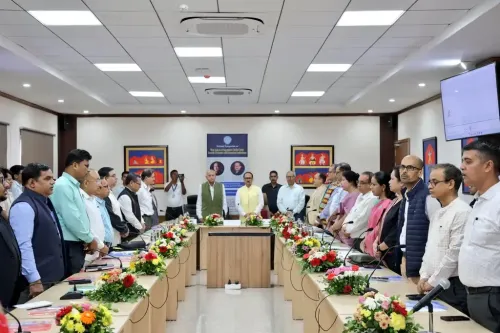
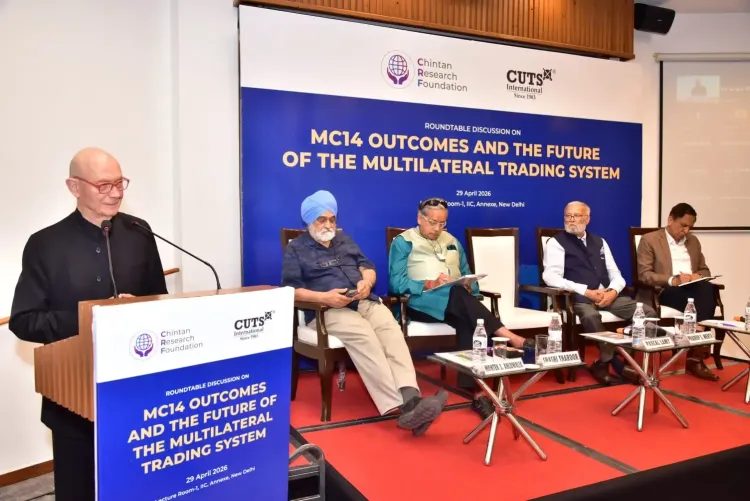
The roundtable, titled 'MC14 Outcomes and the Future of the Multilateral Trading System' , was jointly organised by CRF and CUTS International at the India International Centre , New Delhi.
Mehta of CUTS International described MC14 as a moment of 'disappointment without disruption' , flagging the absence of clear outcomes.
Congress MP Dr Shashi Tharoor characterised the current phase as 'quiet but consequential churn' , highlighting declining trust and geopolitical fragmentation.
Economist Montek Singh Ahluwalia stressed that the WTO cannot be expected to resolve macroeconomic imbalances and called for pragmatic trade policy guardrails.
Shishir Priyadarshi of CRF warned that paralysis of the WTO's dispute settlement mechanism risks allowing power, not rules, to govern global trade.
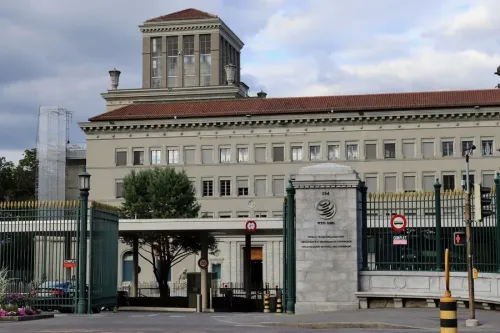
Former World Trade Organisation (WTO) Director-General Pascal Lamy on 30 April called for sweeping reform of the WTO's rulebook and governance structures, warning that many of today's trade disputes have outgrown the organisation's traditional mandate. Delivering the keynote at a high-level dialogue in New Delhi, Lamy argued that classical protectionism is being supplanted by what he termed
Point of View
Yet the WTO's dispute settlement machinery is paralysed and its negotiating rounds have stalled. The MC14 outcome, described here as 'disappointment without disruption', is arguably the more dangerous scenario: a slow erosion of relevance rather than a clean crisis that forces reform. For India, which has historically used the WTO as a counterweight to unilateral pressure from larger economies, a rules-light trading system is a strategic liability, not just an institutional inconvenience.
NationPress
19 Sept 2026
Frequently Asked Questions
What did Pascal Lamy say about the WTO at the New Delhi dialogue?
Pascal Lamy said the WTO must reform both its rulebook and governance structures, as today's trade issues extend beyond its traditional mandate. He specifically argued that classical protectionism is being replaced by 'precautionism' — a regime driven by rising regulatory standards and risk management concerns across countries.
What is 'precautionism' in the context of global trade?
'Precautionism' refers to trade barriers that arise not from deliberate protectionist policy but from divergent regulatory standards and risk management frameworks across countries. Lamy used the term to describe a structural shift in how trade is restricted in the modern global economy.
What happened at MC14 and why does it matter?
MC14 was the 14th Ministerial Conference of the WTO, which produced no major breakdown but also no clear outcomes. CUTS International's Pradeep S. Mehta described it as 'disappointment without disruption', warning that the absence of results has deepened questions about the WTO's relevance to the multilateral trading system.
Why is the WTO's dispute settlement mechanism a concern?
The WTO's dispute settlement mechanism has been effectively paralysed, largely due to the blocking of appointments to the Appellate Body. Experts at the New Delhi dialogue warned that without a functioning enforcement mechanism, global trade risks being governed by economic and political power rather than agreed rules.
Who participated in the New Delhi WTO dialogue on 30 April?
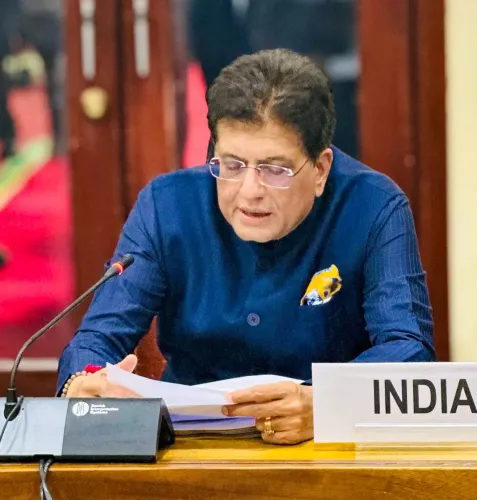
The dialogue was jointly organised by the Chintan Research Foundation (CRF) and CUTS International at the India International Centre. Key participants included former WTO Director-General Pascal Lamy, Congress MP Dr Shashi Tharoor, economist Montek Singh Ahluwalia, CUTS International's Pradeep S. Mehta, and CRF President Shishir Priyadarshi.