Bhupender Yadav Hails Women and Local Knowledge in Mann Ki Baat

Synopsis
Union Environment Minister Bhupender Yadav shared a Hindi message on X on 26 July 2026, stating that when local knowledge, nature, and women's confidence converge, even small efforts spark large change — linking the thought to Prime Minister Modi's Mann Ki Baat programme.
Key Takeaways
Union Environment Minister Bhupender Yadav posted on X on 26 July 2026 in the context of Mann Ki Baat .
His message stated that combining local traditional knowledge , nature, and women's confidence can turn small efforts into big change.
The post was tagged #MannKiBaat and included a video, amplifying PM Modi's monthly citizen outreach programme.
India's environment policy has increasingly centred rural women and community knowledge in conservation and biodiversity management.
Mann Ki Baat was launched in 2014 and has repeatedly featured grassroots environmental stories as national models.
Future Environment Ministry announcements may build on this messaging with scheme expansions targeting women-led conservation projects.
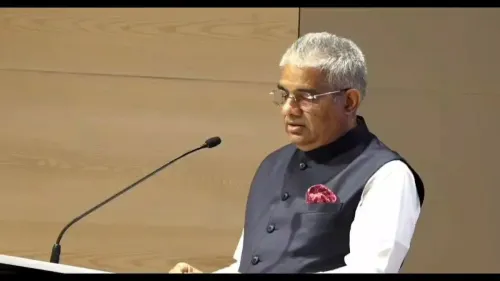
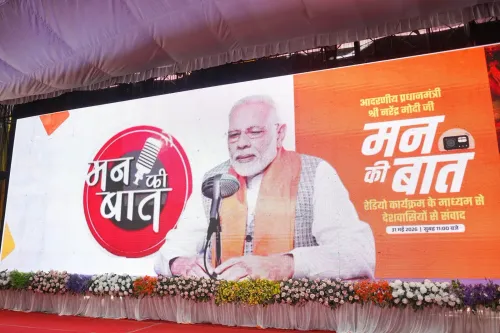
Union Environment Minister Bhupender Yadav on Sunday, 26 July 2026, shared a message on X highlighting the transformative power of combining local traditional knowledge, nature, and women's confidence — tying his remarks to Prime Minister Narendra Modi's monthly radio address, Mann Ki Baat.
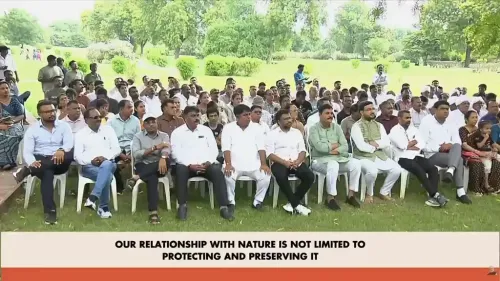
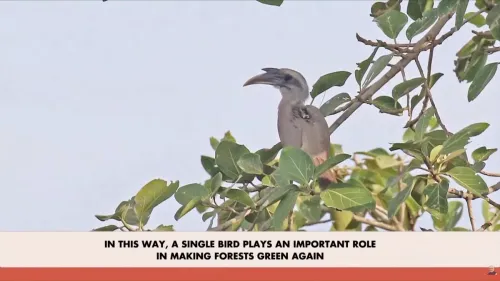
Posting in Hindi, the minister wrote: 'जब स्थानीय ज्ञान, प्रकृति और महिलाओं का आत्मविश्वास साथ आते हैं, तो एक छोटा सा प्रयास भी बड़े बदलाव की शुरुआत बन जाता है' — translated: 'When local knowledge, nature, and the confidence of women come together, even a small effort becomes the beginning of a big change.' The post was accompanied by a video and tagged with #MannKiBaat, signalling its connection to the Prime Minister's citizen outreach programme.
Context
Mann Ki Baat, launched in 2014, is Prime Minister Modi's monthly radio address that spotlights citizen-led initiatives across themes ranging from sanitation to conservation. Environment and climate action have featured repeatedly in the programme, with grassroots stories of community stewardship often highlighted as models for national replication. Minister Yadav's post appears to echo or amplify a theme from the programme, underscoring the ministry's alignment with the Prime Minister's messaging.
Policy Backdrop
India's environment policy has increasingly emphasised community-based conservation, with rural women identified as central actors in forest protection, water conservation, and biodiversity management. The Ministry of Environment, Forest and Climate Change has framed women's participation not merely as a social goal but as an ecological imperative, arguing that communities with deep traditional knowledge are often the most effective stewards of local ecosystems. This approach dovetails with India's commitments under international biodiversity and climate frameworks, which recognise indigenous and local knowledge as essential to sustainable resource management.
The broader policy pattern reflects a deliberate effort to bridge formal environmental governance with grassroots action — positioning schemes and programmes as enablers of community-driven change rather than top-down mandates.
Stakeholders and Impact
Rural women's collectives and local communities stand at the centre of the message Yadav amplified. By invoking the convergence of traditional ecological knowledge, nature, and women's agency, the minister signalled continued ministerial support for programmes that channel these strengths into conservation outcomes. Such messaging carries weight for communities engaged in joint forest management, self-help groups involved in afforestation, and women-led watershed initiatives across India's biodiversity-rich regions. It also reinforces the political salience of women's environmental leadership as a narrative the ruling dispensation has consistently promoted.
What's Next
Observers and policy watchers will look to upcoming Mann Ki Baat episodes and Environment Ministry announcements for concrete programme expansions or scheme launches linked to women-led conservation. If the video shared in Yadav's post profiles a specific local initiative, it could serve as a template for wider replication under existing ministry frameworks. The post adds to a pattern of ministerial social-media engagement designed to build public momentum around grassroots environmental action ahead of key domestic and international climate milestones.
Point of View
Not just rhetorical flourishes. By tying this message to the Prime Minister's radio address, the BJP reinforces a governance narrative that positions grassroots, women-led conservation as central to India's environmental credibility at home and abroad. This pattern of social-media reinforcement ahead of climate milestones suggests the ministry is building a public mandate for community-based approaches as a complement to formal regulatory action. Analysts will watch whether the accompanying video surfaces a specific scheme or initiative that receives follow-through funding or policy backing.
NationPress
24 Oct 2026
Frequently Asked Questions
What did Bhupender Yadav say about women and environment in his Mann Ki Baat post?
Bhupender Yadav posted on 26 July 2026 that when local knowledge, nature, and women's confidence come together, even a small effort can become the beginning of a big change, linking the message to PM Modi's Mann Ki Baat programme.
What is Mann Ki Baat and why is it relevant to environment policy?
Mann Ki Baat is Prime Minister Narendra Modi's monthly radio address, launched in 2014, which regularly features citizen-led stories on topics including conservation, making it a key platform for highlighting grassroots environmental action.
What is Bhupender Yadav's role in the Indian government?
Bhupender Yadav is the Union Minister of Environment, Forest and Climate Change and a senior leader of the Bharatiya Janata Party (BJP).
How does India's environment policy involve women and local communities?
India's environment policy increasingly recognises rural women and communities with traditional ecological knowledge as central actors in forest protection, water conservation, and biodiversity management, treating their participation as an ecological necessity.
What should we watch for after Yadav's Mann Ki Baat environment post?
Observers should monitor upcoming Mann Ki Baat episodes and Environment Ministry announcements for new scheme launches or expansions targeting women-led conservation initiatives, which the post may be foreshadowing.