Bhupender Yadav echoes Mann Ki Baat's green vision

Synopsis
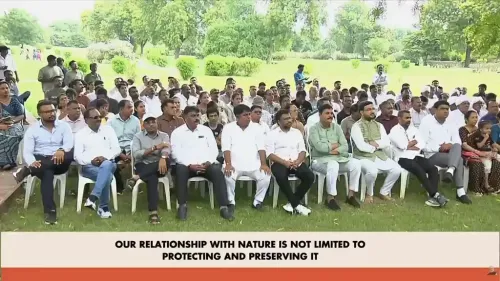
Union Environment Minister Bhupender Yadav amplified a Mann Ki Baat message on 27 September 2026, arguing that protecting the environment means strengthening the entire life-system — not merely saving individual species or trees.
Key Takeaways
Bhupender Yadav , Union Minister of Environment, Forest and Climate Change, shared the post on 27 September 2026 tagging #MannKiBaat .
The Hindi quote frames environmental protection as safeguarding the 'entire life-system', going beyond trees, plants, and animals.
Mann Ki Baat has addressed environmental themes periodically since its launch in 2014 .
Ministers routinely amplify Mann Ki Baat content on social media to extend the programme's reach beyond its radio audience.
The messaging signals a shift from species-centric conservation language to an integrated ecosystem-and-human-welfare framing.
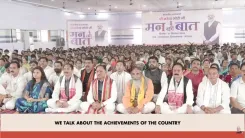
When Union Environment Minister Bhupender Yadav quoted Sunday's edition of Mann Ki Baat on 27 September 2026, he did more than amplify a radio address — he crystallised a philosophy that frames conservation not as a niche cause but as the scaffolding of all life.
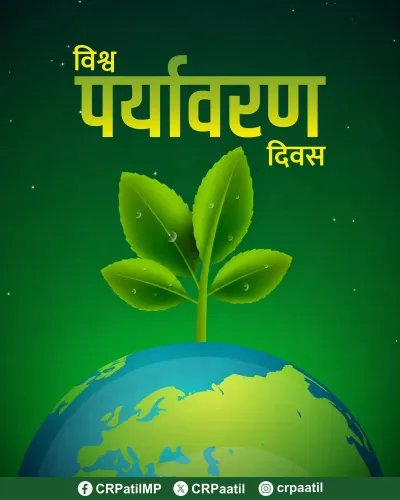
Sharing the thought in Hindi, the Minister wrote: 'हम पर्यावरण की रक्षा करते हैं, तो हम केवल पेड़-पौधों या जीव-जंतुओं को ही नहीं बचाते, हम उस पूरी जीवन-व्यवस्था को मजबूत करते हैं' — 'When we protect the environment, we do not merely save trees, plants, or animals; we strengthen the entire life-system itself.'
What Mann Ki Baat means for environmental messaging
Mann Ki Baat, Prime Minister Narendra Modi's monthly radio programme running since 2014, has repeatedly turned its attention to environmental themes — from river conservation to single-use plastics to wildlife protection. Ministers routinely extend the reach of each episode by sharing key lines across social media, converting a broadcast moment into a days-long public conversation.
Yadav's post follows that pattern precisely. But the framing is notable: rather than listing government schemes or citing hectares of forest cover, it makes a philosophical argument — that the environment is not a category of policy but the condition under which all other policy becomes possible. No clean air, no clean water, no agriculture, no public health. The logic is cascading and intentional.
From isolated conservation to integrated thinking
The shift from 'save a tiger' messaging to 'strengthen the life-system' language reflects a broader evolution in how India's environmental establishment communicates. Conservation, for decades, was sold to the public as protecting the exotic and the rare. The newer framing — visible in international climate negotiations as well as in domestic communications — insists that ecosystem health is inseparable from human welfare, food security, and economic stability.
For Yadav, who represents India at multilateral forums including the Conference of the Parties process, this kind of integrated language matters both at home and abroad. A public that understands why forests keep rivers alive, or why wetlands buffer against floods, is a public more likely to support the harder trade-offs that environmental governance demands.
Words from a Sunday radio programme, a minister's repost — and the quiet insistence that protecting the planet is not charity, but self-preservation. That idea, if it lands, changes everything.
Point of View
Making the argument politically stickier with a broader electorate. It also aligns India's domestic messaging with the systemic, nature-positive language increasingly dominant in multilateral climate and biodiversity negotiations. For the BJP, green credentials communicated through a trusted radio institution carry more organic weight than a press release from a ministry.
NationPress
27 Sept 2026
Frequently Asked Questions
What did Bhupender Yadav say about the environment on 27 September 2026?
He shared a Hindi quote from Mann Ki Baat stating that protecting the environment means strengthening the entire life-system, not merely saving trees, plants, or animals.
What is Mann Ki Baat and why do ministers post about it?
Mann Ki Baat is Prime Minister Narendra Modi's monthly radio programme, running since 2014, in which he shares thoughts with citizens. Ministers amplify its key messages on social media to broaden the programme's reach.
What does 'life-system' mean in Yadav's environment statement?
The term refers to the interconnected web of ecosystems — forests, rivers, wetlands, soil, air — that sustains agriculture, public health, water supply, and human livelihoods, beyond just wildlife or plant species.
Has Mann Ki Baat discussed the environment before?
Yes. Since 2014, Mann Ki Baat episodes have periodically addressed environmental awareness themes including river conservation, plastic pollution, and wildlife protection.
What is Bhupender Yadav's role in India's environment policy?
Bhupender Yadav is India's Union Minister of Environment, Forest and Climate Change and a senior BJP leader. He represents India at international climate and biodiversity forums.