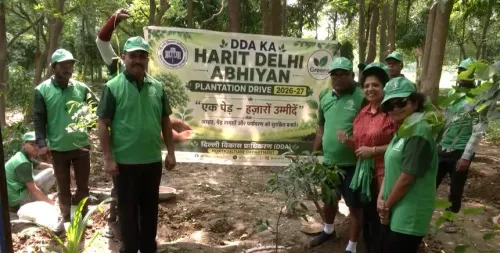
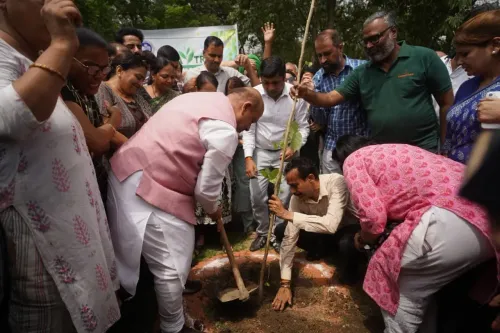
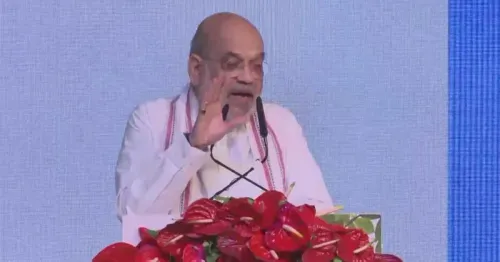
Bhupender Yadav Launches Mission 70 Lakh Plantation Drive in Delhi
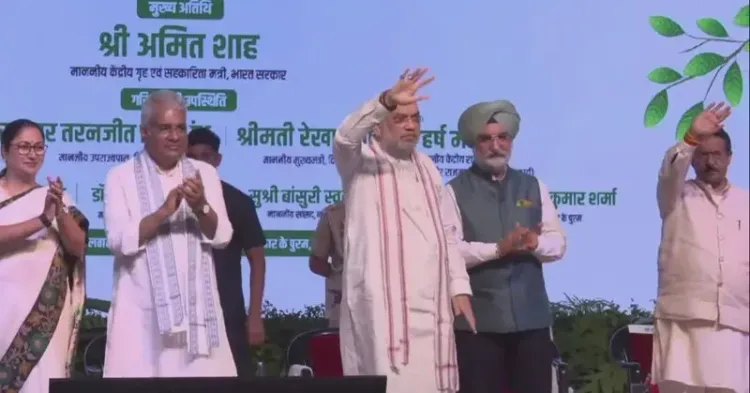
Synopsis
Union Environment Minister Bhupender Yadav launched the Mission 70 Lakh sapling plantation drive in Delhi on 7 July 2026 under the Ek Ped Maa Ka Naam campaign. The initiative targets 7 million saplings in the capital during the monsoon season, advancing India's Paris Agreement commitments and the Panchamrit climate goals set at COP26.
Key Takeaways
Mission 70 Lakh targets planting 70 lakh (7 million) saplings across Delhi under the Ek Ped Maa Ka Naam campaign.
The drive was launched by Union Environment Minister Bhupender Yadav on 7 July 2026 , timed to coincide with the monsoon season for higher sapling survival rates.
Ek Ped Maa Ka Naam was originally launched on World Environment Day 2024 as a national public-participation greening initiative.
The plantation targets contribute to India's commitment to create an additional carbon sink of 2.5 to 3 billion tonnes of CO2 equivalent by 2030 under the Panchamrit climate goals.
India's National Forest Policy 1988 set a 33 per cent forest and tree cover target — urban drives like this directly support that long-standing goal.
Survival-rate audits and monsoon-season progress reports will be key to assessing whether the 70 lakh target is genuinely achieved.
Union Environment Minister Bhupender Yadav on Tuesday, 7 July 2026, launched the Mission 70 Lakh sapling plantation drive in Delhi under the national Ek Ped Maa Ka Naam campaign, marking a significant push to expand the capital's urban green cover ahead of the monsoon season.
Announcing the initiative on X, the minister wrote: 'दिल्ली में #EkPedMaaKaNaam अभियान के अंतर्गत मिशन 70 लाख पौधारोपण अभियान का शुभारंभ' — ('Launch of Mission 70 Lakh sapling plantation drive in Delhi under the Ek Ped Maa Ka Naam campaign'). The post was accompanied by a broadcast link, signalling a live public event.
Context
The Ek Ped Maa Ka Naam ('A Tree in Mother's Name') campaign was originally launched on World Environment Day 2024 by the Central government as a mass public-participation greening initiative. Citizens are encouraged to plant a sapling and dedicate it to their mother, combining emotional appeal with environmental action. Delhi, as the National Capital Territory, has been a priority geography for the campaign given its chronic air quality challenges.
Mission 70 Lakh is the Delhi-specific target set under this broader umbrella — aiming for 70 lakh (7 million) saplings planted across the city. The July timing is deliberate, coinciding with the onset of the monsoon season when survival rates for newly planted saplings are significantly higher.
Policy Backdrop
India's National Forest Policy of 1988 set a long-term goal of bringing 33 per cent of the country's land area under forest and tree cover. Decades later, urban centres like Delhi remain well short of that benchmark, making targeted city-level drives a recurring policy tool. The Central government has scaled up public-participation plantation programmes since 2024, embedding them within India's updated Nationally Determined Contributions (NDCs) submitted under the Paris Agreement.
These plantation targets also feed into the Panchamrit climate commitments announced at COP26, which include creating an additional carbon sink of 2.5 to 3 billion tonnes of CO2 equivalent through additional forest and tree cover by 2030. Large-scale urban drives in metros contribute directly to this national accounting.
Stakeholders and Impact
Delhi residents stand to be the most immediate beneficiaries, with increased tree cover expected to moderate urban heat, improve air quality, and enhance biodiversity corridors across the city. State forest department officials and local civic bodies will bear responsibility for coordinating sapling distribution, plantation sites, and post-plantation maintenance. Community volunteers and resident welfare associations are integral to the campaign's last-mile outreach model.
Environmental advocates have consistently flagged that India's plantation drives must be accompanied by rigorous survival-rate audits — tracking how many of the planted saplings actually survive beyond the first year — to ensure headline numbers translate into genuine ecological gain.
What's Next
The monsoon window through September 2026 will be the critical implementation period for the 70 lakh target. Progress reports from Delhi's forest department and any independent survival-rate audits will determine whether the drive meets its stated goal. Minister Yadav is expected to use the campaign's momentum to push similar Mission targets in other major cities, extending the Ek Ped Maa Ka Naam framework into a sustained, multi-city urban greening programme ahead of India's next NDC review cycle.
Point of View
Citizen-facing programme rather than a bureaucratic exercise. By anchoring it under the emotionally resonant Ek Ped Maa Ka Naam brand, the BJP links environmental action to cultural sentiment — a political framing that also serves the party's outreach in urban constituencies ahead of future electoral cycles. The Delhi focus is pointed: the capital's air quality crisis gives the campaign immediate policy credibility and media salience. The real test, however, will be independent survival-rate data — without which headline sapling numbers risk becoming a recurring accountability gap in India's urban greening record.
NationPress
6 Oct 2026
Frequently Asked Questions
What is Mission 70 Lakh in Delhi?
Mission 70 Lakh is a targeted plantation drive aiming to plant 70 lakh (7 million) saplings across Delhi under the national Ek Ped Maa Ka Naam campaign, launched on 7 July 2026 by Union Environment Minister Bhupender Yadav.
What is the Ek Ped Maa Ka Naam campaign?
Ek Ped Maa Ka Naam ('A Tree in Mother's Name') is a national tree plantation campaign launched by the Central government on World Environment Day 2024, encouraging citizens to plant a sapling and dedicate it to their mother to boost public participation in greening India.
Why was the Delhi plantation drive launched in July?
The drive was timed to coincide with the monsoon season, when rainfall significantly increases the survival rate of newly planted saplings, making it the most effective window for large-scale plantation efforts.
How does this plantation drive relate to India's climate commitments?
The drive contributes to India's Panchamrit climate goals announced at COP26, which include creating an additional carbon sink of 2.5 to 3 billion tonnes of CO2 equivalent through forest and tree cover by 2030, as part of India's updated Nationally Determined Contributions under the Paris Agreement.
Who is responsible for implementing the 70 lakh sapling target in Delhi?
Delhi's state forest department and local civic bodies are responsible for coordinating sapling distribution and plantation sites, with community volunteers and resident welfare associations supporting last-mile outreach.