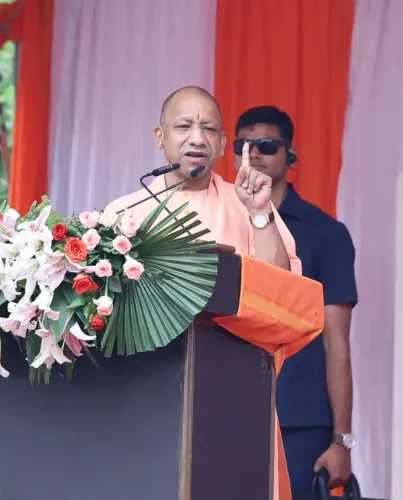
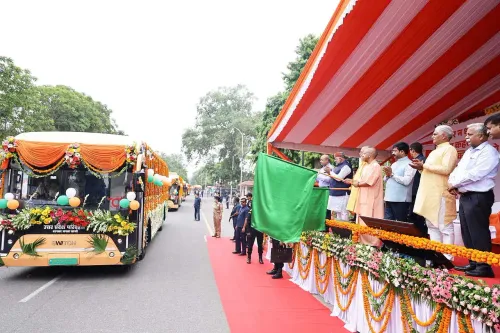
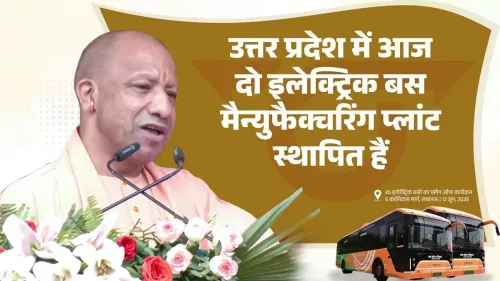
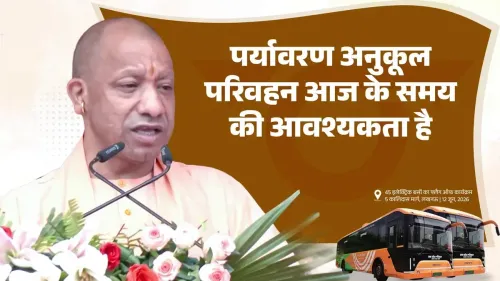
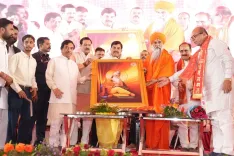
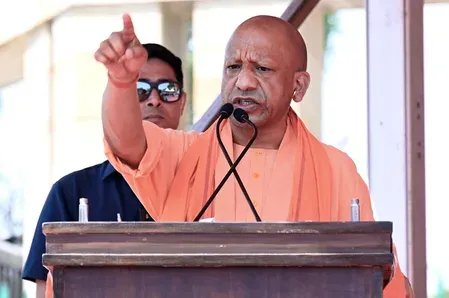
Yogi Adityanath flags off E-Bus service in Noida, Greater Noida on June 12
Synopsis
UP CM Yogi Adityanath flagged off Noida's first e-bus service on 12 June, launching a fleet that will eventually grow to 200 electric buses by year-end. With fares capped at ₹50 and routes designed to feed the upcoming Jewar airport, this is the most consequential public transport expansion in the NCR's Noida corridor in years.
Key Takeaways
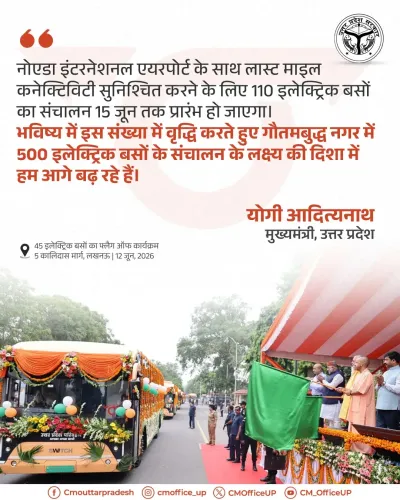
UP CM Yogi Adityanath launched the e-bus service on 12 June 2025 from Shilp Haat, Sector-33A, Noida .
10 electric buses flagged off at the ceremony; remaining fleet to operate from the Sector-90 depot.
Fares set between ₹20 (minimum) and ₹50 (maximum) across all routes.
First phase: 10 buses each for Noida, Greater Noida, and Yamuna Authority; total planned fleet of 100 buses , with 100 more approved by the UP Cabinet.
Approximately 200 electric buses expected to be operational by year-end.
Key objective: feeder connectivity to the upcoming Noida International Airport at Jewar .
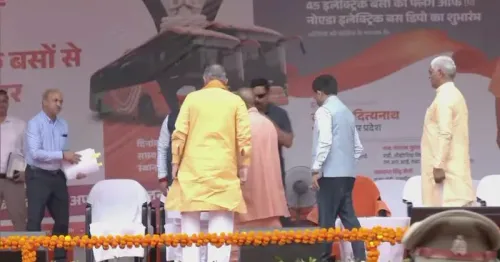
Uttar Pradesh Chief Minister Yogi Adityanath on Friday, 12 June launched the long-awaited electric bus service connecting Noida, Greater Noida, and the Yamuna Authority areas, marking a significant step toward eco-friendly public transport in the National Capital Region (NCR). The flagging-off ceremony was held at Shilp Haat in Sector-33A, with around 300 attendees present.
Launch Details and Scale
A total of 10 electric buses were flagged off at the Shilp Haat complex, while the remaining fleet is set to begin operations on designated routes from the bus depot in Sector-90. In the first phase, Noida, Greater Noida, and Yamuna Authority will each operate 10 buses within their respective jurisdictions.
The current operational plan covers 100 e-buses in total — 50 allocated to Noida and 25 each to Greater Noida and the Yamuna Authority areas. The Uttar Pradesh Cabinet has separately approved an additional 100 e-buses, bringing the expected fleet to approximately 200 electric buses by year-end.
Fares and Route Network
According to Noida Authority ACEC Vandana Tripathi, all three authorities have prepared detailed route plans. Fares have been set at a minimum of ₹20 and a maximum of ₹50, positioning the service as an affordable commuting option for NCR residents.
Key routes will connect Botanical Garden, Sector-62, Greater Noida West, Surajpur, and Pari Chowk. Inter-city connectivity will extend to Sarai Kale Khan, Anand Vihar, Ghaziabad, and ISBT. Several long-distance routes have also been designated to bridge rural and urban pockets within the Yamuna Authority region.
Airport Connectivity at the Core
A primary objective of the e-bus service is to strengthen last-mile and feeder connectivity to the upcoming Noida International Airport at Jewar. Multiple routes will link the airport zone with Noida, Greater Noida, and surrounding localities — a move that anticipates the surge in commuter demand as the airport nears operationalisation.
This comes amid broader efforts by the Uttar Pradesh government to modernise public transit in the NCR corridor, which has historically been underserved by state-run bus networks despite rapid urbanisation.
What This Means for Commuters
The shift to electric buses addresses two longstanding pain points in the region: poor inter-city connectivity and rising vehicular pollution. The NCR is among India's most polluted urban zones, and expanding the electric fleet is expected to contribute to emission reduction targets.
With 200 e-buses projected on roads by the end of 2025, the service represents the most significant expansion of public transport infrastructure in the Noida-Greater Noida corridor in recent years. How quickly the remaining fleet is deployed — and whether the airport-linked routes are operational before Jewar's commercial launch — will determine the service's real-world impact.
Point of View
A modest start for a region of millions. The UP Cabinet's approval of an additional 100 buses signals intent, yet inter-authority coordination on routes and ticketing integration remains untested at scale. If the airport connectivity promise is to hold, the fleet expansion timeline must move faster than state transport projects typically do.
NationPress
26 Oct 2026
Frequently Asked Questions
What is the new e-bus service launched in Noida on 12 June?
It is an electric bus service inaugurated by UP Chief Minister Yogi Adityanath on 12 June, covering Noida, Greater Noida, and Yamuna Authority areas. The service aims to provide eco-friendly, affordable public transport with fares between ₹20 and ₹50.
How many electric buses will operate in Noida and Greater Noida?
In the first phase, 10 buses each will operate under Noida, Greater Noida, and Yamuna Authority. The total current plan covers 100 e-buses, with the UP Cabinet having approved 100 more, bringing the expected year-end fleet to around 200 buses.
Which routes will the new e-buses cover?
Routes include key NCR locations such as Botanical Garden, Sector-62, Greater Noida West, Surajpur, Pari Chowk, Sarai Kale Khan, Anand Vihar, Ghaziabad, and ISBT. Several routes are also designed to connect with the upcoming Noida International Airport at Jewar.
What are the fares for the new e-bus service?
Fares range from a minimum of ₹20 to a maximum of ₹50, making it one of the more affordable public transport options in the NCR corridor.
How does this e-bus service connect to the Jewar airport?
A primary goal of the service is to provide feeder and direct connectivity to the upcoming Noida International Airport at Jewar. Multiple designated routes will link the airport zone with Noida, Greater Noida, and surrounding areas ahead of the airport's commercial launch.