CM Yogi: Electric Buses a Milestone for Last-Mile Connectivity in UP
Synopsis
Chief Minister Yogi Adityanath has called the launch of electric bus operations a milestone for last-mile connectivity in Uttar Pradesh, reinforcing the state's push to modernise public transport under its 2019 EV policy and central FAME-II support.
Key Takeaways
CM Yogi Adityanath declared electric bus operations a 'milestone' for last-mile connectivity in Uttar Pradesh on 12 June 2026 .
The initiative is backed by the Uttar Pradesh Electric Vehicle Manufacturing and Mobility Policy, 2019 , which incentivises EV fleet deployment and charging infrastructure.
Central funding under the FAME-II scheme (2019 onward) has supported state-level electric bus procurement across India, including in UP .
Key cities targeted for electric bus expansion include Lucknow , Kanpur , and Varanasi .
Urban commuters and state transport corporations are the primary beneficiaries, with expected gains in air quality and reduced operational fuel costs.
Uttar Pradesh's approach mirrors similar electric bus programmes in Delhi , Bengaluru , and Maharashtra .
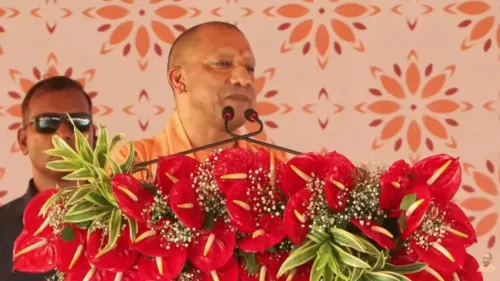
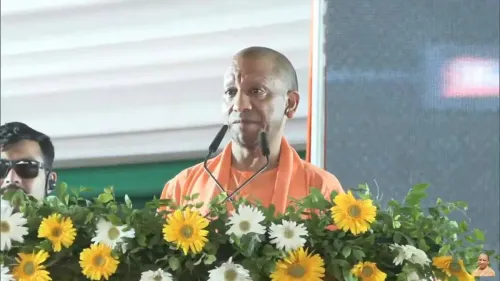
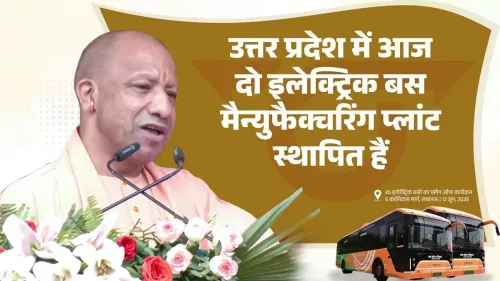
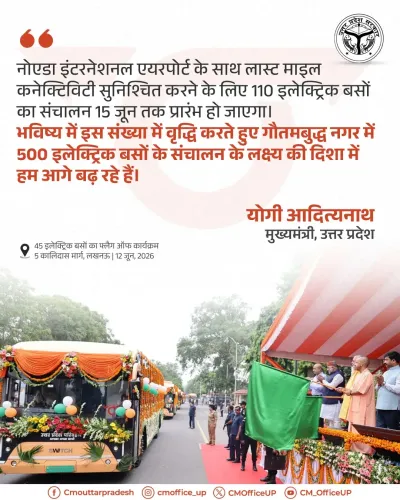
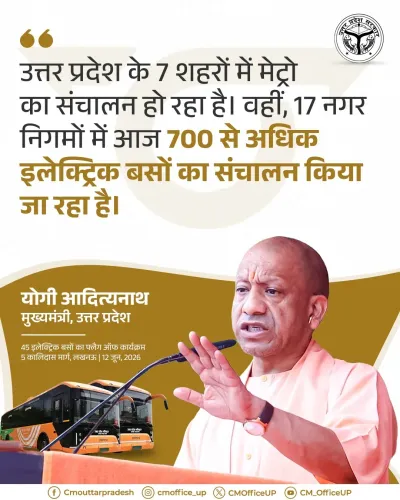
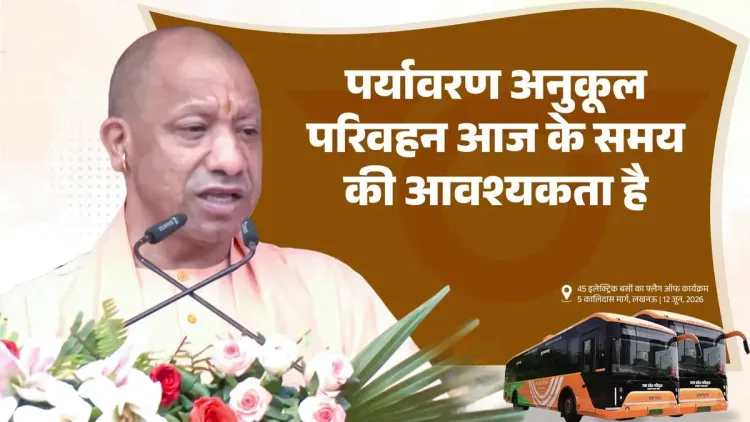
The Chief Minister's Office of Uttar Pradesh, on Friday, 12 June 2026, shared a statement from Chief Minister Yogi Adityanath declaring that the operation of electric buses will prove to be a landmark step toward achieving last-mile connectivity across the state.
In the post, CM Yogi Adityanath stated — 'Last Mile Connectivity की दृष्टि से इलेक्ट्रिक बसों का संचालन एक मील का पत्थर साबित होने जा रहा है' — ('From the perspective of last-mile connectivity, the operation of electric buses is going to prove to be a milestone.') The statement signals the state government's intent to position electric bus fleets as a central pillar of its urban mobility strategy.
Context
Uttar Pradesh has been progressively expanding its public transport infrastructure to bridge the gap between major transit hubs and residential or commercial areas not directly served by metro or rail networks. Last-mile connectivity — the final leg of a commuter's journey — has long been identified as the weakest link in urban transport chains across Indian cities. Electric buses are seen as a cleaner, quieter and cost-efficient solution to plug this gap.
The state's push comes amid growing urban populations in cities such as Lucknow, Kanpur, and Varanasi, where demand for reliable, affordable and environment-friendly public transport has been rising steadily.
Policy Backdrop
The foundation for this initiative was laid with the Uttar Pradesh Electric Vehicle Manufacturing and Mobility Policy, 2019, which offered incentives for electric vehicle manufacturing, the build-out of charging infrastructure, and the deployment of electric public bus fleets. The policy was designed to attract investment and accelerate adoption of EVs across the state.
Central support has come through the FAME-II (Faster Adoption and Manufacturing of Electric Vehicles) scheme, launched by the Government of India in 2019, which provided funding to states for procuring electric buses. Uttar Pradesh has been among the states leveraging this central subsidy to bolster its fleet modernisation plans. This dual-track approach — state policy combined with central funding — mirrors strategies adopted in Delhi, Bengaluru, and Maharashtra.
Stakeholders and Impact
Urban commuters stand to benefit most directly from a larger electric bus fleet, particularly those relying on last-mile links to metro stations, railway terminals, and bus depots. State transport corporations responsible for fleet operations are expected to see reduced fuel costs and lower maintenance expenditure over the long run compared to diesel-powered vehicles.
The broader environmental dividend is also significant. A shift toward electric public transport in Uttar Pradesh — one of India's most populous states — could meaningfully reduce vehicular emissions in cities that regularly record poor air quality indices. Reduced noise pollution in dense urban corridors is an additional benefit frequently cited by urban planners.
What's Next
Attention will now turn to the phased induction of additional electric buses across key urban centres, including Lucknow, Kanpur, and Varanasi, as well as any forthcoming tender announcements for charging infrastructure expansion. The state government's ability to scale up the network rapidly will determine whether the initiative delivers on its last-mile promise at a meaningful scale.
As Indian states compete to modernise public transport ahead of tightening emission norms, Uttar Pradesh's electric bus rollout will be closely watched as a potential template for other large, densely populated states navigating the same urban mobility challenge.
Point of View
Positioning Uttar Pradesh as a proactive actor in India's clean-mobility transition ahead of tightening national emission standards. The statement aligns with a broader pattern of large states using EV policy announcements to demonstrate governance credentials on urban infrastructure. By anchoring the message around last-mile access — a pain point for millions of daily commuters — the government is pitching the initiative as a public-welfare measure rather than a purely environmental one. The real test, however, will lie in execution: fleet scale, route coverage, and charging infrastructure will determine whether the milestone label holds.
NationPress
26 Oct 2026
Frequently Asked Questions
What did CM Yogi say about electric buses in UP?
CM Yogi Adityanath stated that the operation of electric buses will prove to be a milestone from the perspective of last-mile connectivity in Uttar Pradesh, as shared by the Chief Minister's Office on 12 June 2026.
What is last-mile connectivity and why does it matter for UP?
Last-mile connectivity refers to the final leg of a commuter's journey from a transit hub — such as a metro station or railway terminal — to their destination. In Uttar Pradesh's large and densely populated cities, this gap has historically been served by informal or polluting transport options, making electric buses a cleaner and more reliable alternative.
Which cities in UP will get electric buses?
Key cities expected to receive electric buses under Uttar Pradesh's expansion plans include Lucknow, Kanpur, and Varanasi, based on the state government's urban mobility priorities.
What government schemes support electric buses in Uttar Pradesh?
The Uttar Pradesh Electric Vehicle Manufacturing and Mobility Policy of 2019 provides state-level incentives, while the central government's FAME-II scheme offers financial support for procurement of electric buses by state transport corporations.
How does UP's electric bus plan compare to other Indian states?
Uttar Pradesh's approach mirrors programmes in Delhi, Bengaluru, and Maharashtra, all of which have combined state EV policies with central FAME-II subsidies to electrify portions of their public bus fleets and improve urban air quality.