CM Yogi Flags UP's First Tribal Museum, Eyes Mirzapur and Sonbhadra Next
Synopsis
UP Chief Minister Yogi Adityanath announced the state's first tribal museum has been built at Imilia Kodar in Balrampur, and that similar museums are being planned for Mirzapur and Sonbhadra — marking a shift in cultural infrastructure for the state's tribal belts.
Key Takeaways
Uttar Pradesh's first tribal museum has been constructed at Imilia Kodar, Balrampur district .
CM Yogi Adityanath announced plans to build tribal museums in Mirzapur and Sonbhadra as well.
The announcement was made on 6 August 2026 via a post on X.
Balrampur, Mirzapur, and Sonbhadra are home to significant Scheduled Tribe populations that historically received limited cultural infrastructure investment.
The move continues the UP government's tribal welfare and cultural institution drive that has been underway since 2017 .
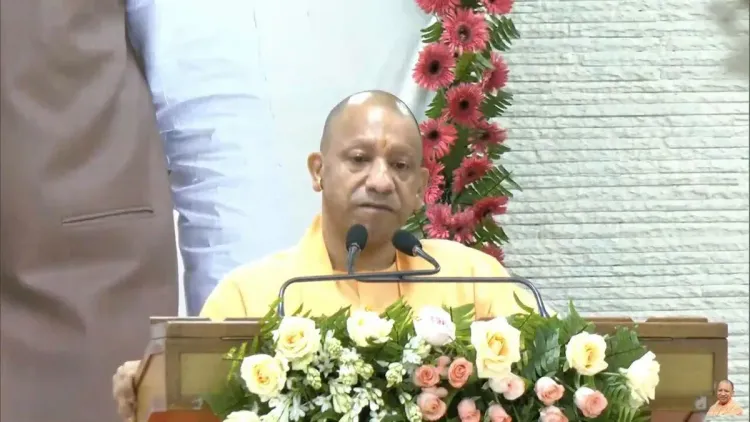
A question that once seemed rhetorical now has a concrete answer in brick and mortar. Uttar Pradesh Chief Minister Yogi Adityanath on Thursday, 6 August 2026, highlighted that the state's first tribal museum — long considered an unlikely ambition for a region where such cultural infrastructure barely existed — has been built at Imilia Kodar in Balrampur district, and announced that two more are in the pipeline for Mirzapur and Sonbhadra.
Posting on X, CM Yogi framed the development as a milestone that defied prior expectations: 'क्या पहले कोई सोचता था कि उत्तर प्रदेश के अंदर ट्राइबल म्यूजियम बनेगा?' — 'Did anyone earlier think that a tribal museum would be built inside Uttar Pradesh?' His answer was the museum itself.
Balrampur's Imilia Kodar: A First for the State
Balrampur, tucked in the Terai belt of eastern Uttar Pradesh along the Nepal border, is home to significant Scheduled Tribe populations that have historically sat at the margins of mainstream cultural policy. The museum at Imilia Kodar marks the first dedicated tribal heritage institution in the state — a district-level project that the government is now positioning as a replicable model.
The choice of location is deliberate. Balrampur, Mirzapur, and Sonbhadra form a loose arc of tribal-belt districts — the Terai in the north, the Vindhya plateau in the south — that share a common thread: rich indigenous cultures and decades of limited state cultural investment. Building museums in all three would, for the first time, give these communities a formal institutional home for their heritage.
Mirzapur and Sonbhadra: The Next Stops
Sonbhadra is particularly significant. The district is among Uttar Pradesh's most mineral-rich, home to multiple tribal groups including the Gond and Kol communities, and has long been a focal point for debates around land rights and development. A tribal museum there would carry symbolic weight beyond heritage — it signals cultural recognition alongside economic extraction.
Mirzapur, straddling the Vindhya range, similarly hosts tribal communities with distinct craft, music, and ritual traditions. The state government has expanded tribal welfare initiatives across these districts since 2017, including support for tribal festivals and education centres. The museum push fits that broader pattern of pairing infrastructure with cultural visibility.
The timelines, budgets, and inauguration schedules for the Mirzapur and Sonbhadra museums are yet to be formally announced. What is clear is the direction: a state that once had no tribal museum now has one — and is already naming the next two on the list.
Point of View
Mirzapur, Sonbhadra — that have been politically and institutionally peripheral. By anchoring heritage institutions in tribal belts, the BJP-led government is simultaneously addressing a cultural gap and building political equity with Scheduled Tribe communities ahead of future electoral cycles. The sequencing matters: Sonbhadra, a district where tribal land and resource conflicts have historically flared, is a pointed choice for a cultural institution. Whether these museums translate into sustained funding and community participation, or remain symbolic inaugurations, will define their actual impact.
NationPress
20 Sept 2026
Frequently Asked Questions
Where has UP's first tribal museum been built?
UP's first tribal museum has been built at Imilia Kodar in Balrampur district, as announced by Chief Minister Yogi Adityanath.
Which districts are next in line for tribal museums in Uttar Pradesh?
The UP government has announced plans to build tribal museums in Mirzapur and Sonbhadra, following the one already constructed in Balrampur.
What tribal communities live in Sonbhadra and Mirzapur?
Sonbhadra and Mirzapur are home to several Scheduled Tribe communities, including the Gond and Kol groups, with distinct cultural, craft, and ritual traditions.
When did the UP government start tribal welfare initiatives?
The Yogi Adityanath government has been expanding tribal welfare and cultural infrastructure initiatives since 2017, focusing on districts with significant Scheduled Tribe populations.
What is the significance of a tribal museum in Sonbhadra?
Sonbhadra is UP's most mineral-rich district and has long seen debates over tribal land rights; a museum there would mark cultural recognition alongside the district's heavy industrial and extractive activity.