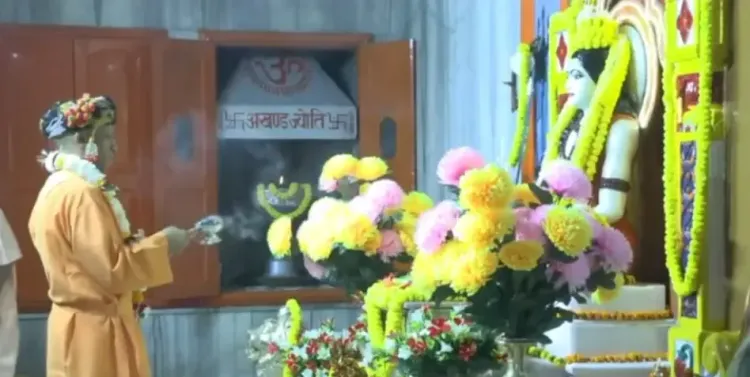
Yogi Adityanath performs Vijayadashami puja at Gorakhnath Temple in Gorakhpur
Synopsis
On Vijayadashami 2026, Yogi Adityanath stepped into his lesser-seen role — not as Chief Minister but as Gorakhpeethadhishwar — conducting over two hours of Vedic rituals at the Gorakhnath Temple in Gorakhpur. The ceremonies, spanning the Shaktipeeth, sanctum sanctorum, Akhand Dhuna, and gaushala, underline how deeply the temple's spiritual authority remains entwined with UP's political leadership.
Key Takeaways
Yogi Adityanath performed special Vijayadashami puja at Gorakhnath Temple , Gorakhpur, on 20 October 2026 .
The rituals lasted more than two hours and followed Vedic rites and traditions of the Nath sect .
Worship began at the Shaktipeeth , where rituals for Adishakti had continued since the first day of Sharadiya Navaratri .
The Chief Minister was accompanied by head priest Yogi Kamalnath and scholars from the Sanskrit Vidyapeeth .
He also performed Gau puja at the temple gaushala, feeding cows jaggery , and offered grain to fish in Bhim Sarovar .
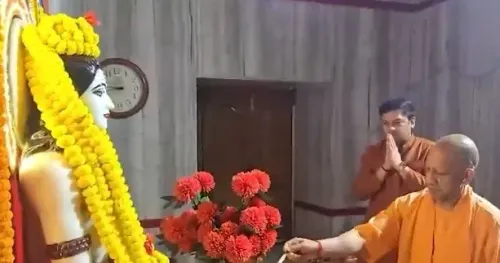
Uttar Pradesh Chief Minister Yogi Adityanath, in his capacity as Gorakhpeethadhishwar, performed a special puja of Mahayogi Guru Gorakhnath — revered as an incarnation of Lord Shiva — at the Gorakhnath Temple in Gorakhpur on the occasion of Vijayadashami (Dussehra) on 20 October 2026. The rituals, conducted in accordance with Vedic rites and the traditions of the Nath sect, lasted more than two hours.
How the Rituals Unfolded
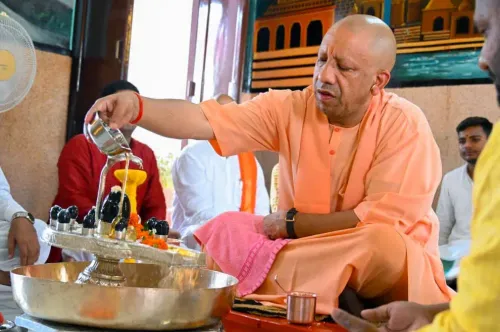
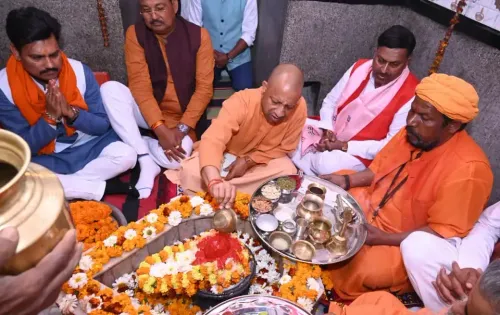
Dressed in traditional attire befitting the Gorakhpeethadhishwar, Yogi Adityanath began the ceremonies at the Shaktipeeth within the temple complex, where worship dedicated to Adishakti, the Divine Mother, had been continuing since Pratipada — the first day of Sharadiya Navaratri. After performing Vedi Pujan (worship of the altar) and offering prayers for universal welfare, the Chief Minister proceeded to the sanctum sanctorum of the main Guru Gorakhnath shrine.
He was accompanied by the temple's head priest, Yogi Kamalnath, and Sanskrit scholars and students from the Sanskrit Vidyapeeth chanting Vedic mantras. The procession unfolded to the resonant sounds of conch shells, damrus, bells, and ceremonial trumpets.
Inside the Sanctum Sanctorum
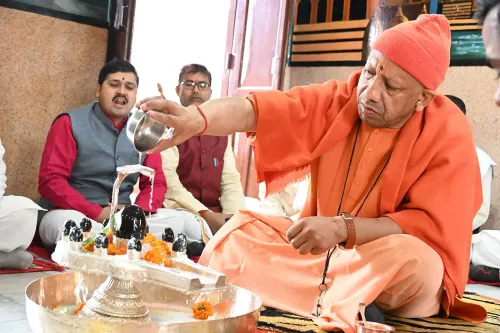
Inside the main shrine, Yogi Adityanath offered jawara — sprouted barley cultivated at the Shaktipeeth altar — as part of the worship. He also performed aarti and offered a chanwar (ceremonial whisk) as a mark of devotion. Following the principal worship, he performed special rituals at the Akhand Jyoti (perpetual flame) and before the idols of all deities installed across the temple complex.
He also offered prayers at the Akhand Dhuna (perpetual sacred fire), the Yagya-shala (sacrificial altar hall), and Bheem Sarovar, the sacred pond within the temple premises. With folded hands, the Chief Minister completed a full parikrama (circumambulation) of Mahayogi Gorakhnath and the other enshrined deities.
Paying Homage to Spiritual Predecessors
Yogi Adityanath bowed before the statues of his Gurudev, Mahant Avaidyanath Ji Maharaj, his Dada-guru, the late Mahant Digvijaynath Ji Maharaj, and revered sage Yogiraj Baba Gambhirnath Ji Maharaj, among other spiritual figures of the Nath tradition. The ceremonial musical ensemble — including nagphani, conch shells, drums, bells, damru, and turahi — sustained the devotional atmosphere throughout.
Gau Puja and Other Observances
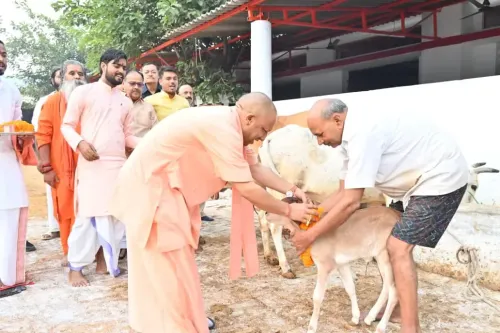
As part of the Vijayadashami observances, the Chief Minister also performed Gau puja (cow worship) at the temple's gaushala. He offered prayers, fed the cows jaggery, and affectionately caressed the animals. Additionally, he fed grain to the fish in Bhim Sarovar, completing the day's religious ceremonies in keeping with the established customs of the Gorakhpeeth.
The Vijayadashami celebrations at Gorakhnath Temple mark one of the most significant annual religious observances at the Gorakhpeeth, blending the dual identity of its head as both a religious leader and the sitting Chief Minister of India's most populous state.
Point of View
He occupies a unique intersection of religious authority and elected office that no other sitting state leader replicates at this scale. The ceremony reinforces the Gorakhpeeth's centuries-old cultural centrality in eastern Uttar Pradesh and reminds constituents that his political persona draws its legitimacy as much from the temple as from the ballot box. Whether that dual identity is a strength or a constitutional tension is a question mainstream coverage rarely surfaces.
NationPress
20 Oct 2026
Frequently Asked Questions
What did Yogi Adityanath do on Vijayadashami 2026?
Yogi Adityanath performed a special puja of Mahayogi Guru Gorakhnath at the Gorakhnath Temple in Gorakhpur on 20 October 2026, conducting Vedic rituals for over two hours in his capacity as Gorakhpeethadhishwar. He also performed Gau puja at the temple's gaushala and fed grain to fish in Bhim Sarovar.
Where is the Gorakhnath Temple and why is it significant?
The Gorakhnath Temple is located in Gorakhpur, Uttar Pradesh, and is the principal seat of the Nath sect. It is dedicated to Mahayogi Guru Gorakhnath, regarded as an incarnation of Lord Shiva, and has been spiritually and culturally central to eastern UP for centuries.
What is Gorakhpeethadhishwar and why does Yogi Adityanath hold the title?
Gorakhpeethadhishwar is the head of the Gorakhpeeth, the religious institution centred on the Gorakhnath Temple. Yogi Adityanath holds this title as the spiritual successor in the Nath tradition, a role he has maintained alongside his position as Chief Minister of Uttar Pradesh.
How long did the Vijayadashami rituals last at Gorakhnath Temple?
The special Vijayadashami rituals at the Gorakhpeeth continued for more than two hours. They began at the Shaktipeeth and extended to the main sanctum sanctorum, the Akhand Dhuna, Yagya-shala, and Bheem Sarovar within the temple complex.
Who accompanied Yogi Adityanath during the puja?
Yogi Adityanath was accompanied by the temple's head priest, Yogi Kamalnath, and Sanskrit scholars and students from the Sanskrit Vidyapeeth, who chanted Vedic mantras throughout the procession to the main shrine.