Sam Altman flags 30% cost share on AI model 'Fable'
Synopsis
OpenAI chief executive Sam Altman publicly questioned on 11 July 2026 whether 30 per cent of operational costs were tied to a model called 'Fable' at current usage levels — a rare public signal about the internal economics of running large AI systems at scale.
Key Takeaways
Sam Altman posted publicly on 11 July 2026 questioning whether 30% of OpenAI's operational cost was attributable to a model referred to as 'Fable'.
The term 'Fable' is not a publicly confirmed OpenAI product, suggesting it may be an internal codename or unreleased model.
Inference costs have grown to dominate AI operational expenditure as usage scales, a trend OpenAI has acknowledged since the GPT-4 era in 2023 .
A 30 per cent cost concentration in a single model would be a significant efficiency signal for an organisation of OpenAI's scale.
AI developers and cloud infrastructure providers are the primary stakeholders affected by such cost allocation decisions.
No formal clarification from OpenAI has been issued; further detail is expected in upcoming technical or financial disclosures.
OpenAI chief executive Sam Altman on Saturday, 11 July 2026, raised eyebrows in the artificial intelligence community by publicly questioning whether 30 per cent of operational cost was attributable to a model referred to as 'Fable' at current usage levels — a rare public signal about the internal economics of running large AI systems at scale.
Context
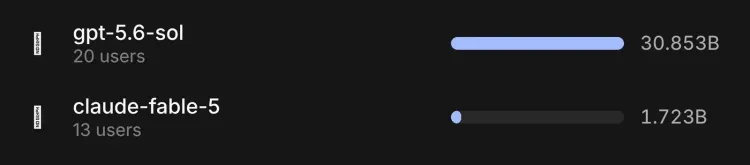
Altman's post — 'Was 30% of the cost on Fable at these levels of usage?' — reads as a candid, real-time interrogation of how inference expenses are distributed across OpenAI's model portfolio. The phrasing suggests Altman may have been reacting to internal data or a briefing, choosing to surface the question publicly rather than keep it within the organisation.
The term 'Fable' is not a publicly confirmed OpenAI product name as of the time of writing. It may refer to a new or unreleased model, an internal codename, or a third-party tool integrated into OpenAI's infrastructure. No further detail was provided in the post itself.
Policy Backdrop
OpenAI has discussed the economics of model inference since at least the GPT-4 technical report in 2023, when it acknowledged that serving large models at scale carries significant per-token costs. As usage volumes have grown — driven by the widespread adoption of ChatGPT and the OpenAI API — inference costs have increasingly dominated operational expenditure relative to one-time training costs.
Technology executives across the industry have used social media to surface internal cost dynamics, often to signal priorities to investors, engineering teams, and the broader developer community. A 30 per cent cost concentration in a single model or component, if accurate, would represent a meaningful efficiency or pricing concern for a company of OpenAI's scale.
Stakeholders and Impact
AI developers and enterprises building on OpenAI's platform will be watching closely: if a significant share of inference cost is concentrated in one model, it could influence which models OpenAI prioritises, deprecates, or reprices. Cloud infrastructure providers that supply the compute underpinning OpenAI's operations are also directly implicated, as cost allocation decisions ripple through procurement and capacity planning.
For the broader AI industry, Altman's public query underscores a recurring tension: as AI products scale to hundreds of millions of users, the economics of serving those users can shift rapidly and unpredictably, making cost visibility a strategic imperative.
What's Next
OpenAI has not issued a formal statement clarifying what 'Fable' refers to or confirming the 30 per cent cost figure. Analysts and developers will look to upcoming technical reports, earnings disclosures, or product announcements for elaboration. If 'Fable' is an emerging or unreleased model, this post may be an early public indication of its operational footprint within OpenAI's infrastructure — and a preview of how the company frames its cost-efficiency narrative heading into the next phase of AI scaling.
Point of View
Sometimes to shape investor expectations. The specificity of the 30 per cent figure suggests this is not an offhand remark but a pointed question about cost concentration. For OpenAI, which is navigating a high-stakes transition from research organisation to commercial enterprise, cost efficiency at inference scale is as strategically important as model capability. The post may also be an early signal that 'Fable' is a significant enough component of OpenAI's infrastructure to warrant public attention — with implications for how the company prices and positions its next generation of products.
NationPress
10 Oct 2026
Frequently Asked Questions
What is 'Fable' in Sam Altman's post?
'Fable' appears to be a model or system within OpenAI's infrastructure referenced by Sam Altman in his 11 July 2026 post. It is not a publicly confirmed OpenAI product name, and it may be an internal codename or an unreleased model.
What did Sam Altman say about AI costs?
Sam Altman publicly questioned whether 30 per cent of OpenAI's operational cost at current usage levels was attributable to a model called 'Fable', signalling concern about cost concentration within the company's model portfolio.
Why are AI inference costs important?
Inference costs — the expense of serving AI model responses to users — have grown to dominate operational budgets as usage scales. For companies like OpenAI , managing inference cost concentration directly affects pricing, model availability, and profitability.
Has OpenAI confirmed what Fable is?
As of 11 July 2026 , OpenAI has not issued a formal statement confirming what 'Fable' refers to. Further clarity is expected in upcoming technical reports or product announcements.
What does Sam Altman's post mean for AI developers?
For AI developers building on OpenAI's platform, a significant cost concentration in one model could influence which models OpenAI prioritises, deprecates, or reprices — directly affecting API availability and pricing structures.