Apple overhauls Siri with Gemini AI at WWDC 2026, China rollout delayed

Synopsis
Apple replaced Siri's scripted engine with Google's Gemini model at WWDC 2026 — its boldest AI move yet — while simultaneously confirming China will be left out of the initial rollout, handing local rivals Baidu, ByteDance, and Alibaba more time to entrench.
Key Takeaways
Apple unveiled a Gemini -powered Siri at WWDC 2026 in Cupertino, California on Monday, June 9, 2026 .
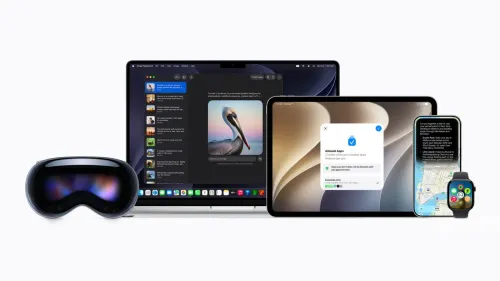
The new Siri supports cross-app task management and persistent chat histories, replacing preprogrammed responses.
CEO Tim Cook delivered his final WWDC keynote; John Ternus takes over leadership in September 2026 .
Francisco Jeronimo of IDC said Apple wants AI “part of the operating system, not a separate destination.” The enhanced Siri will not launch in China at rollout, where Baidu , ByteDance , Alibaba , and Huawei present regulatory and competitive hurdles.
Apple has unveiled a sweeping reinvention of its Siri voice assistant at the Worldwide Developers Conference (WWDC) in Cupertino, California on Monday, June 9, 2026, replacing the assistant's rigid, scripted responses with fluid, context-aware conversations powered by Google's Gemini large language model. The overhaul marks the company's most significant AI push to date — though users in China will have to wait for a localised version.
What changed in the new Siri
The redesigned Siri moves beyond isolated commands to become a persistent, cross-app companion capable of managing tasks and retaining continuous chat histories across sessions. The integration of Google's Gemini model gives the assistant generative reasoning capabilities that the previous rule-based system could not match. The upgrade positions Siri as a system-level intelligence layer rather than a standalone feature.
Why it matters: AI as the operating system
Francisco Jeronimo, Vice-President of Client Devices at International Data Corporation (IDC), framed the announcement as a strategic pivot. Apple wants AI to become “part of the operating system, not a separate destination only available through an app,” he said. “Siri is central to that ambition,” Jeronimo added, underscoring that the assistant is now the primary interface through which Apple intends to deliver intelligence across its hardware ecosystem.
Leadership transition at the helm
WWDC 2026 also served as the platform for CEO Tim Cook's final keynote address before he transfers leadership to John Ternus in September 2026. Jeronimo noted that Ternus would “inherit a company with one of the strongest hardware ecosystems in the world, but the next chapter will be defined by how intelligently that hardware works for users.” The timing ties Apple's AI credibility directly to the incoming chief executive's early mandate.
The China gap
The enhanced Siri will not launch simultaneously in China, where regulatory requirements and the dominance of local AI players — including Baidu, ByteDance, and Alibaba Group Holding — complicate deployment. Apple has previously relied on domestic AI partnerships to navigate China's market, and analyst Kuo Ming-chi has flagged the country as a persistent friction point for the company's AI roadmap. Huawei's growing grip on the premium segment adds competitive pressure to any delay.
What's next
Developer betas are expected to follow the keynote, with a public rollout tied to the next major iOS release cycle later in 2026. The critical test will be whether the Gemini-powered Siri can close the perceived gap with rivals such as Anthropic's Claude and existing Google Assistant integrations on Android. How quickly Apple secures a compliant AI partner for China will determine whether the world's largest smartphone market becomes an asset or a liability under Ternus.
Point of View
A dynamic that erodes the vertical-integration moat Apple spent decades constructing. The China exclusion is the sharper story: every quarter of delay cedes premium-segment ground to Huawei's device ecosystem and to Baidu's and Alibaba's deeply embedded AI services, making a China-specific AI partnership not a nice-to-have but an existential commercial necessity. Mainstream coverage focuses on the Gemini feature; the underreported risk is that John Ternus inherits an AI strategy whose most lucrative geography is still unresolved. If Apple cannot close a compliant China AI deal within two product cycles, the revenue gap will show up in services metrics — the line Wall Street now watches most closely.
NationPress
26 Oct 2026
Frequently Asked Questions
What did Apple announce for Siri at WWDC 2026?
Apple announced a complete overhaul of Siri at WWDC 2026 on June 9, replacing its rule-based engine with Google's Gemini large language model. The new Siri supports fluid multi-turn conversations, cross-app task management, and persistent chat histories.
Why is the new Siri not launching in China?
Apple has not launched the Gemini-powered Siri in China due to regulatory requirements and the dominance of local AI providers such as Baidu, ByteDance, and Alibaba. Apple typically requires a locally compliant AI partner to operate advanced AI features in the Chinese market.
Who is replacing Tim Cook as Apple CEO?
John Ternus is set to succeed Tim Cook as Apple's chief executive in September 2026. Cook delivered his final WWDC keynote at the June 9 event before the planned leadership handover.
How does the new Siri compare to rivals like Claude and Google Assistant?
The Gemini-powered Siri is designed to compete directly with AI assistants such as Anthropic's Claude and Google Assistant by offering generative reasoning and persistent context. Whether it closes the capability gap in real-world use will become clearer once developer betas are tested.
What does the Siri overhaul mean for Apple's broader AI strategy?
According to IDC Vice-President Francisco Jeronimo, Apple wants AI to become part of the operating system rather than a standalone app, with Siri as the central delivery mechanism. The move signals that Apple is betting its next growth phase on ambient, system-level intelligence across its hardware ecosystem.