China's tech giants race to prove AI spending pays off

Synopsis
After Meta's shares fell 8% on a free-cash-flow scare and Alphabet posted its first-ever negative quarterly free cash flow, China's Alibaba and Tencent now face the same investor ultimatum: prove that billions in AI infrastructure spend can generate sustainable profits — or brace for a similar market reckoning.
Key Takeaways
Meta Platforms shares fell roughly 8 per cent in after-hours trading on Wednesday, 30 July 2026 , despite reporting US$60.8 billion in Q2 revenue, as rising AI costs and falling free cash flow alarmed investors.
Alphabet recorded its first-ever negative quarterly free cash flow, driven by surging AI infrastructure outlays that outpaced revenue growth.
Chinese tech giants including Alibaba Group Holding and Tencent Holdings are escalating AI capital expenditure in a race against both domestic rivals and US competitors such as Amazon and Microsoft .
The sector's competitive focus has shifted from model capabilities to capital efficiency and return on investment, according to analysts.
Early commercial traction from AI products has appeared in recent quarterly results from Alibaba and Tencent , though the monetisation curve remains under scrutiny.
Institutions including Morgan Stanley and Sealand Securities are closely tracking whether AI infrastructure spending generates compounding returns or sustains an unproductive arms race.
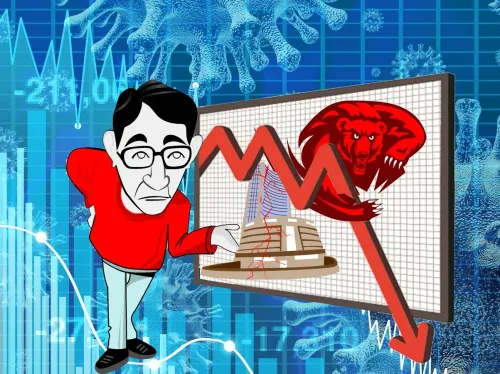
China's top technology companies are under mounting pressure to demonstrate that their surging artificial intelligence infrastructure investments can translate into sustainable profits, mirroring a global reckoning that rattled US markets in late July 2026. As capital expenditure across the sector climbs, the debate has shifted decisively from model capabilities to capital efficiency and return on investment.
Why global investors are spooked by Big Tech AI bills
Market anxiety sharpened after Meta Platforms — the Facebook owner listed on the Nasdaq — saw its shares tumble roughly 8 per cent in after-hours trading on Wednesday following its second-quarter results. The company beat revenue expectations, posting US$60.8 billion in quarterly sales, yet rising AI spending and a sharp drop in free cash flow alarmed investors.
The sell-off followed a similar shock from Alphabet, the parent of Google, which recorded its first-ever negative quarterly free cash flow as massive AI outlays outpaced revenue generation — fuelling broader fears of an AI bubble across global markets.
Chinese firms face a parallel reckoning
China's tech powerhouses and frontier AI labs are locked in a parallel race, escalating capital expenditure to match domestic rivals and US competitors including Amazon and Microsoft. The competitive dynamic has rapidly evolved: raw model performance no longer suffices as a differentiator — investors now demand proof of monetisation.
Early signs of commercial traction have emerged in the most recent quarterly results from Alibaba Group Holding and Tencent Holdings, where AI products are beginning to show measurable revenue contribution, according to company disclosures.
Why it matters
The stakes extend well beyond quarterly earnings. Analysts at institutions including Morgan Stanley and Sealand Securities have flagged that the sector's valuation trajectory depends on whether AI infrastructure spending generates compounding returns or merely sustains an arms race. For China's tech sector, the pressure is compounded by a domestic competitive environment where multiple well-funded frontier labs are vying for the same enterprise and consumer markets.
The Hongkong and Shanghai Banking Corporation and other institutional investors tracking Asia-Pacific technology exposure are watching capital efficiency metrics as closely as revenue growth figures.
The competitive backdrop
Both Alibaba and Tencent have ramped AI capital expenditure significantly over recent quarters, betting that cloud infrastructure, large language models, and AI-native applications will underpin the next growth cycle. The question investors are pressing is whether the monetisation curve will steepen fast enough to justify the outlay before free cash flow deteriorates to levels seen at Alphabet.
What's next
Upcoming quarterly earnings from Alibaba, Tencent, and other major Chinese technology firms will be scrutinised for concrete evidence that AI revenue is scaling in proportion to infrastructure investment. Any widening gap between capex and cash generation risks triggering the same investor backlash that hit Meta and Alphabet — making the next reporting season a critical inflection point for the entire sector.
Point of View
Regardless of domestic policy support. What mainstream coverage underweights is that Alibaba and Tencent are navigating this reckoning while also competing against state-backed frontier labs that face softer profitability mandates, distorting the market signals that would normally discipline capital allocation. The real risk is not an AI bubble per se, but a prolonged period of margin compression across the entire sector as companies overshoot on infrastructure to avoid competitive obsolescence. Investors who benchmarked Chinese tech against US peers on growth multiples may soon find themselves benchmarking on cash flow recovery timelines instead.
NationPress
14 Sept 2026
Frequently Asked Questions
Why did Meta Platforms shares fall after its Q2 2026 earnings?
Meta Platforms shares dropped roughly 8 per cent in after-hours trading despite reporting US$60.8 billion in Q2 2026 revenue, which beat expectations. Investors were alarmed by rising AI infrastructure spending and a decline in free cash flow, signalling that profitability could be under pressure even as top-line growth continues.
What happened to Alphabet's free cash flow in its latest quarterly results?
Alphabet posted its first-ever negative quarterly free cash flow as massive AI capital outlays outpaced revenue generation. The result intensified market fears that the global technology sector is over-investing in AI infrastructure without a clear near-term return.
Are Chinese tech companies like Alibaba and Tencent facing the same AI spending pressure?
Yes. Alibaba Group Holding and Tencent Holdings are both escalating AI capital expenditure to compete with domestic rivals and global players including Amazon and Microsoft . Their most recent quarterly results showed early commercial traction from AI products, but investors are demanding faster monetisation to justify the rising spend.
What are analysts watching in China's AI sector right now?
Analysts at firms including Morgan Stanley and Sealand Securities have shifted focus from model performance metrics to capital efficiency and return on investment. The central question is whether AI revenue from cloud services, large language models, and enterprise applications will scale fast enough to prevent free cash flow deterioration similar to what hit Meta and Alphabet .
What should investors watch next in China's tech AI story?
Upcoming quarterly earnings from Alibaba , Tencent , and other major Chinese technology companies will be the key test. If AI -driven revenue growth fails to keep pace with infrastructure investment, the sector could face the same investor backlash that punished US Big Tech in late July 2026 .