Will Global Leaders Unite to Tackle Diabetes, Hypertension, and Mental Health by 2030?
Synopsis
In an unprecedented initiative, global leaders have united to adopt a political declaration targeting the battle against noncommunicable diseases such as diabetes, hypertension, and mental health hurdles by 2030. This pivotal move reflects an urgent response to escalating health crises worldwide.
Key Takeaways
Global leaders have adopted a political declaration to combat NCDs and mental health issues.
Targets include reducing tobacco use and increasing access to mental health care by 2030.
This initiative aims to save millions of lives annually.
The declaration incorporates lessons from the Covid-19 pandemic.
Global cooperation is essential for effective public health solutions.
New Delhi, Dec 16 (NationPress) In a groundbreaking move, leaders from various nations have come together to endorse a political declaration aimed at addressing noncommunicable diseases (NCDs), including diabetes, high blood pressure, and mental health issues by the year 2030, according to a statement from the World Health Organization (WHO) released on Tuesday.
NCDs, which encompass conditions like obesity and various cancers, are the top contributors to mortality, responsible for an estimated 18 million premature deaths annually, while mental health disorders impact over a billion individuals worldwide.
Given the rising prevalence of both NCDs and mental health issues in all corners of the globe, immediate action is required, not only for enhancing public health but also for fostering productivity and sustainable economic advancement, the WHO emphasized.
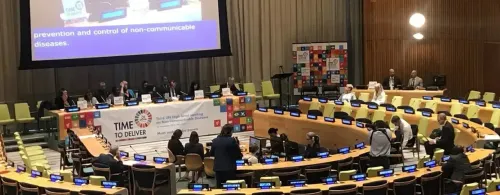
The recent political declaration, ratified during the 80th United Nations General Assembly (UNGA), is designed to expedite global efforts with a clear set of targets set for 2030.
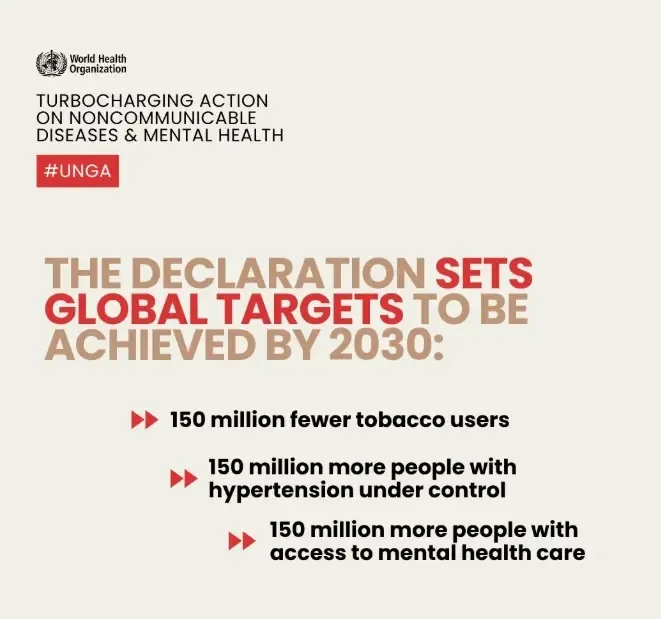
It lays out three unprecedented global “fast-track” outcomes to be achieved by 2030: reducing tobacco use by 150 million individuals; bringing 150 million more people with hypertension under control; and ensuring 150 million additional individuals have access to mental health services.
To assist nations in reaching these ambitious goals, the declaration outlines measurable targets for national health systems by 2030.
This includes ensuring that at least 80% of countries implement policy, legislative, regulatory, and financial measures; at least 80% of primary healthcare facilities provide affordable, WHO-approved essential medicines and basic technologies for NCDs and mental health; and at least 60% of countries adopt financial protection policies to cover or limit the costs of essential NCD and mental health services.
“The commitment of Member States to safeguard the health of their populations is exemplified by the adoption of these courageous targets to manage noncommunicable diseases and enhance mental health,” stated WHO Director-General Dr. Tedros Adhanom Ghebreyesus.
“By uniting, we can alter the course of NCDs and mental health, ensuring health, well-being, and opportunities for all,” he added.
This political declaration marks the most extensive effort so far, incorporating insights from the Covid-19 pandemic while addressing new global challenges.
It also tackles numerous urgent matters such as oral health, lung health, childhood cancers, liver disease, kidney disease, rare diseases, and environmental concerns like air pollution, unsafe cooking practices, lead exposure, and hazardous chemicals, as well as the emerging risks of digital harm including social media exposure, excessive screen time, and the dangers of misinformation, as noted by the WHO.
Point of View
This declaration is a pivotal moment in global health policy. It signifies a collective acknowledgment of the urgent need to address the rising tide of noncommunicable diseases and mental health issues. The WHO's comprehensive approach, including lessons learned from the pandemic, positions this initiative as a critical framework for enhancing public health systems. This commitment from world leaders underscores the pressing need for sustainable health solutions that protect the well-being of populations across the globe.
NationPress
20 Sept 2026
Frequently Asked Questions
What is the aim of the political declaration?
The political declaration aims to combat noncommunicable diseases such as diabetes, high blood pressure, and mental health challenges by the year 2030.
How many lives do NCDs claim annually?
NCDs claim approximately 18 million lives prematurely each year.
What are the key targets set for 2030?
The key targets include reducing tobacco use by 150 million, controlling hypertension in 150 million more individuals, and providing mental health care access to 150 million additional people.
What role does the WHO play in this initiative?
The WHO facilitates the adoption of this declaration and sets specific targets for countries to achieve by 2030, promoting better health outcomes worldwide.
Why are these targets important?
These targets are crucial for improving public health, enhancing productivity, and ensuring sustainable economic growth, particularly as NCDs and mental health issues continue to rise.