Google pitches AI coding tools as cost-effective Anthropic rival
Synopsis
At Google I/O in Mountain View, Google chose not to launch a new model but instead reframed the AI coding war around cost-effectiveness — a direct challenge to Anthropic's Claude, which has led on coding benchmarks. The pivot signals pricing, not raw capability, as the next frontier.
Key Takeaways
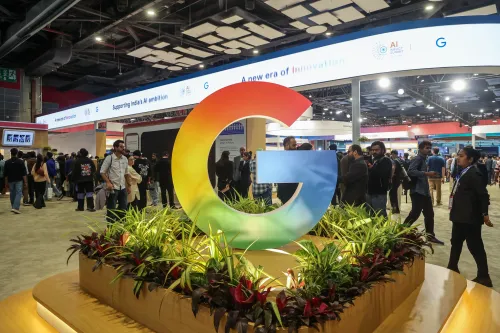
Google used Google I/O on Tuesday in Mountain View, California to pitch its AI coding tools as the cost-effective alternative in the market.
Google did not release a new model at the event; instead it chose to redefine the competitive framing against Anthropic .
Anthropic , founded in 2021 by Dario Amodei and other former OpenAI executives, has established dominance in AI coding through its Claude model family.
Google is both an investor in and a direct market competitor to Anthropic , creating a uniquely complex rivalry.
Cost-per-inference and developer economics are emerging as the primary enterprise sales levers as frontier model capabilities increasingly converge.
Google used its flagship developer conference, Google I/O, held Tuesday in Mountain View, California, to position its AI coding tools as the cost-effective alternative to Anthropic's dominant presence in the coding assistant market. Rather than unveiling an entirely new product, Google arrived at the event with a strategic reframe: redefine what the competition is actually about.
The core pitch: value over raw capability
according to reports, Google did not release a new model at Google I/O specifically to challenge Anthropic's coding benchmarks head-on. Instead, the company leaned into cost-effectiveness as its primary differentiator, signalling a shift in how the AI coding tools market may be contested going forward. The move suggests Google believes the next battleground is price-per-inference and developer economics, not just raw model performance.
Why it matters
Anthropic, founded in 2021 by former OpenAI executives including Dario Amodei, has built a strong reputation in the coding assistant space through its Claude family of models, which posted notably strong results on coding and agentic benchmarks in 2024. Google's decision to compete on cost rather than benchmark supremacy reflects a broader industry pattern: as frontier model capabilities converge, pricing and integration depth become the decisive enterprise sales levers. For developers and engineering teams evaluating AI coding tools, the implication is a more competitive and potentially cheaper market.
The competitive backdrop
Google has been steadily integrating generative AI features into its developer and cloud ecosystem since 2023, with offerings spanning Google Cloud and developer-facing products. Anthropic, meanwhile, has received major investments from both Amazon and Google itself, making the competitive dynamic unusually layered — Google is simultaneously an investor in and a market rival to Anthropic. This dual relationship adds strategic complexity to any direct pitch against Claude-based coding tools.
What's next
The framing introduced at Google I/O is likely to shape enterprise conversations around AI coding assistant procurement through the remainder of 2025. If Google can substantiate its cost-effectiveness claims with concrete pricing disclosures and integration milestones, it could pull developer workloads away from Anthropic-powered tools at the enterprise tier. Observers will be watching for follow-up product announcements, benchmark disclosures, and whether Google's cloud partners align their go-to-market messaging around the same cost narrative.
Point of View
The platform with the most pricing leverage wins. This mirrors the cloud infrastructure wars of the previous decade, where AWS, Azure, and Google Cloud ultimately competed as much on discount structures as on feature sets. What mainstream coverage may miss is that Google's investor stake in Anthropic creates a perverse incentive — it profits whether developers choose Claude or Gemini-based tools, reducing the urgency of a knockout blow. The real pressure falls on pure-play coding assistant vendors and smaller AI labs that lack either Google's distribution scale or Anthropic's benchmark credibility.
NationPress
4 Oct 2026
Frequently Asked Questions
What did Google announce about AI coding tools at Google I/O?
Google positioned its AI coding tools as the cost-effective option in the market at Google I/O on Tuesday in Mountain View, California . Rather than launching a new model, the company reframed the competition against Anthropic around developer economics and pricing.
How does Google's AI coding pitch compare to Anthropic's Claude?
Google is not directly challenging Anthropic 's Claude on benchmark performance but instead emphasising cost-effectiveness as its key differentiator. Anthropic 's Claude models have been widely recognised for strong coding and agentic benchmark results, making pricing a strategic angle for Google to compete.
Why is the Google vs Anthropic rivalry in AI coding unusual?
Google is both a major investor in Anthropic and a direct competitor to it in the AI coding tools market. This means Google has a financial stake in Anthropic 's success even as it pitches its own tools against Claude -based products at developer conferences.
Who is Anthropic and why does it dominate AI coding?
Anthropic was founded in 2021 by former OpenAI executives including Dario Amodei and develops the Claude family of large language models. Its models have earned a strong reputation in coding and agentic tasks, attracting major investments from Amazon and Google .
What should developers watch for after Google I/O 2025?
Developers should monitor whether Google follows its cost-effectiveness pitch with concrete pricing disclosures, deeper IDE integrations, and enterprise contract terms. Further product announcements from both Google and Anthropic through the rest of 2025 will determine whether the cost framing translates into measurable developer adoption shifts.