How is IIT Bombay’s New Smart Platform Helping Researchers Decode Brain Diseases?
Click to start listening
Synopsis
A groundbreaking initiative by IIT Bombay's bioengineers introduces BrainProt and DrugProtAI, promising to revolutionize brain disease research. These platforms integrate diverse biological data, enabling quick identification of disease markers and druggable targets, thereby accelerating treatment exploration. Discover how this innovation could change the landscape of neurological research.
Key Takeaways
- BrainProt consolidates various biological data for brain disease research.
- DrugProtAI helps predict whether proteins are suitable drug targets.
- The platforms aim to accelerate the exploration of disease markers and treatments.
- BrainProt integrates multi-disease data from different biological perspectives.
- Researchers can evaluate druggability rapidly, saving time and resources.
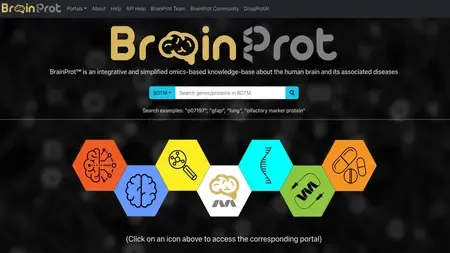
New Delhi, Jan 22 (NationPress) A group of bioengineers from the Indian Institute of Technology (IIT) Bombay has launched innovative smart platforms—BrainProt and DrugProtAI—that consolidate fragmented data on various brain diseases, aiding researchers in identifying markers, investigating treatments, and determining druggable targets.
BrainProt v3.0 serves as a comprehensive database merging diverse biological data—from genes to proteins—into one cohesive platform to facilitate systematic understanding of human brain function in both healthy and pathological conditions.
This pioneering system integrates multi-disease data from genomics, transcriptomics, proteomics, and biomarker research, all accessible through a single portal.
“BrainProt also offers resources for recognizing and analyzing protein expression variations between the left and right hemispheres of the human brain across 20 neuroanatomical regions. This is the inaugural resource of its kind,” stated Prof. Sanjeeva Srivastava from the Department of Biosciences and Bioengineering, IIT Bombay.
BrainProt encompasses data on 56 human brain diseases and 52 multi-omics datasets sourced from over 1,800 patient samples. These datasets include transcriptomic data for 11 diseases and proteomic data for six diseases.
For each condition, users can investigate genes and proteins strongly linked with the disease, evaluate their support in existing medical and scientific databases, and analyze how their activity levels fluctuate in patient samples.
DrugProtAI has been created to ascertain whether a protein is amenable to drug development (possessing the biological and physical traits necessary to serve as an effective drug target) before embarking on costly experiments.
This is vital, as only around 10 percent of human proteins currently possess an FDA-approved drug, with an additional 3-4 percent under investigation.
“Before committing years of research to a protein target, DrugProtAI assesses whether the protein is druggable by examining factors beyond the protein’s sequence, including cellular location, structural features, and other distinct characteristics,” remarked Dr. Ankit Halder, co-author of the study.
The tool produces a druggability index—a probability score indicating the likelihood of a protein being druggable. A higher score implies that the protein shares numerous properties with proteins that already have approved drugs, while a lower score suggests that drug development would be more complex.
“By incorporating DrugProtAI directly into BrainProt, we have established a streamlined process where researchers can transition from identifying a disease marker to examining its expression patterns, assessing its druggability, and delving into existing compounds or clinical trials, all within an hour,” Halder added.
Point of View
The innovative platforms developed by IIT Bombay mark a significant advancement in neuroscience research. The integration of diverse biological data not only enhances the understanding of brain diseases but also paves the way for more efficient drug discovery processes. As India continues to emerge as a global leader in technology and research, initiatives like these underscore the vital role that academic institutions play in addressing critical health challenges.
NationPress
23/01/2026
Frequently Asked Questions
What are BrainProt and DrugProtAI?
BrainProt and DrugProtAI are innovative platforms developed by IIT Bombay that consolidate data on brain diseases to assist researchers in identifying disease markers and exploring treatment options.
How does BrainProt help researchers?
BrainProt integrates various types of biological data, enabling systematic insights into brain function and facilitating the examination of protein expression differences across neuroanatomical regions.
What is the significance of DrugProtAI?
DrugProtAI predicts the druggability of proteins, helping researchers identify viable drug targets before conducting expensive experiments.
How many diseases does BrainProt cover?
BrainProt encompasses data on 56 human brain diseases and 52 multi-omics datasets derived from over 1,800 patient samples.
What is the druggability index?
The druggability index is a probability score that indicates how likely a protein is to be a viable drug target, based on its characteristics.