How is IIT Bombay Revolutionizing T-cell Recovery for Cancer Treatment?
Synopsis
IIT Bombay's groundbreaking research unveils a novel method for recovering T-cells, enhancing cancer therapies. This innovative approach promises to increase T-cell viability and effectiveness, potentially transforming cancer treatment protocols. Discover how this advancement could make a significant impact in the fight against cancer.
Key Takeaways
New Methodology: IIT Bombay has developed a novel approach to recover T-cells.
Improved Viability: The use of accutase enhances cell survival compared to traditional enzymes.
Scaffold Technology: Electrospun scaffolds create a favorable environment for T-cell growth.
Clinical Implications: This research could significantly impact cancer therapies.
Expert Leadership: The study is led by Prof.
New Delhi, Feb 4 (NationPress) Scientists at the Indian Institute of Technology (IIT) Bombay have pioneered a more streamlined and effective approach to recover immune cells cultivated in the laboratory for T-cell–based cancer treatments.
In therapies like CAR T-cell, T-cells (a specific kind of immune cell) are extracted from a patient’s blood, modified extensively in the lab, and then reintroduced into the patient's bloodstream to combat cancer.
These cells, bred externally, must be harvested delicately to ensure they remain viable and functional upon reintroduction to the patient. Thus, identifying safe, effective methods for T-cell cultivation and retrieval is crucial for the success of these therapies.
“While cell recovery may seem straightforward in theory, it presents significant challenges in reality,” remarked Prof. Prakriti Tayalia from the Department of Biosciences and Bioengineering at IIT Bombay.
“Insufficient healthy cells hinder both proper testing and therapeutic application,” she added.
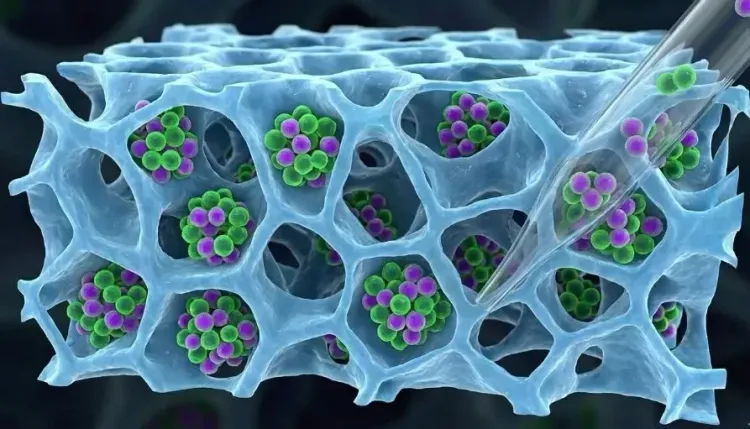
To better replicate the body’s natural environment, Tayalia’s team utilized a specific type of scaffold created through a process known as electrospinning. These electrospun scaffolds resemble thin mats of extremely fine fibers, akin to a dense fishing net.
The team cultivated Jurkat T-cells (a human cell line utilized in laboratory studies for T-cell biology, cancer, and HIV) within electrospun scaffolds made from a material named polycaprolactone.
Under microscopic observation, the researchers noted that the cells actively migrated into the scaffold and became securely lodged between the fibers.
Furthermore, the research revealed that using trypsin, an enzyme, for cell collection resulted in higher cell mortality.
Conversely, cells retrieved with accutase, a gentler enzyme, exhibited greater survival rates and functioned more like healthy T-cells. They formed clusters, a crucial precursor to T-cell division, and continued to thrive post-recovery.
“Aggressive treatments involving enzymes like trypsin can damage vital surface proteins needed for immune signaling and activation, thereby diminishing the therapeutic potential of the cells. Accutase appears gentle enough to prevent this issue,” Tayalia explained.
The findings of this study, published in the journal Biomaterials Science, could assist laboratories in utilizing such scaffolds when preparing cells for therapies like CAR T-cell treatment.
“Every step is critical if we want these advanced therapies to benefit patients. The methods used to grow and retrieve cells can significantly impact outcomes,” Tayalia emphasized.
Point of View
It's vital to highlight the importance of scientific advancements in healthcare. IIT Bombay's innovative research on T-cell recovery represents a significant step towards improving cancer therapies, showcasing the role of academic institutions in addressing pressing medical challenges. This development could lead to better patient outcomes and underscores the importance of continued investment in scientific research.
NationPress
28 Sept 2026
Frequently Asked Questions
What is the significance of T-cell recovery in cancer therapy?
T-cell recovery is crucial for therapies like CAR T-cell treatment as it ensures that enough viable immune cells are available to combat cancer effectively.
How does the new method developed by IIT Bombay differ from traditional methods?
The new method employs electrospun scaffolds and a gentler enzyme, accutase, which enhances cell survival rates compared to conventional methods that often use harsher enzymes.
What are electrospun scaffolds?
Electrospun scaffolds are thin mats created from fine fibers that mimic the natural environment of cells, providing better conditions for cell growth and recovery.
Who is leading the research at IIT Bombay?
The research is led by Prof. Prakriti Tayalia from the Department of Biosciences and Bioengineering.
What publication featured the findings of this research?
The findings were published in the journal Biomaterials Science, highlighting their scientific significance.