FM Sitharaman: India's economic resilience built on aspirations and domestic demand
Synopsis
Finance Minister Nirmala Sitharaman used a Mumbai banking event to lay out the government's multi-pillar economic vision — from insurance for all by 2047 and AI-focused skilling to capital expenditure discipline — anchoring India's growth story in domestic demand and a middle class that now numbers in the hundreds of millions.
Key Takeaways
Finance Minister Nirmala Sitharaman spoke at HSBC India's financial inclusion event in Mumbai on 2 November 2026 .
She cited middle-class expansion as the primary driver of domestic demand and economic resilience.
The government targets 'Insurance for All' by 2047 , backed by schemes like PMJJBY , PMSBY , and the Atal Pension Yojana .
Ayushman Bharat offers health insurance of up to ₹5 lakh per family ; 50 crore people have reportedly moved out of poverty, per World Bank data.
AI-focused skilling programmes are being prioritised to align workforce capabilities with emerging industry needs.
Sitharaman reaffirmed fiscal discipline, saying 'Government spending must remain responsible.'
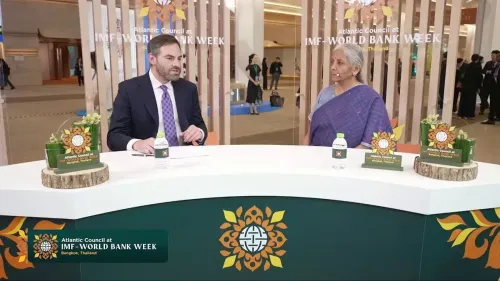
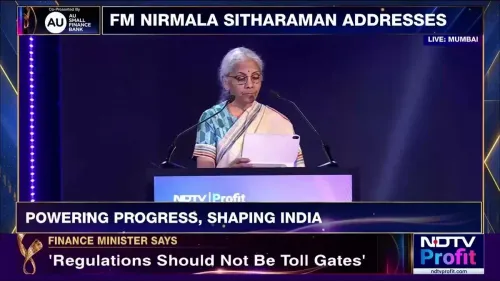
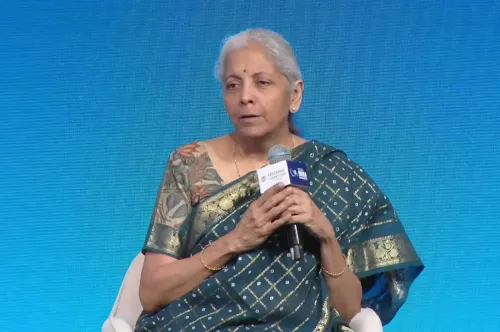
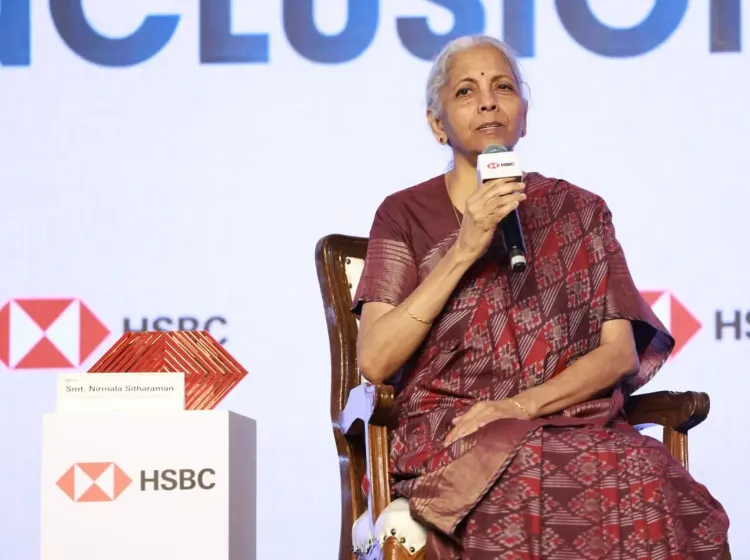
Finance Minister Nirmala Sitharaman on Monday, 2 November 2026, said India's economic resilience is rooted in the aspirations of its people and the strength of its large domestic market, underscoring the government's commitment to financial inclusion, social security, skills development, and fiscal prudence. She was speaking at a fireside chat with HSBC India CEO Hitendra Dave at HSBC India's 'Furthering Financial Inclusion' event in Mumbai.
Middle Class Expansion and Domestic Demand
Sitharaman said the rapid expansion of India's middle class has translated into greater purchasing power and has become a dependable engine of domestic demand. This structural shift, she argued, insulates the economy from excessive dependence on external factors and provides a self-sustaining growth buffer. Stability in governance, she added, gives businesses the clarity and confidence needed to invest for the long term.
Financial Security and Insurance for All
On financial security, the Finance Minister stated that universal insurance coverage remains a high priority. She highlighted the Pradhan Mantri Jeevan Jyoti Bima Yojana (PMJJBY) and the Pradhan Mantri Suraksha Bima Yojana (PMSBY) as examples of schemes offering insurance protection at affordable premiums, and cited the Atal Pension Yojana as a vehicle for expanding pension coverage. The government's stated aim is to achieve 'Insurance for All' by 2047, deepening penetration across regions and income brackets.
Health Coverage and Poverty Reduction
Sitharaman pointed to Ayushman Bharat, which provides health insurance coverage of up to ₹5 lakh per family, as a scheme that has enabled millions to access medical treatment without being compelled to liquidate assets. The expansion of primary healthcare centres has further improved last-mile access, according to her. She also cited a World Bank estimate that around 50 crore people have moved out of poverty, attributing the achievement to consistent policy efforts and improved access to basic services. 'Access to schools and skill training after schooling has supported poverty reduction,' she said.
AI-Focused Skilling and Future Employment
Addressing future employment opportunities, Sitharaman said the government is focused on equipping young people with skills required for artificial intelligence (AI)-related jobs. AI-focused training programmes, she said, would help bridge the gap between industry expectations and workforce capabilities — a recognition that the next wave of job creation will be technology-driven. This comes amid a broader global conversation about AI's impact on labour markets, with India's demographic advantage hinging on whether its workforce can be upskilled at scale.
Fiscal Discipline and Capital Expenditure
On the macroeconomic front, Sitharaman reaffirmed that capital expenditure remains a key pillar of the government's growth strategy. She stressed the need to closely monitor the fiscal deficit and maintain fiscal discipline. 'Government spending must remain responsible,' she said — a signal that the Centre intends to preserve its credibility with ratings agencies and bond markets even as it pursues an ambitious social spending agenda. Notably, this balancing act between expansionary capex and fiscal consolidation has been a defining tension of the current government's economic management.
Point of View
Multilaterals, and domestic audiences simultaneously. The '50 crore out of poverty' World Bank figure is powerful but contested in methodology; the government's repeated use of it without contextualising the poverty line applied does little to settle the debate. The 'Insurance for All by 2047' target is ambitious, but insurance penetration in India has moved glacially for years — the distance between the scheme architecture and actual last-mile enrolment remains the critical gap. On AI skilling, the intent is right, but the scale and funding of those programmes were not disclosed, raising questions about whether this is a vision statement or an operational commitment.
NationPress
2 Nov 2026
Frequently Asked Questions
What did Finance Minister Nirmala Sitharaman say about India's economic resilience?
Sitharaman said India's economic resilience is rooted in the aspirations of its people and the strength of its large domestic market. She highlighted middle-class expansion, domestic demand, and government schemes on financial inclusion and social security as the key drivers.
What is India's 'Insurance for All' target?
The government aims to achieve universal insurance coverage across India by 2047. Schemes like PMJJBY, PMSBY, and the Atal Pension Yojana are the primary vehicles, with the focus on deepening penetration among low-income and rural populations.
How does Ayushman Bharat support financial inclusion?
Ayushman Bharat provides health insurance coverage of up to ₹5 lakh per family, enabling beneficiaries to access medical treatment without selling assets or property. The expansion of primary healthcare centres has complemented the scheme's reach.
What is the government's approach to AI and employment?
Sitharaman said the government is prioritising AI-focused skilling programmes to equip young people with capabilities required for artificial intelligence-related jobs. The aim is to bridge the gap between industry expectations and current workforce skills.
What did Sitharaman say about fiscal discipline and capital expenditure?
She reaffirmed that capital expenditure is a key pillar of the government's growth strategy while stressing the need to monitor the fiscal deficit closely. She said 'Government spending must remain responsible,' signalling continued commitment to fiscal consolidation.