KOSPI volatility interruptions hit record 29,357 in H1 2026
Synopsis
South Korea's KOSPI shattered its own volatility record in the first half of 2026 — not during a crash, but during a historic rally. A total of 29,357 Volatility Interruptions were triggered as the index surged past 9,000 for the first time, driven by an AI memory chip supercycle and amplified by US-Iran geopolitical tensions. The index has since pulled back to 8,088.
Key Takeaways
The KOSPI triggered a record 29,357 Volatility Interruptions (VIs) in January–June 2026 , the highest ever for any six-month period.
The previous record was 24,401 VIs in the first half of 2020 , set during the COVID-19 market crisis.
Average intraday volatility reached 3.3% — the second-highest first-half reading on record, behind only 3.51% in H1 1998 .
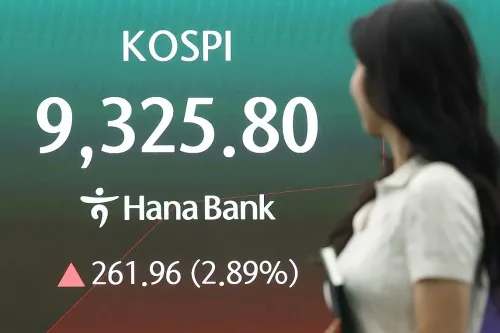
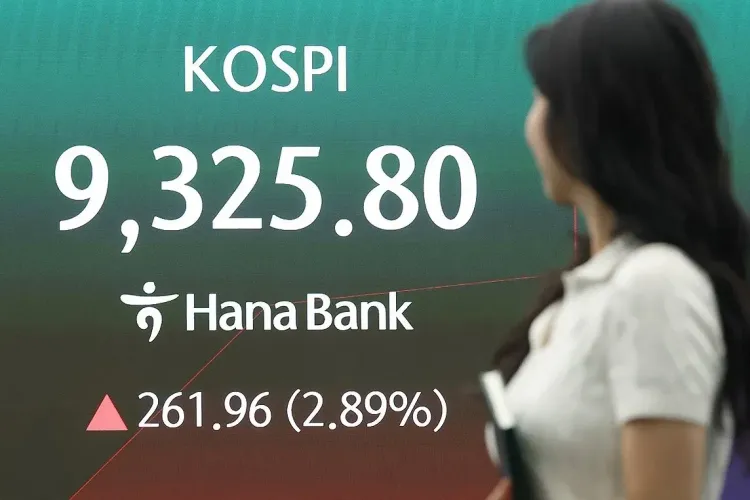
The KOSPI crossed 9,000 points for the first time on 18 June 2026 before retreating to close at 8,088.34 on Friday.
The rally was driven by AI-fuelled semiconductor demand ; geopolitical risk from the US-Iran conflict added further turbulence.
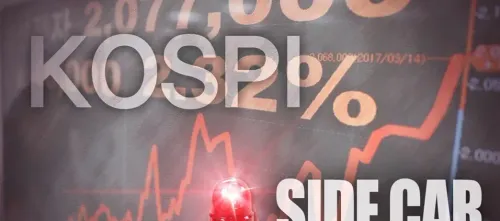
South Korea's stock market recorded the highest number of Volatility Interruption (VI) measures ever triggered on the KOSPI benchmark in the first half of 2026, as a historic rally in semiconductor stocks drove extreme price swings in both directions. Data released on Sunday, 5 July 2026 by the Korea Exchange (KRX) confirmed the scale of the turbulence.
Record VI Count
A total of 29,357 VIs were triggered on the KOSPI during the January–June 2026 period — the highest figure ever recorded for any six-month window. The previous record stood at 24,401 in the first half of 2020, when the COVID-19 pandemic sent markets into a tailspin. The latest figure surpasses that crisis-era benchmark by more than 20%.
A VI is a market safeguard mechanism: when an individual stock's price moves sharply within a short window, trading is temporarily shifted to a two-minute call auction to absorb order imbalances and prevent runaway moves.
Second-Highest Intraday Volatility on Record
Beyond the VI count, the KOSPI also posted its second-highest first-half intraday volatility on record. The benchmark's average intraday volatility stood at 3.3% in the first six months of the year — behind only the 3.51% recorded in the first half of 1998, during the Asian financial crisis. Intraday volatility is measured by dividing the difference between a session's high and low by their average, capturing how widely the index swings within a single trading day.
What Drove the Swings
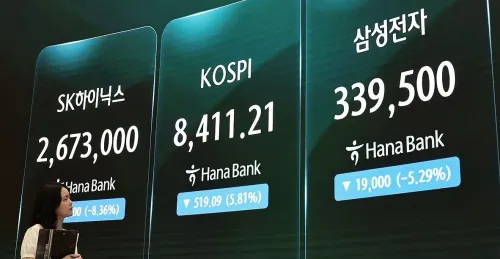
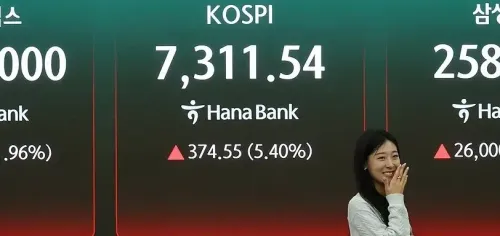
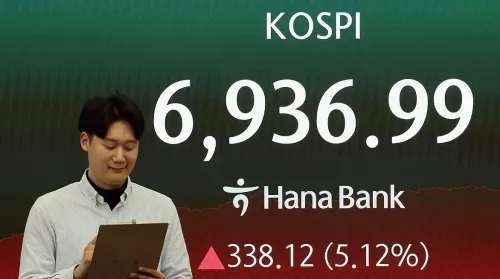
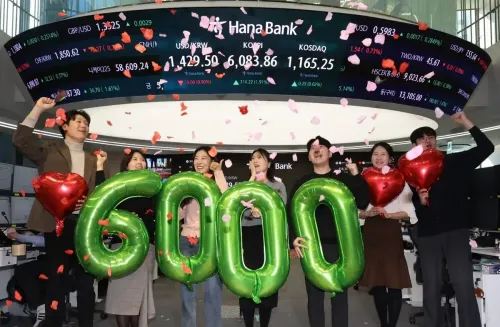
The primary catalyst was a powerful rally in semiconductor stocks, fuelled by the artificial intelligence-driven memory chip supercycle. As the KOSPI surged to successive milestones — crossing 5,000 points in January, 6,000 in February, and the 7,000 and 8,000 thresholds in May — aggressive buying was met with equally sharp profit-taking, amplifying two-way volatility.
The index climbed above 9,000 on 18 June 2026, a historic high, but has since retreated, closing at 8,088.34 on Friday. Geopolitical tensions arising from the conflict between the United States and Iran, which escalated from late February onwards, further stoked market uncertainty and contributed to the heightened volatility environment.
Context and Historical Comparison
The 2020 VI record was set against a backdrop of global panic selling; the 2026 record, by contrast, was driven largely by a euphoric rally — underscoring that extreme volatility is not exclusive to bear markets. Notably, this is the first time the KOSPI has crossed the 9,000-point level, making the current cycle structurally unprecedented for the exchange.
As the AI chip supercycle matures and geopolitical risks remain unresolved, market participants will be watching whether the KOSPI can stabilise above the 8,000 level or whether further corrections lie ahead.
Point of View
Not bull runs. That 29,357 circuit-breaker events were needed during an upswing — not a collapse — reveals how thin the order books were relative to the speed of the rally. The AI chip supercycle created genuine fundamental tailwinds, but the velocity of the KOSPI's move from 5,000 to 9,000 in under six months suggests momentum trading and retail participation outpaced institutional absorption. The retreat from 9,000 to 8,088 is worth watching: if the semiconductor earnings cycle peaks before geopolitical risks recede, the same mechanisms that amplified the upside will accelerate the downside.
NationPress
5 Oct 2026
Frequently Asked Questions
What is a Volatility Interruption (VI) on the KOSPI?
A Volatility Interruption is a market safeguard triggered when an individual stock's price moves sharply within a short period, temporarily shifting trading to a two-minute call auction to prevent runaway price moves. It is designed to absorb order imbalances and restore orderly trading on the Korea Exchange.
Why did KOSPI volatility hit a record in H1 2026?
The record was driven by a historic rally in semiconductor stocks tied to the AI memory chip supercycle, which triggered both aggressive buying and sharp profit-taking. Geopolitical tensions from the US-Iran conflict that began in late February 2026 added further uncertainty, amplifying two-way price swings.
How does the 2026 VI record compare to previous highs?
The 29,357 VIs recorded in H1 2026 surpass the previous record of 24,401 set in H1 2020 during the COVID-19 pandemic. Unlike the 2020 record, which was driven by a market crash, the 2026 record was set during a powerful upswing.
What level did the KOSPI reach and where does it stand now?
The KOSPI crossed the 9,000-point mark for the first time on 18 June 2026, a historic milestone. It has since pulled back, closing at 8,088.34 on Friday, 4 July 2026.
What is the significance of the 3.3% average intraday volatility figure?
An average intraday volatility of 3.3% in H1 2026 is the second-highest first-half reading in KOSPI history, exceeded only by 3.51% in H1 1998 during the Asian financial crisis. It signals that daily price swings were exceptionally wide relative to historical norms.