Can Nagaland University’s Biodegradable Gelatin-Electrolyte Enhance Supercapacitor Performance?

Synopsis
Discover how a team from Nagaland University has engineered a groundbreaking biodegradable gelatin-based hydrogel electrolyte that promises to enhance supercapacitor performance while promoting eco-friendliness. This innovative development could revolutionize energy storage in various applications.
Key Takeaways
Eco-friendly: The new hydrogel is biodegradable and safe for the environment.
Enhanced Performance: It significantly improves ionic conductivity and capacitance in supercapacitors.
Wide Applications: Ideal for electric vehicles, medical devices, and portable electronics.
Long-lasting: Maintains stability over thousands of charge-discharge cycles.
Innovative Materials: Combines gelatin, glyoxal, and potassium iodide for superior performance.
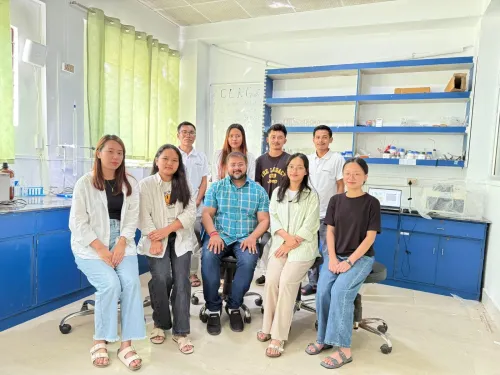
Kohima, Nov 3 (NationPress) A dedicated research team from Nagaland University has successfully created an innovative gelatin-based hydrogel membrane electrolyte that is both eco-friendly and biodegradable. This novel electrolyte serves as a secure, flexible alternative to traditional electrolytes utilized in supercapacitors.
Supercapacitors are known for their rapid charging capabilities and high energy output, finding applications in a range of devices from electric vehicles to emergency medical tools.
Published in the journal Materials Today Chemistry, this groundbreaking research could lead to more sustainable energy solutions. It has significant implications for sustainable energy storage systems, particularly in electric vehicles, medical wearables, and portable electronics.
Conventional energy storage systems rely on liquid electrolytes, which can leak, corrode components, and result in environmental harm.
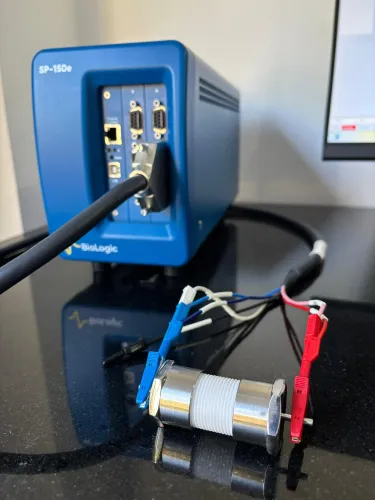
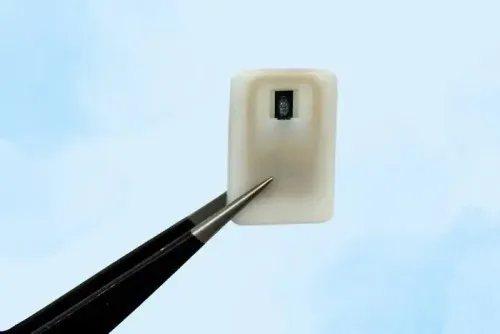
To tackle these issues, the research team developed a unique ‘KI-doped glyoxal-crosslinked gelatin hydrogel membrane electrolyte’ (GNHME).
This innovative material merges gelatin—a naturally biodegradable protein—with glyoxal, a crosslinking agent that boosts mechanical flexibility, and potassium iodide (KI), a redox-active dopant that enhances ionic conductivity and capacitance.
The team reports that the outcome is a semi-transparent, flexible hydrogel that conducts ions safely and maintains stability over thousands of charge-discharge cycles, making it perfect for the next generation of solid-state supercapacitors.
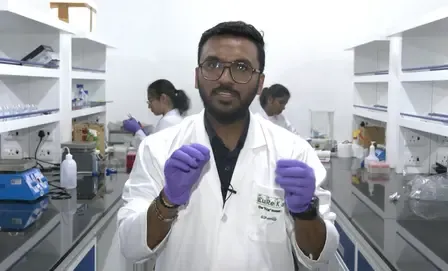
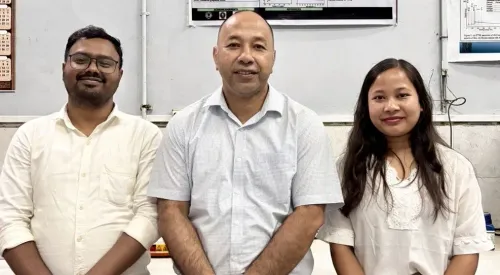
Dr. Nurul Alam Choudhury, Assistant Professor in the Department of Chemistry at Nagaland University, elaborated that the creation of biodegradable, redox-active solid electrolytes is a vital step towards achieving eco-friendly, high-performance energy storage systems that are compatible with renewable energy.
“This technology has the potential to significantly contribute to electric mobility and green energy initiatives, aligning with India’s sustainable development objectives,” he noted.
In contrast to traditional liquid electrolytes, this quasi-solid hydrogel is biodegradable, leak-proof, and demonstrates outstanding electrochemical performance.
The gelatin/glyoxal covalent hydrogel can absorb water up to an impressive 717 percent. The addition of KI notably enhances the energy and power densities of supercapacitors, while glyoxal provides superior flexibility and durability compared to other crosslinking agents.
Point of View
I find the advancements made by Nagaland University significant in the context of sustainable energy. The development of eco-friendly energy storage solutions is crucial. This research exemplifies a shift towards integrating renewable energy with innovative technology, reflecting our commitment to responsible journalism and environmental stewardship.
NationPress
30 Sept 2026
Frequently Asked Questions
What is the significance of the biodegradable electrolyte developed by Nagaland University?
The biodegradable electrolyte offers a sustainable alternative to traditional electrolytes, reducing environmental impact while enhancing supercapacitor performance.
How does the new hydrogel electrolyte improve supercapacitor functionality?
The hydrogel electrolyte enhances ionic conductivity and capacitance, making it ideal for high-performance energy storage applications.
What applications could benefit from this innovative technology?
Potential applications include electric vehicles, medical wearables, and portable electronics, contributing to cleaner energy solutions.
Is the new electrolyte safe for the environment?
Yes, the biodegradable nature of the hydrogel electrolyte ensures it does not pose environmental risks associated with conventional liquid electrolytes.
What are the future prospects of this research?
This research paves the way for sustainable energy storage innovations and aligns with global initiatives for renewable energy integration.