I-STEM Portal: India calls for stronger state coordination to boost R&D access
Synopsis
India's I-STEM platform — home to 31,000+ scientific instruments across 4,000 institutions — held its first dedicated state-level coordination meeting on 22 September, pulling together Nodal Officers from 23 states and 4 UTs. The signal is clear: the Centre wants R&D infrastructure built on public money to stop sitting idle and start serving researchers across every state, not just premier central institutions.
Key Takeaways
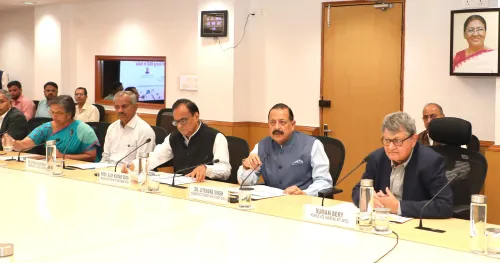
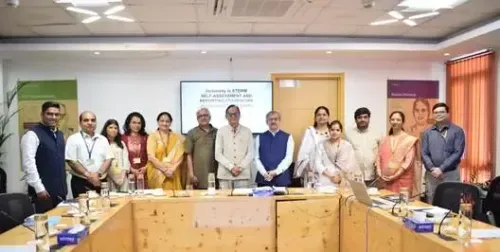
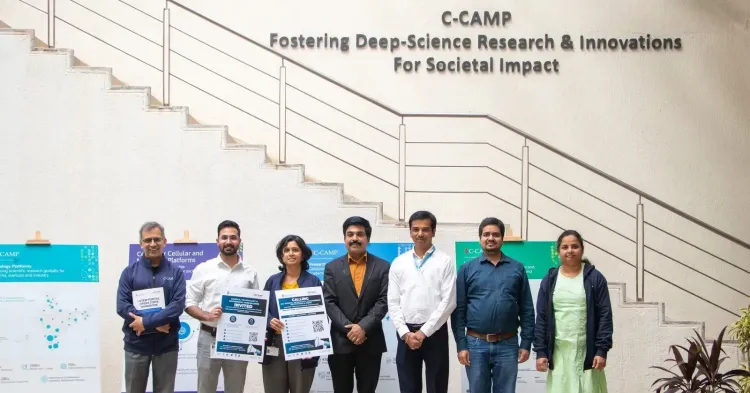
Dr Parvinder Maini , Scientific Secretary, Office of the PSA , chaired the first State Governments Nodal Officers Meeting for the I-STEM Portal on 22 September 2026 in New Delhi .
The meeting brought together Nodal Officers from 23 states and 4 Union Territories to strengthen state-level integration with the national platform.
The I-STEM platform currently hosts over 31,000 scientific instruments across nearly 4,000 institutions , with more than 65,000 registered users .
All publicly funded equipment costing above ₹20 lakh is mandated to be listed on I-STEM to enable shared access and reduce duplication.
The One Nation One Subscription (ONOS) initiative was highlighted as a complementary tool for broadening access to scholarly resources.
Dr Parvinder Maini, Scientific Secretary at the Office of the Principal Scientific Advisor (PSA) to the Government of India, on 22 September 2026 in New Delhi stressed the urgent need to make India's investments in scientific and research-and-development infrastructure more discoverable, accessible, and optimally utilised. Her remarks came as she chaired the first 'State Governments Nodal Officers Meeting' for the I-STEM Portal, a national platform designed to connect researchers across the country with publicly funded scientific equipment.
What the Meeting Covered
The meeting brought together Nodal Officers from 23 states and four Union Territories, along with representatives from the Office of the PSA and I-STEM, to discuss mechanisms for integrating state-level universities, research institutions, laboratories, and other R&D facilities with the national I-STEM platform. Dr Maini emphasised the critical role these Nodal Officers play in facilitating institutional onboarding, equipment listing, and the effective utilisation of scientific facilities, while also addressing practical challenges around coordination and implementation.
Scale of the I-STEM Ecosystem
The I-STEM platform has grown into a significant national resource, now hosting more than 31,000 scientific instruments across nearly 4,000 institutions, with over 65,000 registered users. A key regulatory provision mandates the listing of all publicly funded equipment costing above ₹20 lakh on I-STEM, reinforcing the framework for shared access and reducing unnecessary duplication of capital expenditure. This rule is central to the government's broader intent of extracting maximum value from public investment in science.
One Nation One Subscription and Knowledge Access
Beyond physical infrastructure, Dr Maini also highlighted the significance of the One Nation One Subscription (ONOS) initiative in broadening access to high-quality scholarly resources. ONOS, which provides centralised subscriptions to academic journals for institutions across India, is seen as a complementary pillar to I-STEM in building a more equitable and well-resourced research ecosystem. Together, these initiatives aim to ensure that researchers at smaller state institutions are not disadvantaged relative to those at premier central universities.
Why State Participation Matters
The meeting underscored the particular importance of I-STEM for state universities, colleges, technical institutions, and emerging innovation hubs — especially in regions where access to specialised scientific infrastructure remains limited. By improving utilisation of existing equipment and connecting state-level R&D facilities to a national network, the platform seeks to democratise scientific capability. Notably, this first dedicated state-level coordination meeting signals a strategic push to move beyond the initial phase of the portal, which largely onboarded central government institutions, toward a genuinely pan-India reach.
What Comes Next
The focus going forward is on ensuring that the larger objective — making publicly funded scientific infrastructure and knowledge resources accessible to the wider R&D and innovation ecosystem — translates into measurable outcomes at the state level. Officials indicated that active participation by Nodal Officers will be key to accelerating institutional onboarding and driving utilisation rates higher across states.
Point of View
000 instruments, 4,000 institutions — but the real test is whether a researcher at a Tier-2 state university in Odisha or Jharkhand can actually book time on a high-end spectrometer sitting idle at a central lab. The first state Nodal Officers meeting is a necessary administrative step, but coordination meetings alone do not move utilisation rates. The ₹20 lakh listing mandate is only as strong as its enforcement, and the pattern with similar government portals has been strong at launch and patchy in upkeep. What is missing from the official narrative is any target — for instrument utilisation rates, for state institutions onboarded, for access requests fulfilled — without which this risks becoming another well-intended platform whose metrics are defined by registrations rather than research outcomes.
NationPress
22 Sept 2026
Frequently Asked Questions
What is the I-STEM Portal and what does it do?
The I-STEM (Indian Scientific and Technological Research) Portal is a national platform that lists publicly funded scientific instruments and equipment, allowing researchers across institutions to discover and access facilities they may not have at their own institution. It currently hosts over 31,000 instruments across nearly 4,000 institutions, with more than 65,000 registered users.
What was the purpose of the State Governments Nodal Officers Meeting held on 22 September?
The meeting, chaired by Dr Parvinder Maini of the Office of the Principal Scientific Advisor, aimed to strengthen participation of state governments in the I-STEM ecosystem. It brought together Nodal Officers from 23 states and 4 UTs to discuss mechanisms for integrating state-level universities, labs, and R&D institutions with the national platform.
What is the rule about listing equipment on I-STEM?
All publicly funded scientific equipment costing above ₹20 lakh is required to be listed on the I-STEM portal. This mandate is designed to promote shared access to expensive instruments and reduce duplication of capital investment across institutions.
What is One Nation One Subscription (ONOS) and how does it relate to I-STEM?
One Nation One Subscription is a government initiative that provides centralised subscriptions to academic journals and scholarly resources for institutions across India. It complements I-STEM by addressing access to knowledge resources, alongside I-STEM's focus on physical scientific infrastructure.
Why does state-level participation in I-STEM matter?
State universities, colleges, and technical institutions — particularly in regions with limited access to specialised scientific equipment — stand to benefit most from the I-STEM network. Stronger state participation can democratise research capability and ensure that public investment in science delivers value beyond a handful of central institutions.