Nvidia CEO Jensen Huang Unveils AI Future at GTC Taipei
Synopsis
Nvidia CEO Jensen Huang took the stage at GTC Taipei on June 1, 2026, unveiling AI factory infrastructure, autonomous agents, physical AI and robotics, and a new personal AI generation — a sweeping expansion of the company's ecosystem that carries significant implications for global AI investment and India's own compute ambitions.
Key Takeaways
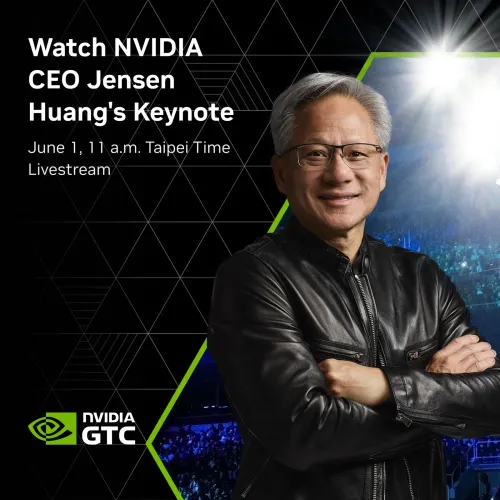
Jensen Huang delivered the keynote at GTC Taipei on June 1, 2026 , outlining Nvidia's next-generation AI vision.
Nvidia announced AI infrastructure it describes as powering 'the world's AI factories' — large-scale compute clusters for training and running AI models.
Autonomous agents 'that actually do things' were highlighted as a new product frontier, moving beyond passive AI assistants.
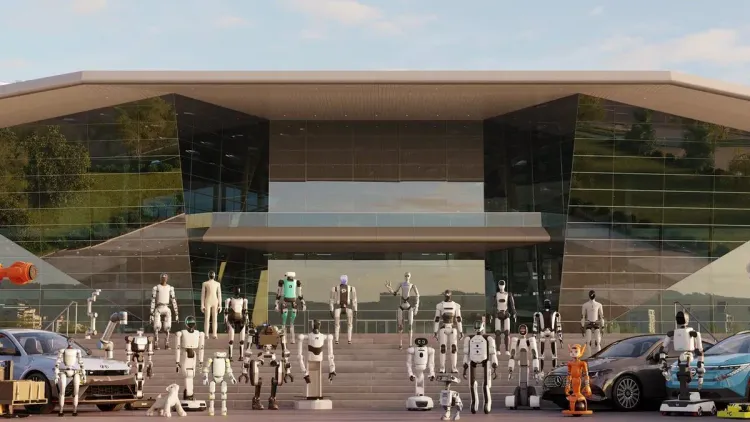
Physical AI and robotics were positioned as entering real-world deployment, targeting manufacturing, logistics, and autonomous systems.
A brand-new generation of personal AI computing was unveiled, extending Nvidia's ecosystem from data centres to individual users.
Taiwan as the event venue reinforces Nvidia's deep ties to the island's advanced semiconductor manufacturing base amid global supply-chain realignments.
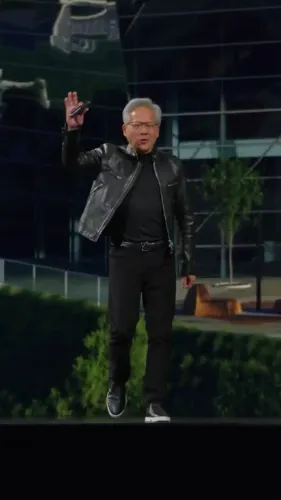
Chip giant Nvidia announced on Monday, June 1, 2026, that its chief executive Jensen Huang took the stage at GTC Taipei to unveil a sweeping new vision for artificial intelligence — covering AI infrastructure, autonomous agents, physical AI, robotics, and a new generation of personal AI computing.
Context
In the post, Nvidia described how Huang 'redefined the future of AI' at the GTC Taipei keynote. The announcement spans four broad pillars: AI infrastructure powering what the company calls 'the world's AI factories,' autonomous agents capable of taking real-world actions, physical AI and robotics entering practical deployment, and a brand-new generation of personal AI devices. The post was accompanied by a video, underscoring the scale of the product showcase.
GTC — Nvidia's GPU Technology Conference — has evolved from a graphics-hardware showcase into one of the industry's most-watched AI platforms. Past editions introduced landmark architectures including the Hopper GPU series in 2022, which became foundational to data-centre AI workloads globally.
Policy Backdrop
Taiwan is not an incidental venue. The island sits at the centre of global semiconductor supply chains, hosting the world's most advanced chip fabrication capacity. Holding a flagship AI event in Taipei signals Nvidia's continued alignment with Taiwan's manufacturing ecosystem at a time when governments worldwide are scrambling to secure chip supply and build domestic AI infrastructure.
Nvidia's expansion from selling discrete GPUs to positioning itself as the backbone of 'AI factories' — large-scale compute clusters that train and run AI models — reflects a deliberate strategic pivot that has reshaped how enterprises and governments plan their AI investments. The company's hardware and software stack increasingly sets de-facto industry standards.
Stakeholders and Impact
AI developers, robotics firms, and semiconductor suppliers are the most directly affected constituencies. Announcements of new Nvidia infrastructure typically trigger rapid re-evaluation of procurement roadmaps across cloud providers, hyperscalers, and national AI programmes — including India's own emerging AI compute initiatives.
For India, where the government has committed thousands of crore of rupees to building sovereign AI infrastructure, Nvidia's product direction carries direct policy relevance. Indian startups and research institutions that depend on GPU access will be watching the commercial availability timelines and pricing of any newly announced hardware closely.
The inclusion of physical AI and robotics in the keynote signals Nvidia's intent to move beyond the data centre and into manufacturing floors, logistics networks, and autonomous vehicles — sectors where Indian industry has growing ambitions.
What's Next
The specifics of product names, release dates, and pricing for the announced categories were carried in the linked video and have not been independently detailed in the post text. Subsequent partner integrations and Nvidia's next-quarter financial disclosures will provide the clearest signal of commercial traction for these announcements.
Regulatory and standards discussions at major AI forums are also expected to pick up threads from the GTC Taipei keynote, particularly around autonomous agents and physical AI — two domains where governance frameworks remain nascent globally. Nvidia's direction here is likely to shape those conversations well into 2027.
Point of View
Each Nvidia product cycle effectively sets the benchmark against which India's sovereign AI infrastructure ambitions must be measured. The Taipei setting is itself a geopolitical signal: at a moment of intense competition over semiconductor supply chains, Nvidia is doubling down on its Taiwan partnerships rather than hedging them. Autonomous agents and physical AI, the two most consequential categories announced, remain lightly governed globally — Nvidia's product roadmap here will likely outpace regulatory frameworks and force governments to accelerate AI governance timelines.
NationPress
16 Oct 2026
Frequently Asked Questions
What did Jensen Huang announce at GTC Taipei 2026?
Jensen Huang unveiled four major areas at GTC Taipei on June 1, 2026: AI infrastructure for large-scale AI factories, autonomous agents capable of real-world actions, physical AI and robotics entering practical deployment, and a new generation of personal AI computing devices.
What is Nvidia GTC and why is it important?
GTC, or GPU Technology Conference, is Nvidia's flagship annual event series where the company showcases new hardware architectures, software platforms, and strategic directions. It has become one of the most influential events in the global AI and semiconductor industry, with past editions introducing landmark products like the Hopper GPU architecture in 2022.
Why is GTC 2026 being held in Taipei?
Taiwan is a central hub in global semiconductor manufacturing, and Taipei hosts major chip and technology events. Nvidia's choice of Taipei reflects its close ties with Taiwan's advanced fabrication ecosystem, which remains critical to producing its high-end GPUs.
How does Nvidia's GTC Taipei announcement affect India?
India's government has committed significant funding to building sovereign AI compute infrastructure, and Nvidia GPUs form a core part of those plans. New product announcements from Nvidia directly influence procurement decisions, startup development roadmaps, and the pace of AI adoption across Indian industry and research institutions.
What is physical AI and why does it matter?
Physical AI refers to artificial intelligence systems embedded in real-world machines such as robots, autonomous vehicles, and industrial equipment — as opposed to AI that operates purely in software or data centres. Nvidia's push into this space signals that AI is moving from screens and servers into factories, warehouses, and public spaces, with broad implications for manufacturing and logistics sectors.