ORV Sagar Manthan launched in Kolkata to replace 43-year-old research vessel
Synopsis
India has launched ORV Sagar Manthan — its most advanced ocean research vessel yet — built domestically by GRSE in under two years. Designed to operate in the Southern Ocean for 30 years, it will replace a 43-year-old predecessor and positions India as a serious player in global ocean geopolitics, deep-sea mineral exploration, and climate science.
Key Takeaways
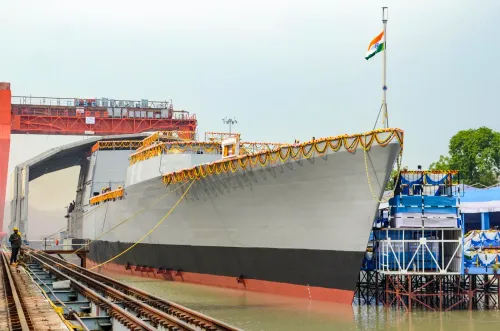
ORV Sagar Manthan was launched at Rishi Bankim Shipyard, Kolkata on 9 September by defence PSU GRSE for NCPOR .
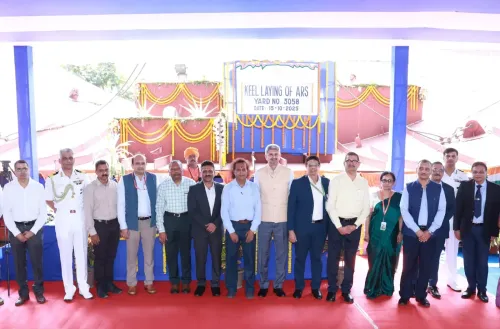
The vessel was delivered within two years of contract signing and five months after keel laying.
It features dynamic positioning , multibeam bathymetry , multichannel seismic systems , ROV and AUV deployment facilities, and a 30-year service life.
It will gradually replace the 43-year-old ORV Sagar Kanya as India's primary oceanographic platform.
The Ministry of Earth Sciences plans to acquire additional oceanographic vessels and a Polar Research Vessel in the near future.
The launch marks India's shift from procuring foreign-built research platforms to constructing them domestically under the Atmanirbhar Bharat initiative.
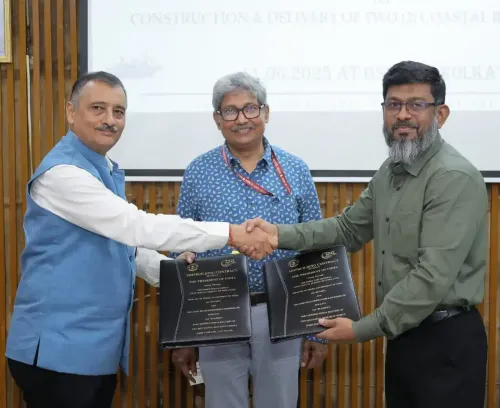
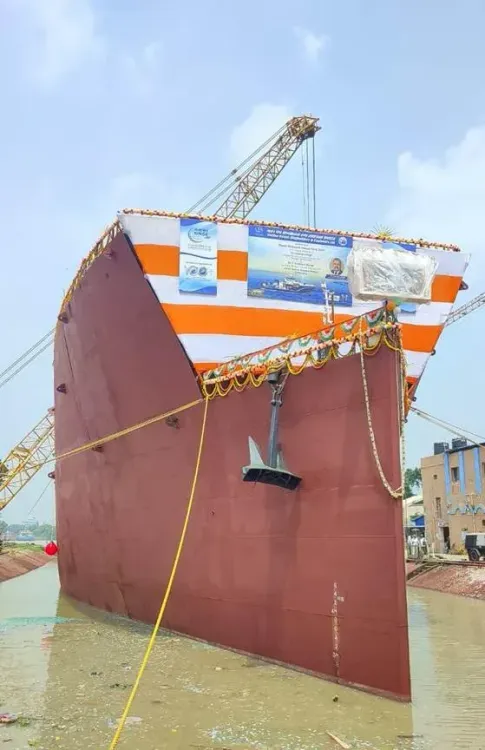
India launched its most advanced ocean research vessel, ORV Sagar Manthan, at the Rishi Bankim Shipyard in Kolkata on 9 September, marking a significant step in the country's push for indigenous maritime and oceanographic capabilities. The vessel was built by defence public sector undertaking Garden Reach Shipbuilders & Engineers Limited (GRSE) for the National Centre for Polar and Ocean Research (NCPOR), under the Ministry of Earth Sciences (MoES).
Launch Ceremony and Key Figures
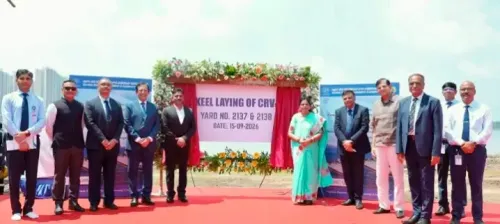
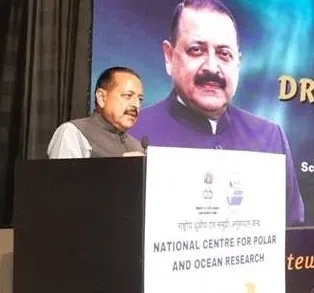
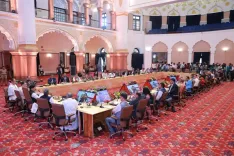
The launch was attended virtually by Dr. Jitendra Singh, Minister of Earth Sciences, whose spouse Manju Singh named the vessel, in keeping with maritime tradition. Dr. Singh commended the team for completing the launch within just two years of contract signing and barely five months after keel laying, calling it an exceptional demonstration of efficiency. He described the ship as 'India's first advanced Ocean Research Vessel built by GRSE, displaying the required thrust towards Atmanirbharta and self-reliance.'
Technical Capabilities and Equipment
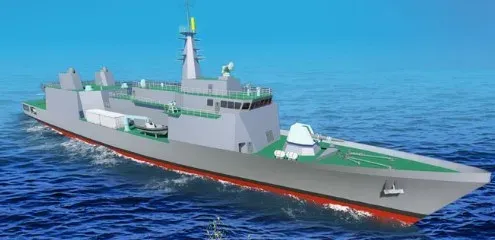
ORV Sagar Manthan is equipped with an array of cutting-edge systems, including dynamic positioning, multibeam bathymetry, multichannel seismic systems, sub-bottom profiling, weather radar, drop keels, and deployment facilities for Remotely Operated Vehicles (ROV) and Autonomous Underwater Vehicles (AUV). The vessel is engineered to operate in extreme oceanic environments, including the Southern Ocean, and carries a projected service life of 30 years.
Its research mandate covers multidisciplinary exploration along the Indian Ocean mid-oceanic ridges, including identification of multi-metal hydrothermal sulphide mineralisation, establishment of environmental baselines, collection of upper-air data, and CTD profiling. Additional capabilities include underway swath multibeam surveys, geophysical profiling, atmospheric observations, and water column sampling.
Replacing a Legacy Vessel
ORV Sagar Manthan will gradually replace the 43-year-old ORV Sagar Kanya as India's primary advanced oceanographic platform. Dr. Singh also noted that the Ministry of Earth Sciences has plans to acquire additional oceanographic vessels and a Polar Research Vessel in the near future, signalling a broader expansion of India's deep-sea research fleet.
Strategic and Scientific Significance
Dr. T. Srinivasa Kumar, Secretary of the Ministry of Earth Sciences, expressed pride in India's policy shift from procuring research platforms abroad to building them domestically. He underlined that ocean research is foundational for understanding climate challenges, predicting tsunamis, and strengthening maritime capabilities. Dr. Singh added that 'solid data collected by vessels like ORV Sagar Manthan will allow India to lead the global path in disaster prevention, take corrective environmental measures, and play a pivotal role in global ocean geopolitics.' This comes amid India's growing ambitions in the blue economy and deep-sea mining, with the government's Deep Ocean Mission already underway. The commissioning of a domestically built research vessel marks a notable departure from India's historical dependence on foreign-built oceanographic platforms.
Point of View
Anchored by the Deep Ocean Mission, require credible research infrastructure, and dependence on foreign-built vessels has long been a quiet vulnerability. What deserves scrutiny, however, is the pace of fleet expansion: one vessel, however capable, cannot substitute for the broader fleet renewal that a 30-year-old Sagar Kanya retirement demands. The announced Polar Research Vessel and additional oceanographic ships remain plans, not commitments. India's ocean geopolitics aspirations will be tested not by a single launch, but by whether MoES can sustain the procurement momentum it has now publicly promised.
NationPress
24 Oct 2026
Frequently Asked Questions
What is ORV Sagar Manthan?
ORV Sagar Manthan is India's most advanced ocean research vessel, built by Garden Reach Shipbuilders & Engineers Limited (GRSE) for the National Centre for Polar and Ocean Research (NCPOR) under the Ministry of Earth Sciences. It was launched at Rishi Bankim Shipyard in Kolkata on 9 September and is designed for multidisciplinary oceanographic research, including deep-sea mineral exploration and climate data collection.
Which vessel will ORV Sagar Manthan replace?
ORV Sagar Manthan will gradually replace the 43-year-old ORV Sagar Kanya as India's primary advanced oceanographic research platform. The Ministry of Earth Sciences also has plans to acquire additional oceanographic vessels and a Polar Research Vessel in the near future.
What are the key technical features of ORV Sagar Manthan?
The vessel is equipped with dynamic positioning, multibeam bathymetry, multichannel seismic systems, sub-bottom profiling, weather radar, drop keels, and facilities for deploying Remotely Operated Vehicles (ROV) and Autonomous Underwater Vehicles (AUV). It is built to operate in extreme environments including the Southern Ocean, with a projected service life of 30 years.
Who built ORV Sagar Manthan and how long did it take?
ORV Sagar Manthan was designed, engineered, and constructed by defence public sector undertaking Garden Reach Shipbuilders & Engineers Limited (GRSE). The vessel was launched within two years of contract signing and just five months after keel laying, which Minister Dr. Jitendra Singh described as an exceptional display of efficiency.
Why is ORV Sagar Manthan significant for India?
The vessel represents India's shift from procuring foreign-built oceanographic platforms to constructing them domestically, in line with the Atmanirbhar Bharat initiative. It will support India's Deep Ocean Mission, aid in tsunami prediction, climate research, and deep-sea mineral exploration, and is seen as a step toward greater influence in global ocean geopolitics.