GRSE lays keels for two Coastal Research Vessels for Geological Survey of India
Synopsis
GRSE has formally begun structural construction of two state-of-the-art Coastal Research Vessels for the Geological Survey of India — vessels that will survey and sample India's Exclusive Economic Zone across depths of up to 1,000 metres. With DP-1 positioning, on-board scientific labs, and diesel-electric propulsion, they represent a concrete step toward India's critical mineral self-reliance ambitions under Atmanirbhar Bharat @2047.
Key Takeaways
GRSE laid keels for two Coastal Research Vessels (CRVs) for the Geological Survey of India (GSI) on 15 September 2026 at its Rishi Bankim Dockyard, Kolkata .
Each vessel is 64 metres long and 13 metres wide , with a deadweight of approximately 461 tonnes , speed of 10 knots , and endurance of 15 days .
The CRVs will operate in India's EEZ at depths of 5 to 1,000 metres , equipped with scientific labs and Dynamic Positioning-1 capability.
GSI Director General Varsha Ashok Aglawe linked the project to Atmanirbhar Bharat @2047 and self-reliance in the mineral sector.
GRSE is also building an Ocean Research Vessel for NCPOR and an Acoustic Research Ship for DRDO's NPOL , and has received an NOA from ONGC for four Platform Supply Vessels .
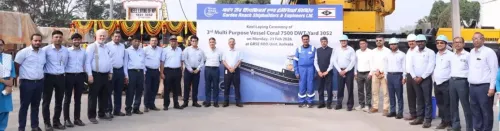
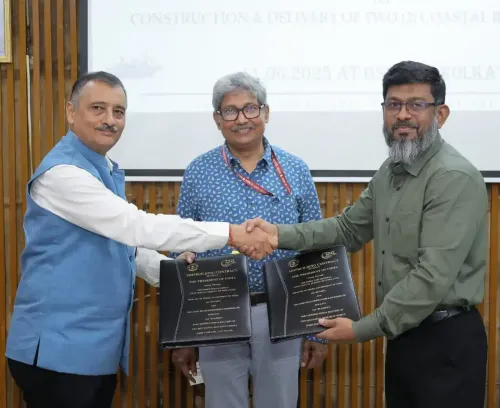
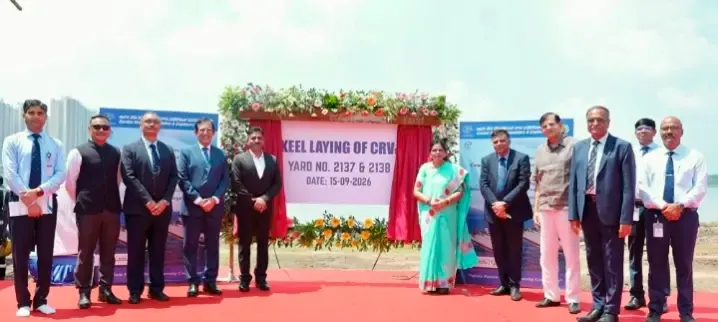
Garden Reach Shipbuilders & Engineers (GRSE), the Kolkata-based state-run shipyard, on Tuesday, 15 September 2026, reached a key construction milestone with the keel-laying of two Coastal Research Vessels (CRVs) for the Geological Survey of India (GSI) at its Rishi Bankim Dockyard in Kolkata. The ceremony marks the formal commencement of structural construction for vessels that will strengthen India's offshore mineral exploration capabilities.
Key Developments at the Keel-Laying Ceremony
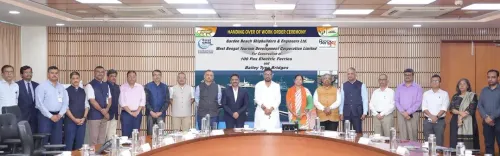
Varsha Ashok Aglawe, Director General of GSI, attended the ceremony as chief guest. In shipbuilding tradition, keel-laying signifies the transition from design and engineering planning into the physical assembly of a vessel's backbone — a point of no return in construction timelines.
According to GRSE, the order for these CRVs was placed specifically in recognition of the shipyard's track record in building advanced, specialised vessels — a niche segment that demands precision engineering distinct from standard naval construction.
Vessel Specifications and Capabilities
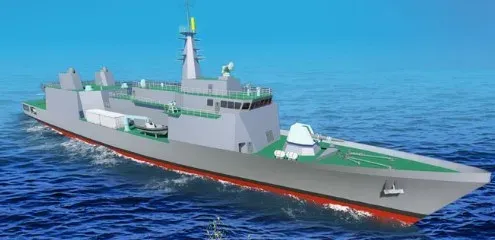
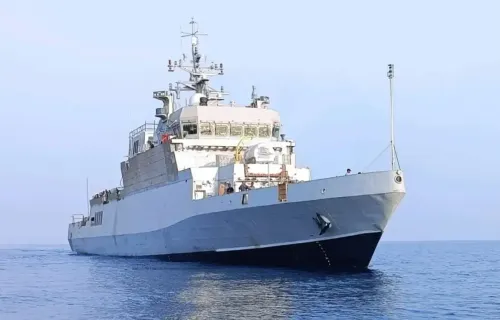
Each of the two CRVs will measure 64 metres in length and 13 metres in width, with a deadweight tonnage of approximately 461 tonnes. The ships will carry a top speed of 10 knots, an endurance of 15 days at sea, and accommodation for 35 personnel.
They will be fitted with advanced scientific laboratories for data processing and sample analysis. Crucially, the vessels will incorporate Dynamic Positioning-1 (DP-1) capability, enabling precise station-keeping in Sea State 3 conditions — a prerequisite for accurate deep-sea geological surveys. Propulsion will be diesel-electric, with diesel generators powering the thrusters.
Operationally, the CRVs are designed to function within India's Exclusive Economic Zone (EEZ), covering water depths ranging from 5 to 1,000 metres. Their stated purposes include offshore geological mapping, mineral exploration, ocean environment monitoring, and broader scientific research.
What the Government Said
Varsha Ashok Aglawe described the vessels as 'extremely valuable in exploring our mineral resources beyond the country's land borders.' She added: 'Once commissioned, these vessels will play a pivotal role in augmenting India's offshore mineral exploration capabilities. This project aligns seamlessly with our national vision of Atmanirbhar Bharat @2047 and achieving comprehensive self-reliance in the mineral sector.'
From the GRSE side, Cmde Hari said the keel-laying marked 'the transformation of design and planning into the physical construction of the vessels,' and expressed confidence in delivering the CRVs to GSI 'on schedule and with the highest quality standards.'
GRSE's Expanding Specialised Vessel Portfolio
The keel-laying adds to an already substantial order book at GRSE's specialised vessel division. The shipyard is currently building an Ocean Research Vessel (ORV) for the National Centre for Polar and Ocean Research (NCPOR) under the Ministry of Earth Sciences, and an Acoustic Research Ship (ARS) for the Naval Physical and Oceanographic Laboratory (NPOL), an establishment of the Defence Research and Development Organisation (DRDO).
GRSE's credentials in this segment extend back decades — the shipyard delivered two series of Sandhayak-class survey vessels to the Indian Navy and the marine acoustic research ship INS Sagardhwani to NPOL in 1994. More recently, the yard received a Notification of Award (NOA) from Oil and Natural Gas Corporation Limited (ONGC) for the construction of four Platform Supply Vessels (PSVs).
Why This Matters for India's Mineral Ambitions
India's EEZ spans roughly 2.37 million square kilometres, a vast maritime territory whose seabed resources remain only partially mapped. As global competition for critical minerals intensifies — driven by the energy transition and semiconductor supply chains — dedicated research vessels that can systematically survey and sample India's offshore zones become strategically significant assets. The GSI CRVs, once commissioned, are expected to directly support the government's broader push for domestic critical mineral security.
Point of View
And the absence of dedicated research tonnage has been a persistent gap. GRSE's expanding specialised-vessel order book — spanning NCPOR, DRDO-NPOL, ONGC, and now GSI — signals a deliberate policy push to build indigenous scientific maritime infrastructure rather than rely on chartered or foreign-built research ships. The Atmanirbhar Bharat framing is apt, but the real test will be how quickly GSI can deploy and operationalise these vessels once delivered, and whether the data they generate translates into actionable mineral extraction programmes.
NationPress
15 Sept 2026
Frequently Asked Questions
What are the Coastal Research Vessels being built by GRSE for GSI?
They are two specialised scientific ships being constructed by Garden Reach Shipbuilders & Engineers (GRSE) in Kolkata for the Geological Survey of India (GSI) , designed for offshore geological mapping, mineral exploration, ocean environment monitoring, and scientific research within India's Exclusive Economic Zone.
What are the key specifications of the GSI Coastal Research Vessels?
Each CRV will be 64 metres long and 13 metres wide , with a deadweight of approximately 461 tonnes , a top speed of 10 knots , an endurance of 15 days , and accommodation for 35 personnel . They feature diesel-electric propulsion, Dynamic Positioning-1 capability, and onboard scientific laboratories.
Why is the keel-laying ceremony significant in shipbuilding?
Keel-laying marks the formal commencement of a vessel's structural construction — the point at which design and engineering planning translate into the physical assembly of the ship's primary backbone. It is a traditional milestone that signals the project has moved from procurement into active fabrication.
How do these vessels support India's mineral exploration goals?
The CRVs will operate in India's EEZ at water depths of 5 to 1,000 metres , systematically surveying and sampling the seabed for mineral deposits. GSI's Director General has described them as pivotal to augmenting India's offshore mineral exploration capabilities and advancing the Atmanirbhar Bharat @2047 self-reliance agenda.
What other specialised vessels is GRSE currently building?
GRSE is simultaneously building an Ocean Research Vessel (ORV) for the National Centre for Polar and Ocean Research (NCPOR) and an Acoustic Research Ship (ARS) for DRDO's Naval Physical and Oceanographic Laboratory (NPOL) . The shipyard has also received a Notification of Award from ONGC for four Platform Supply Vessels.