UN report: AI chatbot pleasantries waste energy for 760,000 people

Synopsis
A UN University report reveals that AI data centres already consume as much electricity as France, and unnecessary chatbot pleasantries alone waste enough energy to power 760,000 sub-Saharan African households — with demand set to nearly double by 2030.
Key Takeaways
AI data centres consumed an estimated 448 TWh of electricity last year, ranking equivalent to France if treated as a country.
Polite filler phrases in AI chatbot interactions waste energy sufficient to power 760,000 sub-Saharan African residents annually, according to the UN University report.
Producing that electricity required 4.5 trillion litres of water and 6,900 sq km of land — nearly 4.5 times Greater London .
AI electricity demand is projected to reach 945 TWh by 2030 , close to 3% of total global electricity consumption .
By 2030 , AI infrastructure could generate up to 2.5 million tonnes of e-waste per year , equal to 250 Eiffel Towers discarded annually.
The report was published by the Institute for Water, Environment and Health under the United Nations University on Wednesday, 3 June 2026 .
Skipping phrases like 'please' and 'thank you' when prompting AI chatbots could conserve enough energy to power the annual needs of 760,000 residents in sub-Saharan Africa, according to a landmark report released on Wednesday, 3 June 2026 by the Institute for Water, Environment and Health under the United Nations University, the academic arm of the United Nations. The study lays bare the massive but largely hidden environmental toll of artificial intelligence, extending well beyond carbon emissions.
The scale of AI's energy footprint
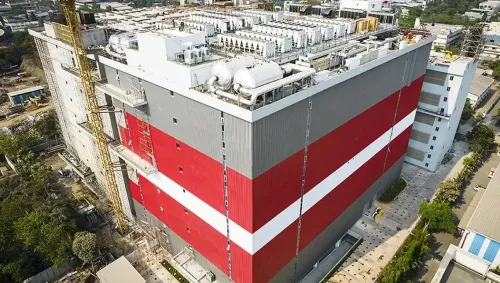
Data centres — the physical backbone of AI infrastructure — consumed an estimated 448 terawatt-hours (TWh) of electricity last year. To put that in perspective, if data centres were a sovereign nation, they would rank 11th globally for energy consumption, roughly on par with France.
Generating that electricity required approximately 4.5 trillion litres (1.2 trillion gallons) of water — enough to fill 1.8 million Olympic-sized swimming pools. The physical infrastructure also demanded 6,900 sq km (2,700 square miles) of land, nearly 4.5 times the size of Greater London, according to the report.
Why it matters: beyond carbon to water, land and e-waste
The UN University report explicitly warns that the true cost of AI cannot be reduced to carbon accounting alone. Water consumption, land use, and electronic waste represent compounding environmental liabilities that regulators and technology companies have largely failed to address in public disclosures.
By 2030, the report projects that AI infrastructure could generate up to 2.5 million tonnes of e-waste annually — the equivalent of discarding 250 Eiffel Towers worth of hardware every year. This places mounting pressure on supply chains in the United States, China, and other major AI-producing economies.
The 2030 trajectory: nearly 3% of global electricity
AI-related electricity consumption is projected to reach 945 TWh by 2030, accounting for nearly 3 per cent of total global electricity demand, according to the study. That figure represents more than a doubling of current consumption within five years, driven by the rapid proliferation of large language models and generative AI services such as ChatGPT from OpenAI.
The compounding demand for compute, cooling water, and physical land signals that the environmental cost of AI is structural, not incidental — baked into every query, every model training run, and every unnecessary token generated by overly polite users.
What's next: pressure on tech giants and policymakers
The UN University findings are expected to intensify calls for mandatory environmental disclosures from hyperscalers and AI developers. Regulators in the European Union and several US states have already begun examining data centre water and energy reporting standards.
As AI adoption accelerates globally, the organisations and governments most exposed will be those building or hosting large-scale data centres without binding sustainability commitments — a list that currently includes some of the world's most valuable technology companies.
Point of View
The industry's self-reported climate pledges have focused almost exclusively on renewable energy procurement, quietly sidestepping water stress and e-waste — liabilities that are far harder to offset with a certificate. The chatbot-pleasantries angle is a compelling hook, but the structural finding is more damning: AI's resource footprint is doubling on a five-year cycle regardless of user behaviour, driven by model scaling and inference demand. What mainstream coverage misses is the geographic concentration of risk — data centre water withdrawals are acutely felt in already water-scarce regions of the American Southwest and northern China, where AI infrastructure is densest. Policymakers who have treated AI energy as a grid-management problem are about to discover it is simultaneously a water-security and waste-management crisis.
NationPress
21 Oct 2026
Frequently Asked Questions
How much energy do AI data centres consume?
AI data centres consumed an estimated 448 terawatt-hours (TWh) of electricity last year, according to the UN University report. That places them roughly on par with France in national energy consumption terms, ranking 11th globally if treated as a country.
Why does being polite to AI chatbots waste energy?
Every token an AI model processes — including unnecessary pleasantries like 'please' or 'thank you' — requires computational work that draws electricity from data centres . The UN University report calculated that eliminating such filler language could save enough energy to cover the annual electricity needs of 760,000 residents in sub-Saharan Africa .
What is the projected AI electricity demand by 2030?
AI-related electricity consumption is projected to reach 945 TWh by 2030 , nearly double current levels. That would account for close to 3 per cent of total global electricity demand , according to the UN University study published on 3 June 2026 .
How much e-waste will AI generate by 2030?
By 2030 , AI infrastructure could produce up to 2.5 million tonnes of electronic waste annually , the UN University report warned. That is equivalent to discarding 250 Eiffel Towers worth of hardware every year.
Which countries are most affected by AI's environmental impact?
The United States and China host the largest concentrations of AI data centre infrastructure and bear the greatest share of associated water, land, and energy burdens. The report's findings apply pressure to policymakers and technology companies in both nations to adopt binding environmental disclosure standards.