Tencent's WeChat AI agent Xiaowei tested: strengths and limits
Synopsis
Tencent unveiled its WeChat AI agent Xiaowei during its August 2026 earnings call — and a 24-hour real-world trial reveals a capable but imperfect system that could reshape how over a billion users interact with China's dominant super-app.
Key Takeaways
Tencent Holdings publicly introduced its WeChat AI agent Xiaowei for the first time during its earnings announcement on Wednesday, 16 August 2026 .
Xiaowei is an action-taking AI agent — not a chatbot — designed to complete tasks such as making restaurant reservations and placing orders autonomously.
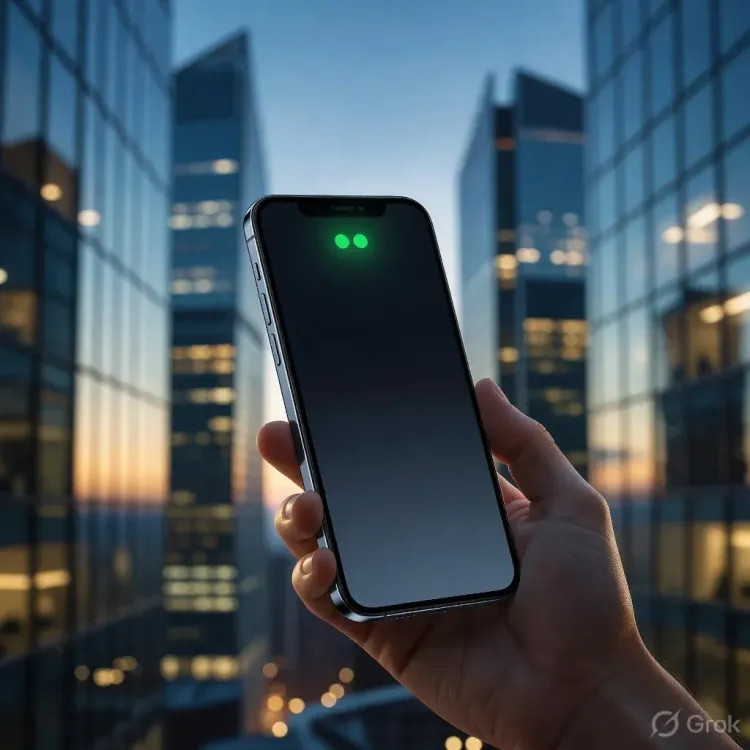
The feature is currently in trial, visible as two green dots at the top of WeChat's main screen, with access limited to early users.
Tencent highlighted Xiaowei's focus on user privacy and inference efficiency as key differentiators in its earnings commentary.
A nearly 24-hour hands-on test found the agent promising but occasionally frustrating, reflecting the early-stage nature of consumer agentic AI.
Rivals including Alibaba are building competing agent layers, intensifying the race for dominance in China's AI-powered super-app ecosystem.
Tencent Holdings' WeChat has introduced an embedded AI agent called Xiaowei, marking the super-app's most ambitious step yet toward fully automated, hands-free digital assistance for its more than one billion users in China. The feature was publicly highlighted for the first time during Tencent's latest earnings results announced on Wednesday, 16 August 2026, with the company emphasising its focus on user privacy and inference efficiency.
What Xiaowei is — and how it works
Unlike conventional chatbots that respond to queries, Xiaowei is designed as an action-taking agent. Where a standard AI might suggest a hotpot restaurant, Xiaowei is built to make the reservation and place the order. The feature appears as two green dots at the top of WeChat's main screen and is currently available as a trial to select early-access users.
WeChat is already the undisputed super-app across China, handling tasks ranging from splitting dinner bills to hailing taxis — giving Xiaowei an unusually rich ecosystem of services to act upon from day one.
24-hour field test: what the agent got right
During a nearly 24-hour hands-on trial, Xiaowei was given control over a tester's daily digital routine to assess how comprehensively an AI agent could manage real-life tasks inside the platform. The experiment offered a promising glimpse into the future of app-based automation, with the agent demonstrating meaningful capability in navigating WeChat's interconnected mini-programs and services.
The agent's design philosophy — centred on privacy preservation and lean inference — reportedly sets it apart from more resource-intensive AI deployments, according to the company's earnings commentary.
Where it stumbled
The trial also surfaced moments of frustration, underscoring that agentic AI inside consumer super-apps remains an early-stage technology. Specific failure cases pointed to the inherent complexity of chaining multiple in-app actions without human intervention, a challenge that rivals including Alibaba are also navigating as they build competing agent layers atop their own ecosystems.
Why it matters
Tencent's decision to debut Xiaowei in an earnings call signals the company views agentic AI as a core commercial narrative, not merely a product experiment. With WeChat's scale, even incremental adoption of Xiaowei could reshape how hundreds of millions of users interact with commerce, logistics, and communication daily.
The competitive backdrop is intensifying: Alibaba and other Chinese tech majors are racing to embed autonomous agents into their own platforms, making the agent layer the next major battleground in China's AI ecosystem wars.
What's next
As Tencent expands Xiaowei's trial rollout, the key metrics to watch will be task-completion rates, user retention within the agent interface, and whether the privacy-first architecture holds up under regulatory scrutiny. The broader question is whether a super-app's embedded agent can outperform standalone AI assistants — a test that will define the next phase of consumer AI in Asia.
Point of View
Not just an R&D talking point. This mirrors a pattern seen across the US big-tech cycle, where AI agent announcements are increasingly used to anchor valuation stories amid slowing core-business growth. What mainstream coverage underweights is the regulatory dimension: an AI agent that autonomously executes transactions inside a platform used by over a billion people is precisely the kind of data-aggregation mechanism that China's internet regulators have historically moved to constrain. The privacy-first framing from Tencent may be as much a pre-emptive regulatory hedge as a genuine architectural choice.
NationPress
1 Oct 2026
Frequently Asked Questions
What is Tencent's WeChat AI agent Xiaowei?
Xiaowei is an AI agent embedded inside WeChat that is designed to take autonomous actions — such as booking restaurants or placing orders — rather than simply answering questions like a chatbot. It appears as two green dots at the top of WeChat's main screen and is currently in early-access trial.
When did Tencent announce Xiaowei?
Tencent highlighted Xiaowei for the first time during its earnings results announced on Wednesday, 16 August 2026 . The company used the earnings platform to emphasise the agent's privacy focus and inference efficiency.
How did Xiaowei perform in real-world testing?
A nearly 24-hour hands-on trial found Xiaowei to be a promising but imperfect system. The agent showed genuine capability in navigating WeChat's ecosystem of mini-programs and services, but also produced moments of frustration, reflecting the early-stage nature of consumer agentic AI.
How does Xiaowei compare to rivals like Alibaba?
Alibaba and other major Chinese tech companies are also building autonomous agent layers atop their platforms, making this a fiercely contested space. Xiaowei's advantage lies in WeChat's unmatched scale of over one billion users and its deeply integrated ecosystem of payments, logistics, and commerce.
Why does Tencent's AI agent matter for the broader tech industry?
The launch signals that agentic AI — systems that act, not just respond — is moving from research labs into mass-market consumer apps. If Xiaowei scales successfully inside WeChat , it could set a template for how super-apps globally integrate autonomous AI, accelerating similar moves by platforms in Asia and beyond.