AI exploit WeWorm hijacks WeChat via missed calls, Tencent patches flaw
Synopsis
A US security firm built an AI-assisted exploit called WeWorm that could hijack any WeChat account through a single missed voice call — compressing what once took months of engineering work into just over one week, exposing a new frontier of AI-driven cyber risk.
Key Takeaways
US firm Calif disclosed on 9 September 2026 that it developed WeWorm , an AI-assisted exploit targeting WeChat accounts via unanswered voice calls.
The critical flaw in Tencent Holdings' platform was identified in July 2026 ; Tencent deployed a server-side patch in late August 2026 .
Tencent confirmed there was 'no evidence that the vulnerability was ever exploited in the wild' and that no user action is required to be protected.
Calif researchers stated that 'AI can already do most of the work here,' compressing a previously months-long development cycle to just over one week.
The incident has renewed calls for formal US–China bilateral cooperation on cybersecurity vulnerability disclosure.
The case is being cited by analysts as a documented example of frontier AI models lowering the barrier to sophisticated cyberattacks.
US cybersecurity firm Calif disclosed on Tuesday, 9 September 2026 that its researchers used artificial intelligence to develop WeWorm, an experimental exploit capable of seizing full control of a WeChat account through a single unanswered voice call — no user interaction required. The vulnerability, identified in July within Tencent Holdings' messaging and payments platform, was patched by the Chinese tech giant in late August after Calif alerted the company. The disclosure has intensified debate over AI-accelerated cyber threats and renewed calls for United States–China bilateral cooperation on cybersecurity.
How WeWorm worked
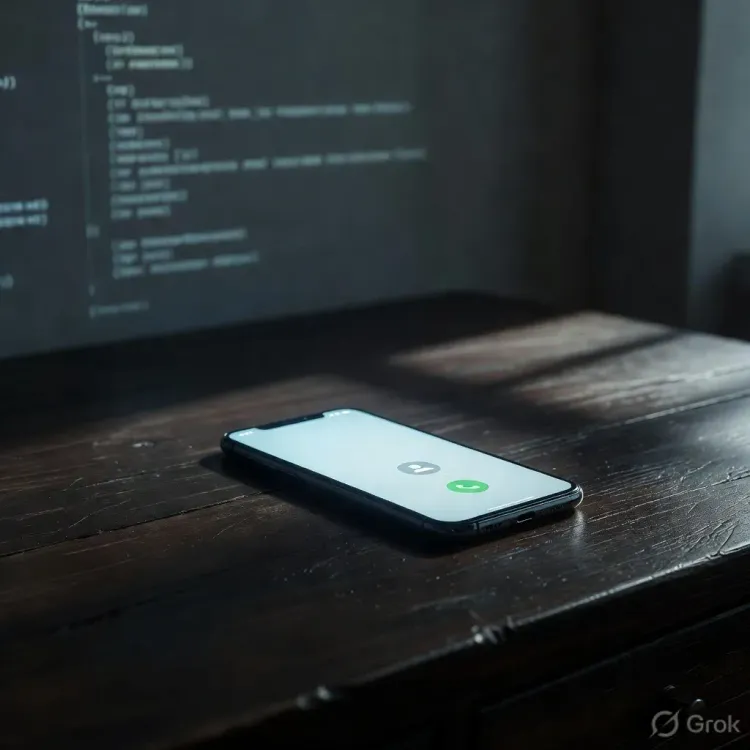
Calif researchers identified a critical server-side flaw in WeChat in July and, in just over a week, built WeWorm — an exploit that routes an attack through a simple voice call the target never needs to answer. Once triggered, the attacker could gain complete control of the victim's account, including access to messages and linked payment functions. The firm noted that AI did the heavy lifting, stating that 'AI can already do most of the work here.'
Why it matters
The speed of development is the most alarming detail: a worm of comparable complexity previously demanded months of effort from larger engineering teams, according to Calif. The fact that a small research group compressed that timeline to roughly a week signals a structural shift in the threat landscape. Analysts noted that the same AI capabilities available to defenders are equally accessible to malicious actors.
Tencent's response
A Tencent spokesperson confirmed on Wednesday that a server-side fix had been deployed, requiring no action from WeChat's more than 1 billion users. The company stated there was 'no evidence that the vulnerability was ever exploited in the wild' and said it was 'grateful to the researchers for bringing this to our attention and working with us.' The coordinated disclosure process between a US firm and a Chinese technology giant was itself highlighted as a model for cross-border cyber cooperation.
The competitive backdrop
The findings arrive against a backdrop of escalating AI development across China, with firms including DeepSeek, MiniMax, StepFun, and Moonshot AI rapidly advancing large language model capabilities. Security researchers, including voices at institutions such as the American Enterprise Institute, have warned that frontier AI models lower the barrier to sophisticated cyberattacks. The WeWorm case provides a concrete, documented example of that concern materialising in a real-world context.
What's next
The incident is expected to amplify pressure on policymakers in both Washington and Beijing to establish formal channels for vulnerability disclosure and cyber incident coordination. For Tencent, the swift patch limits immediate reputational damage, but the episode exposes the scale of risk embedded in super-apps that combine communications and financial services. How quickly adversarial actors adopt similar AI-assisted exploit development pipelines will be the defining variable to watch in the months ahead.
Point of View
State-level and criminal actors operating with far greater resources face an even lower barrier. The coordinated disclosure between a US firm and Tencent is quietly significant: it demonstrates that technical cooperation can survive geopolitical friction, but it also highlights the absence of any formal government-to-government framework to institutionalise such exchanges. With China's AI ecosystem — DeepSeek, MiniMax, StepFun — advancing rapidly, the window for establishing mutual vulnerability-disclosure norms may be narrowing faster than policymakers on either side appear to recognise.
NationPress
24 Oct 2026
Frequently Asked Questions
What is WeWorm and how does it hijack WeChat accounts?
WeWorm is an experimental AI-assisted exploit developed by US cybersecurity firm Calif that can seize full control of a WeChat account through a single unanswered voice call, requiring no interaction from the victim. Researchers identified the underlying flaw in July 2026 and built the exploit in just over a week, with AI automating most of the development process.
Has Tencent fixed the WeChat vulnerability?
Tencent deployed a server-side fix in late August 2026 , meaning all WeChat users are protected automatically without needing to update the app. The company confirmed there was 'no evidence that the vulnerability was ever exploited in the wild.'
Why does the WeWorm exploit matter for AI cybersecurity?
The WeWorm case matters because it provides a real-world, documented example of AI dramatically accelerating the development of sophisticated cyberattacks. A comparable exploit previously required months of work from larger engineering teams; Calif researchers completed it in just over a week, signalling a structural shift in the threat landscape.
What does this mean for US-China cybersecurity relations?
The incident has renewed calls for formal bilateral cooperation between the United States and China on vulnerability disclosure and cyber incident coordination. The coordinated disclosure between Calif and Tencent is being cited as a working model, though no government-to-government framework currently exists to institutionalise such exchanges.
Which Chinese AI companies are relevant to the broader threat context?
Security analysts have pointed to the rapid advancement of Chinese AI firms — including DeepSeek , MiniMax , StepFun , and Moonshot AI — as evidence that frontier AI capabilities are becoming widely accessible. Researchers and institutions such as the American Enterprise Institute have warned this lowers the barrier to AI-assisted cyberattacks globally.