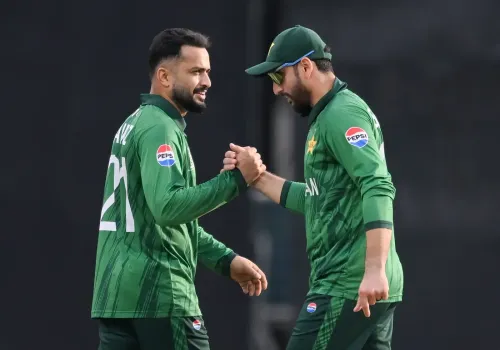
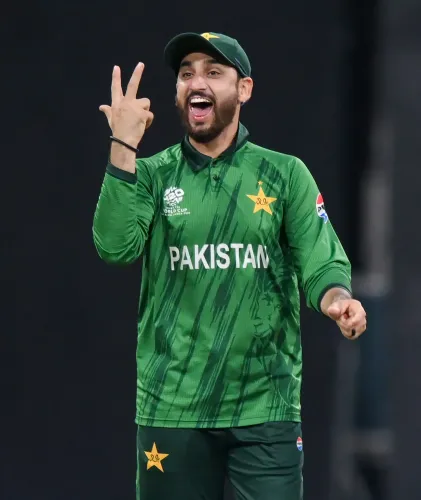
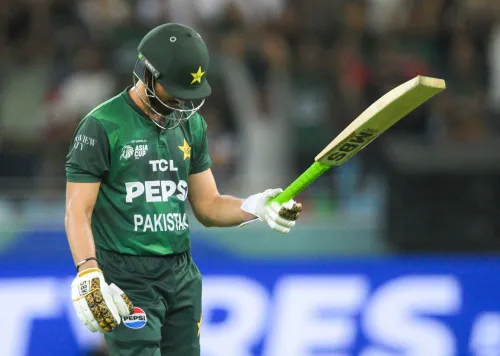
Salman Agha's ODI century vs Sri Lanka: domestic cricket made the difference
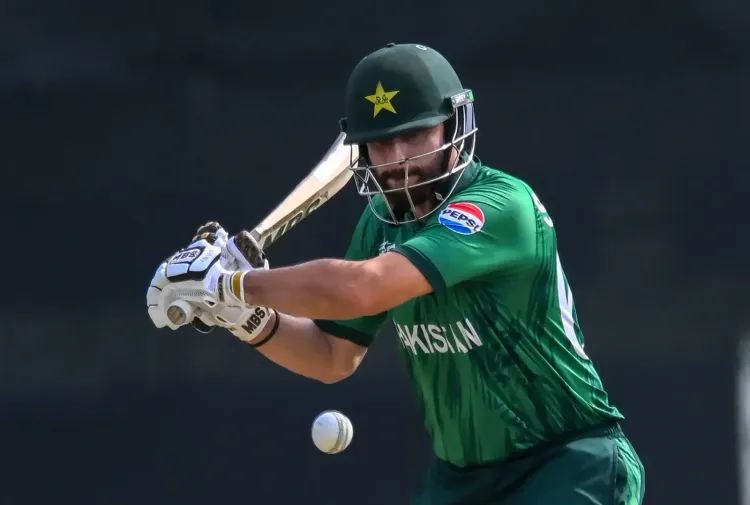
Synopsis
Dropped from all three formats and stripped of the T20I captaincy, Salman Agha went back to domestic cricket, scored an unbeaten triple-century and another hundred in five matches, then walked out and made 107* off 90 balls against Sri Lanka in a tri-series opener. His post-match argument — that domestic cricket deserves far more respect — lands with the weight of a match-winner behind it.
Key Takeaways
Salman Agha scored an unbeaten 107 off 90 deliveries against Sri Lanka in the tri-series opener in Rawalpindi on 19 October 2025 .
Agha had been out of Pakistan's international setup since August , having lost his place in the T20I , Test , and ODI squads, as well as the T20I captaincy.
During his absence he represented Kingsmen in the President's Trophy Grade-I , scoring an unbeaten triple-century in mid-September and another hundred shortly after, across five matches .
Agha argued that domestic cricket performances are routinely undervalued by social media, ex-cricketers, and the media.
He cited Saud Shakeel as another example of a player whose domestic grounding deserves recognition.
Salman Agha marked a commanding return to ODI cricket on Sunday, 19 October 2025, smashing an unbeaten 107 off 90 deliveries against Sri Lanka in the opening match of a tri-series in Rawalpindi that also features England. The 32-year-old Pakistan batter credited an extended stint in domestic cricket for restoring both his technique and confidence after a difficult period at the international level.
A Return Built on Domestic Runs
Agha had been absent from Pakistan's international setup since August, having lost his place in the T20I and Test sides, as well as the captaincy in the shortest format. Rather than retreating, he returned to Pakistan's domestic circuit with a point to prove. Representing Kingsmen in the President's Trophy Grade-I competition, he struck an unbeaten triple-century in mid-September before adding another hundred towards the end of the following month — accumulating those scores across five domestic matches.
'My batting alignment and mechanics were out of place, but I went there, played, performed, and improved significantly,' Agha said after his match-winning knock. 'Today, by the grace of Allah, that success translated here.'
Agha's Case for Respecting Domestic Cricket
Speaking after his innings, Agha was pointed in his criticism of the tendency to dismiss domestic performances as less meaningful. 'I feel that we don't give enough respect to our domestic cricket,' he said. 'People think conditions there are very easy and scoring runs is a walk in the park — which isn't true, otherwise everyone would go and score.'
He argued that the narrative around established players returning to domestic cricket is often reductive. 'When a player like me scores runs there, social media, ex-cricketers, or the media often downplay it by saying, 'Oh, he just scored runs in domestic (cricket).' Let me tell you, scoring runs in domestic cricket is not easy. You have to go there, play well, and fight for your runs; otherwise, runs simply don't come.'
Agha also pointed to the career of teammate Saud Shakeel — who also performed well in the same fixture — as evidence that the domestic pathway deserves greater recognition.
Context: A Difficult International Spell
Agha's exclusion from Pakistan's Test squad had followed a challenging run of results, including his stint as stand-in captain during the opening Test at Leeds on the tour of England. Despite having been a consistent performer for Pakistan over roughly four years at international level, a dip across three or four Test matches proved enough for selectors to drop him from all three formats.
'I had been performing consistently for four years before that,' Agha noted. 'So I don't think being in or out of the limelight changes things drastically.' He acknowledged, however, that recovering from a rough patch at the highest level is far from straightforward: 'When you face a rough patch in international cricket, getting out of it isn't easy because you are playing high-risk cricket under immense pressure against the best professionals in the world.'
Broader Significance for Pakistan Cricket
The century arrives at a pivotal moment for Pakistan, who have faced scrutiny over player selection and team management in recent months. Agha's return underlines the potential value of the domestic structure as a reset mechanism — one that Pakistan's selectors arguably leveraged effectively in this instance. Notably, his comeback story mirrors patterns seen in other cricket nations, where a well-functioning domestic circuit serves as a genuine bridge back to the international stage.
With the tri-series still in its early stages and England also in the mix, Agha's form will be closely watched as Pakistan look to build momentum ahead of future assignments.
Point of View
But Pakistan cricket's deeper problem is structural: selectors rarely articulate clear, measurable criteria for dropping or recalling players, leaving careers hostage to brief slumps rather than career arcs. The fact that a consistent four-year performer could be discarded after three or four bad Tests — without a transparent explanation — is a governance issue, not just a form one. Agha's century is a satisfying comeback story; it should also prompt a harder conversation about whether Pakistan's selection process is systematic enough to reliably identify and protect long-term value.
NationPress
19 Oct 2026
Frequently Asked Questions
How did Salman Agha perform in the tri-series opener against Sri Lanka?
Salman Agha scored an unbeaten 107 off 90 deliveries against Sri Lanka in the opening match of the tri-series in Rawalpindi on 19 October 2025. The knock was match-winning and marked his return to ODI cricket after a lengthy absence from the national setup.
Why was Salman Agha dropped from Pakistan's international squads?
Agha lost his place in Pakistan's T20I, Test, and ODI squads following a difficult run in Test cricket, which included a stint as stand-in captain during the opening Test against England at Leeds. A poor sequence of three or four matches proved enough for selectors to leave him out across formats.
What did Salman Agha do during his time away from international cricket?
Agha represented Kingsmen in the President's Trophy Grade-I competition, scoring an unbeaten triple-century in mid-September and another hundred later in the month across five domestic matches. He used the stint to rebuild his batting mechanics and confidence.
What argument did Agha make about domestic cricket after his century?
Agha argued that domestic cricket is routinely undervalued, with social media, former cricketers, and the media often dismissing performances there as less meaningful. He insisted that scoring runs at domestic level requires just as much effort, consistency, and technical skill as at the international stage.
Which other Pakistan players did Agha cite as examples of domestic cricket producing international talent?
Agha highlighted Saud Shakeel, who also performed well in the same tri-series fixture against Sri Lanka, as a player whose rise through the domestic system deserves greater recognition. He framed both their careers as proof of the domestic circuit's value.