2025 ODI World Cup win is Harmanpreet's greatest legacy as India captain: Anjum Chopra
Synopsis
Anjum Chopra, who has watched Harmanpreet Kaur from a national camp in 2008 to the 2025 ODI World Cup podium, delivers a candid verdict: the title on home soil is the legacy that defines everything. But her more pointed argument — that India's T20 World Cup failures were a batting-template problem, not a captaincy failure — may be the most important thing said about Indian women's cricket this week.
Key Takeaways
Harmanpreet Kaur stepped down as India women's captain across all formats this week after nearly ten years in charge.
Smriti Mandhana has been named as the new India women's captain across formats.
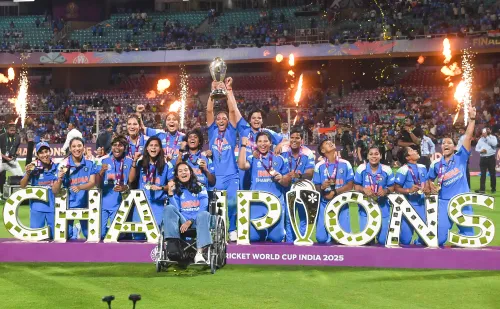
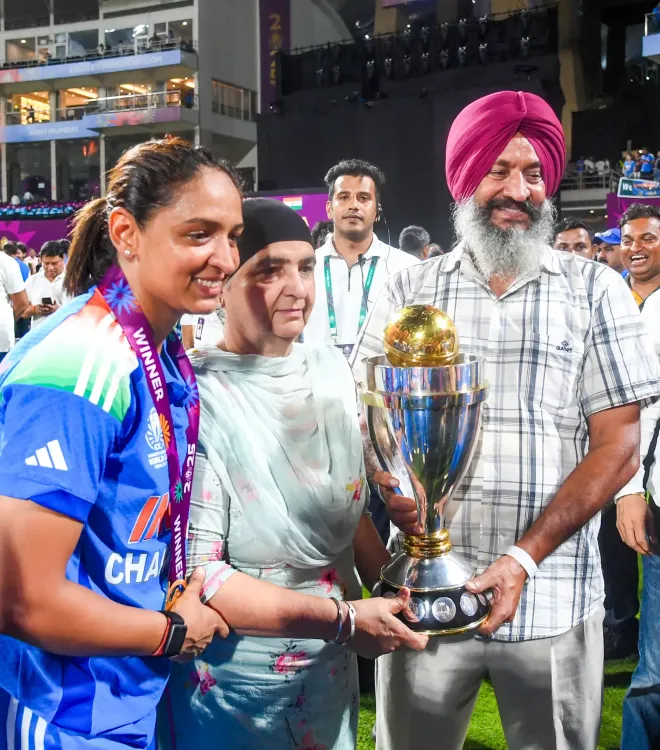
Former captain Anjum Chopra says the 2025 Women's ODI World Cup triumph on home soil is Harmanpreet's biggest legacy.
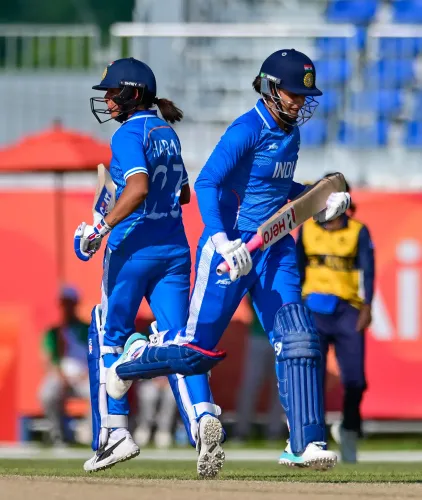
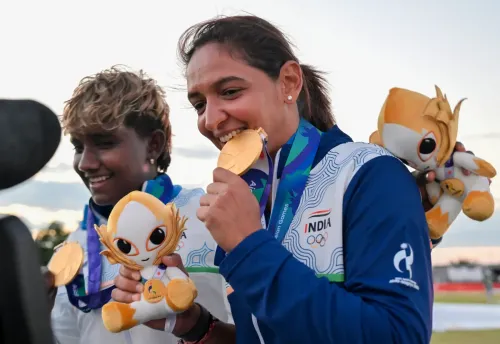
Harmanpreet captained India in 5 Tests , 51 ODIs , and 155 T20Is , and led the side to a second consecutive Asian Games gold in Nisshin, Japan .
Chopra rejected the view that T20 World Cup exits in 2024 and 2026 drove the captaincy change, citing batting-template and bowling-depth issues instead.
Chopra flagged India's reliance on a single frontline pacer — citing Kranti Gaud — as a structural concern that outlasts any captaincy change.
Former India captain Anjum Chopra has said that Harmanpreet Kaur's defining legacy as India women's captain will be leading the side to the 2025 Women's ODI World Cup title on home soil — a triumph that, according to Chopra, was built on collective growth and a decade of relentless team-building. Harmanpreet stepped down as captain across all formats this week after nearly ten years at the helm, with Smriti Mandhana named as her successor.
A Legacy Sealed by the World Cup
'The biggest legacy Harmanpreet will always have to her credit as a leader is winning the ODI World Cup in 2025,' Chopra said in an exclusive conversation on Friday, 9 October. 'Look at how her batting shaped up in that tournament — in the league games, the semifinal, and the final, and how the team evolved to get there through everyone's contribution. It wasn't just Harman.'
Chopra emphasised that the victory was a collective achievement. 'With every player contributing, Harman was able to lift that crown and India was able to win,' she added. Harmanpreet's captaincy record spans five Tests, 51 ODIs, and 155 T20Is. She signed off by leading India to their second consecutive Asian Games gold medal in Nisshin, Japan, last month.
From Underdog to World Champions
Chopra, who has known Harmanpreet since a national training camp in 2008, traced her journey from a young prospect to the face of Indian women's cricket. 'From the 2008 training camp to playing her first World Cup match against Pakistan in 2009 till date, I've seen Harmanpreet grow as a player and as a captain,' she said. Chopra noted that the shift in India's stature — from perpetual underdog to genuine title contender — was unmistakable from 2022 onwards, when Harmanpreet took over all-format captaincy following Mithali Raj's retirement.
'It was very evident that this is Harmanpreet Kaur's team and she is the one holding the fort,' Chopra said. She also cited Harmanpreet's historic first T20I century by an Indian — against New Zealand at the 2018 T20 World Cup in Guyana — as an early signal of the team's changing ambition.
T20 World Cup Exits: A System Failure, Not a Captain's Failure
Chopra firmly rejected the view that India's early exits from the 2024 and 2026 T20 World Cups — in the UAE and England respectively — were the primary reason for Harmanpreet's stepping down. 'I don't think the team was equipped to handle the opposition,' she said. 'A captain does not decide that style of cricket; individual players decide that by how they go out and play.'
She pointed to a structural disconnect: Indian players routinely post totals of 200-plus in franchise cricket such as the Women's Premier League (WPL), yet struggled to replicate that in T20 World Cup knockout matches. 'You can't be chasing 200-plus in a WPL match and then struggle to reach 150 or 160 convincingly on the international stage,' she said. Chopra also flagged a persistent bowling depth issue, noting that India still relies on a single frontline pace option. 'Even today, we play with one fast bowler like Kranti Gaud, and Nandini Sharma has just walked in,' she observed.
The Character Behind the Captaincy
Chopra offered a rare close-quarters portrait of Harmanpreet the leader, describing a captain equally quick to demand higher standards and to celebrate her players. 'If somebody makes an ordinary effort in the field, she will give that person a go right on the ground. But the moment that same person makes a good stop, takes a wicket, or takes a catch, she will be the first person to run across and compliment them,' Chopra said. She added that the person behind the captain had remained unchanged despite the seismic transformation of women's cricket around her: 'I have never seen an impulsive side in her. I've always seen a calm demeanour in Harmanpreet Kaur.'
Reflecting on Harmanpreet's use of the word 'sacrifice' in her Instagram resignation post, Chopra offered context. 'The biggest sacrifice you make is setting aside your own desire and will to play a certain way. You have to put the team's interest ahead of your own... You wake up first and go to sleep last. Even in your dreams, you're thinking about how everyone else is doing,' she explained.
What Comes Next for Indian Women's Cricket
With Smriti Mandhana now at the helm, Chopra believes the foundation Harmanpreet built gives her successor a strong platform. 'That will be her legacy, alongside the aggression and confidence she brought into that dressing room over the years. If those qualities are carried forward, this Indian team is on the right path and the process is well set,' she said. The team's next assignment will be closely watched as a test of whether Harmanpreet's team culture survives the transition of leadership.
Point of View
Which is a structurally important distinction. India's inability to replicate WPL scoring rates in global knockouts is a selection and preparation failure, not a tactical one, and changing the captain does not fix it. Mandhana inherits a side that is the world's best in 50-over cricket but remains structurally fragile in T20 tournaments — a gap no new leader can paper over without addressing the bowling depth crisis Chopra herself names. The real accountability question for the BCCI women's wing is not who holds the captaincy armband, but why a team that produces 200-plus scores in franchise cricket reverts to 150s at World Cups.
NationPress
9 Oct 2026
Frequently Asked Questions
What is Harmanpreet Kaur's biggest legacy as India women's captain?
According to former India captain Anjum Chopra, Harmanpreet Kaur's biggest legacy is leading India to the 2025 Women's ODI World Cup title on home soil. Chopra described it as a team achievement built on collective growth across every player's contribution over Harmanpreet's decade-long tenure.
Why did Harmanpreet Kaur step down as India captain?
Harmanpreet stepped down as India women's captain across all formats this week after nearly ten years in the role. No single official reason has been cited; Anjum Chopra, however, rejected the narrative that India's early T20 World Cup exits in 2024 and 2026 were the primary driver, arguing the team's batting-template limitations were the real issue.
Who is the new India women's cricket captain?
Smriti Mandhana has been named as the new India women's captain across all formats, succeeding Harmanpreet Kaur. Mandhana has been a central figure in the Indian side since 2013 and has played in multiple ICC events.
What did Anjum Chopra say about India's T20 World Cup exits in 2024 and 2026?
Chopra argued that the exits were not a captaincy failure but a reflection of India's inability to replicate their franchise-cricket scoring rates — often 200-plus — in World Cup knockouts. She also pointed to a chronic bowling-depth problem, noting India still relies on a single frontline pacer.
How long did Harmanpreet Kaur captain India and what were her stats?
Harmanpreet Kaur captained India for nearly ten years, leading the side in 5 Tests, 51 ODIs, and 155 T20Is. She signed off by leading India to a second consecutive Asian Games gold medal in Nisshin, Japan, last month.