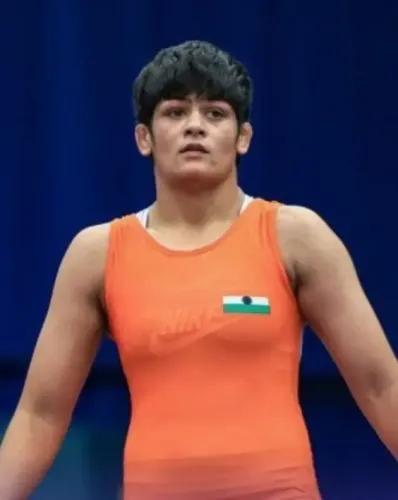
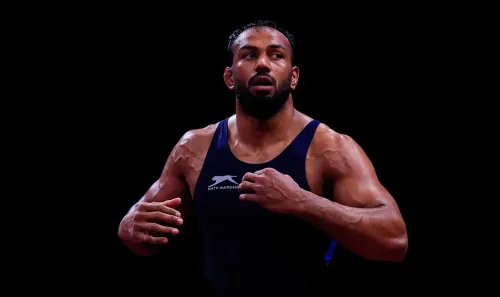
Nitesh Siwach wins Asian Games silver in men's 97kg Greco-Roman wrestling
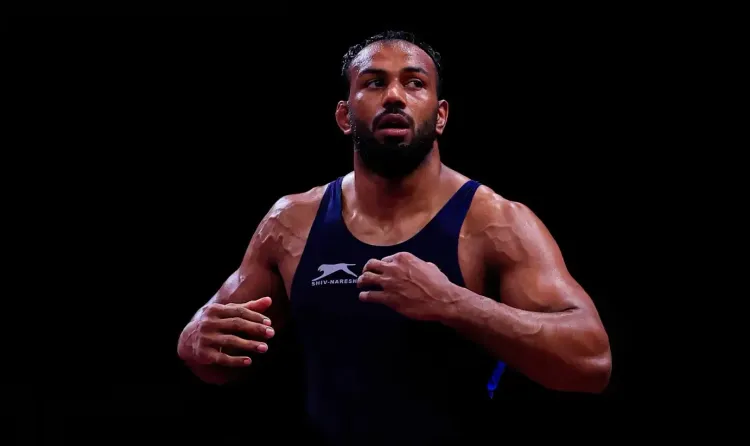
Synopsis
For the first time in 64 years, an Indian wrestler reached a Greco-Roman final at the Asian Games — and came within one bout of gold. Nitesh Siwach's 9-0 semi-final demolition of Mongolia raised hopes of ending a drought stretching back to 1962, but Japan's Yuri Nakazato proved too complete on the day, winning 4-0 to deny India the historic top step.
Key Takeaways
Nitesh Siwach won the silver medal in the men's 97 kg Greco-Roman event at the 2026 Asian Games in Nagoya on 1 October 2026 .
Japan's Yuri Nakazato won the gold, defeating Nitesh 4-0 in the final.
Nitesh became only the second Indian Greco-Roman wrestler to reach an Asian Games final, 64 years after Maruti Mane in 1962 .
He defeated Turkmenistan's Amanberdi Agamammedov 7-1 in the quarters and Mongolia's Ganbaataryn Gankhuyag 9-0 in the semis.
Nitesh arrived in Nagoya as the 2026 Asian Championships silver medallist , continuing a strong upward trajectory.
Nitesh Siwach came agonisingly close to ending India's 64-year wait for a Greco-Roman wrestling gold at the Asian Games, but had to settle for silver after Japan's Yuri Nakazato claimed the men's 97 kg final at the Nagoya City Inae Sports Center on Thursday, 1 October 2026. The result nonetheless marks a historic breakthrough — Nitesh became only the second Indian Greco-Roman wrestler in history to reach an Asian Games final, 64 years after Maruti Mane earned silver in the same weight category at the 1962 Asian Games.
A Final Too Far Against a Dominant Nakazato
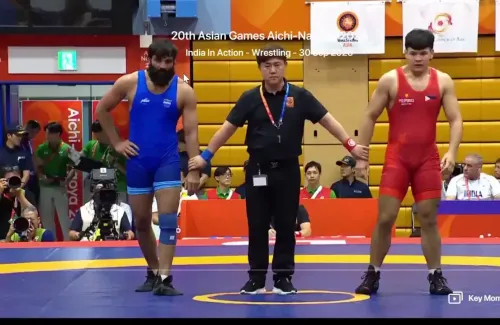
The gold-medal bout proved a step too far for the Indian wrestler, with Nakazato dictating terms from the very first exchange. The Japanese opener arrived early — Nitesh was penalised 2 points for passivity midway through the opening period, gifting Nakazato an early cushion.
Nitesh showed considerable resistance to prevent the deficit from widening before the break, but trailed 0-2 heading into the final three minutes. The second period brought no relief: Nakazato bundled Nitesh over to extend the lead to 4-0, then briefly attempted a pin. Nitesh resisted and stayed in the contest, but the Japanese wrestler's control left virtually no room for an Indian comeback. Nakazato saw the bout through to claim gold, leaving Nitesh with the silver medal.
Historic Route to the Final
Nitesh's run to the gold-medal bout was emphatic and statistically dominant. He opened his knockout campaign with a 7-1 victory over Turkmenistan's Amanberdi Agamammedov in the quarterfinals. He then delivered an even more commanding performance in the semis, defeating Mongolia's Ganbaataryn Gankhuyag by a resounding 9-0 scoreline.
That semi-final win carried significance well beyond mere qualification. It ended India's prolonged absence from a Greco-Roman final at the Asian Games — a gap stretching back six decades — and momentarily put the country within one bout of gold.
India's Long Greco-Roman Drought
Greco-Roman wrestling has historically been India's most elusive discipline at the Asian Games. The country's only previous appearance in a final at this level came via Maruti Mane in 1962, who returned home with a silver in the same 97 kg category. The sport demands upper-body dominance and technique largely divorced from India's freestyle-wrestling strengths, making Nitesh's campaign all the more remarkable.
Nitesh arrived in Nagoya as the 2026 Asian Championships silver medallist, signalling a steady upward trajectory. His Asian Games silver now cements him as one of the most decorated Indian Greco-Roman wrestlers in the country's history.
What This Result Means Going Forward
The silver marks a generational shift for Indian Greco-Roman wrestling and is likely to sharpen focus on the discipline ahead of future international cycles. With Nitesh still in his competitive prime, the question of whether India can go one better at the next Asian Games will dominate the narrative in the months ahead.
Point of View
And India's near-total absence from Asian Games finals for six decades reflects that gap. The fact that Nitesh arrived in Nagoya as Asian Championships silver medallist and produced back-to-back dominant wins before the final suggests a pipeline is forming, not just a one-off. The federation's next move — investment in Greco-Roman-specific coaching and international exposure — will determine whether 2026 becomes a launchpad or another footnote in a long drought.
NationPress
1 Oct 2026
Frequently Asked Questions
What medal did Nitesh Siwach win at the 2026 Asian Games?
Nitesh Siwach won the silver medal in the men's 97 kg Greco-Roman wrestling event at the 2026 Asian Games in Nagoya on 1 October 2026, losing the final 0-4 to Japan's Yuri Nakazato.
Why is Nitesh Siwach's silver medal historically significant?
Nitesh became only the second Indian Greco-Roman wrestler in history to reach an Asian Games final — the first since Maruti Mane won silver in the same 97 kg category at the 1962 Asian Games, a gap of 64 years.
How did Nitesh Siwach perform on his route to the final?
Nitesh defeated Turkmenistan's Amanberdi Agamammedov 7-1 in the quarterfinals and then crushed Mongolia's Ganbaataryn Gankhuyag 9-0 in the semi-finals before falling in the gold-medal bout.
Who won the gold medal in men's 97 kg Greco-Roman at the 2026 Asian Games?
Japan's Yuri Nakazato won the gold medal, defeating Nitesh Siwach 4-0 in the final at the Nagoya City Inae Sports Center.
What was Nitesh Siwach's form heading into the Asian Games?
Nitesh entered the 2026 Asian Games as the Asian Championships silver medallist, underscoring a period of consistent improvement that made him one of India's strongest Greco-Roman prospects.