ICAR, FCI sign MoU to tackle wheat and rice storage pests sustainably
Synopsis
India's grain reserves are under threat — not just from pests, but from the chemicals meant to stop them. With pest resistance to aluminium phosphide hitting up to 100% in some states, ICAR and FCI have signed an MoU to trial nitrogen and CO2-based fumigation as safer, scalable alternatives, in what could be a turning point for how the country protects its wheat and rice stockpiles.
Key Takeaways
ICAR and FCI signed an MoU on 1 October 2026 to research alternative fumigation for wheat and rice storage pest management.
Pest resistance to aluminium phosphide (ALP) and malathion has reached 72–100% in key Indian states.
Phase-I (two years) will trial nitrogen gas , CO2 , and combined CO2 and phosphine fumigation, implemented by ICAR–CIPHET, Ludhiana .
Phase-II (one year) will expand into multi-location trials across agro-climatic zones to develop region-specific SOPs .
The initiative is supported by the Department of Food & Public Distribution (DFPD) , Ministry of Consumer Affairs.
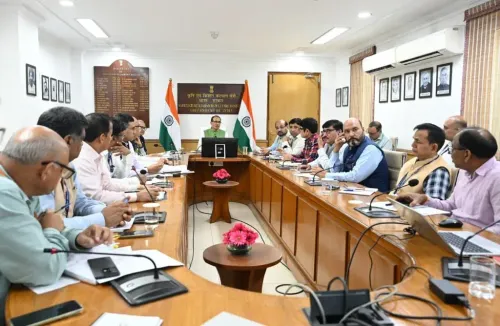
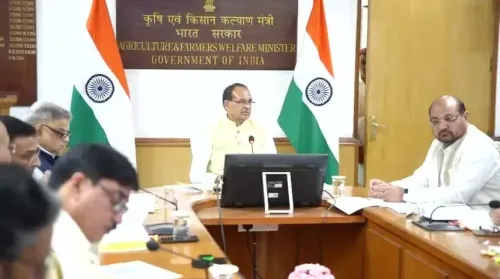
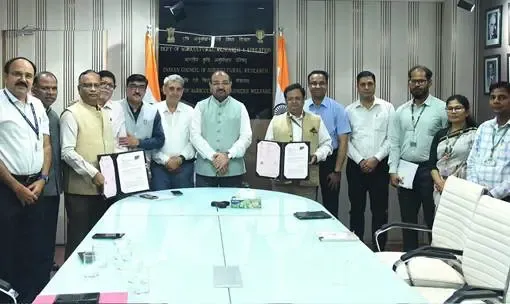
The Indian Council of Agricultural Research (ICAR) and the Food Corporation of India (FCI) have signed a memorandum of understanding (MoU) to research alternative fumigation technologies for the safe and sustainable management of storage pests in wheat and rice, according to an official statement released on Thursday, 1 October 2026. The collaboration is backed by the Department of Food & Public Distribution (DFPD) under the Ministry of Consumer Affairs, Food & Public Distribution.
The Problem With Current Fumigation Methods
India's strategic grain reserves have long depended on aluminium phosphide (ALP) and malathion for post-harvest pest control. However, repeated and widespread use of these chemicals has produced severe consequences. According to the official statement, pest resistance frequencies have reached 72–100 per cent in key Indian states, forcing ever-escalating fumigation cycles that drive up operational costs. Beyond economics, current chemical methods reportedly pose significant respiratory hazards to workers and carry long-term ecological risks — including concerns over fumigant residues in stored grain.
What the MoU Proposes
The partnership aims to standardise the commercial use of three alternative approaches: nitrogen gas, carbon dioxide (CO2), and a synergistic combination of CO2 and phosphine. The initiative is designed to develop scientifically validated, scalable, and sustainable replacements for conventional chemical fumigation, directly addressing pest resistance, occupational exposure, and environmental impact.
Phase-I Trials: Three Parallel Tracks
Phase-I will run for two years and will be implemented by ICAR–Central Institute of Post-Harvest Engineering and Technology (CIPHET) in Ludhiana. Three major trials are planned:
First, nitrogen gas (above 99 per cent purity) fumigation will be tested for managing storage pests in wheat held in metal silos. Second, a combined carbon dioxide and phosphine treatment will be evaluated for pest control in wheat and rice stored in bags at FCI and Central Warehousing Corporation (CWC) warehouses. Third, carbon dioxide fumigation alone will be assessed for wheat and rice stored in bags enclosed in hermetic covers.
Phase-II and the Road Ahead
Following the Phase-I pilot, a one-year Phase-II multi-location trial will expand testing across varied agro-climatic zones across India. The goal is to establish region-specific Standard Operating Procedures (SOPs) that can be adopted at scale by government grain storage agencies. Notably, this is among the first structured, government-backed efforts to move India's post-harvest pest management away from chemical dependency toward controlled-atmosphere alternatives — a shift that grain storage experts have advocated for over a decade.
Point of View
But the proof will be in the transition: whether Phase-II SOPs are actually adopted by FCI warehouses at scale, or whether they join a shelf of validated-but-unimplemented research. India has enormous strategic grain reserves; the cost of inaction — in food losses, worker health, and ecological residue — compounds every year these alternatives remain in the pilot phase.
NationPress
1 Oct 2026
Frequently Asked Questions
What is the ICAR-FCI MoU on storage pest management?
ICAR and FCI signed an MoU on 1 October 2026 to jointly research alternative fumigation technologies for managing storage pests in wheat and rice. The collaboration aims to develop safe, sustainable replacements for conventional chemicals like aluminium phosphide and malathion, backed by the Department of Food & Public Distribution.
Why are current fumigation chemicals a problem for Indian grain storage?
Repeated use of aluminium phosphide and malathion has led to pest resistance frequencies of 72–100% in key Indian states, making them increasingly ineffective. These chemicals also pose respiratory risks to workers and carry long-term ecological and residue concerns.
What alternative fumigation methods will be tested under the MoU?
Three approaches will be trialled: nitrogen gas above 99% purity in metal silos, a combined CO2 and phosphine treatment in bagged grain at FCI and CWC warehouses, and CO2 fumigation alone for grain in hermetic covers.
How long will the research trials run and who will conduct them?
Phase-I is a two-year pilot implemented by ICAR–CIPHET in Ludhiana, followed by a one-year Phase-II multi-location trial across varied agro-climatic zones. Phase-II will produce region-specific Standard Operating Procedures for wider adoption.
Which government body is funding and supporting this initiative?
The research is supported by the Department of Food & Public Distribution (DFPD) under the Ministry of Consumer Affairs, Food & Public Distribution, with ICAR–CIPHET, Ludhiana serving as the implementing agency for Phase-I.