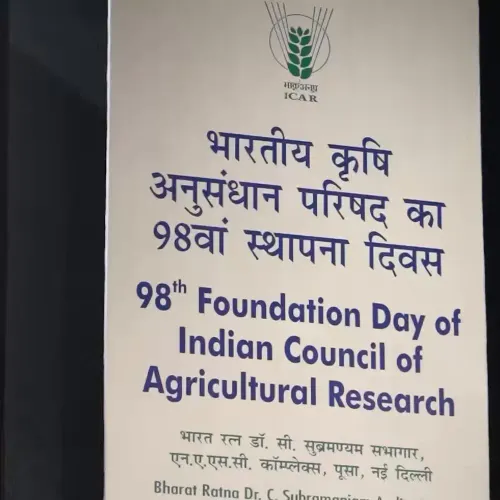
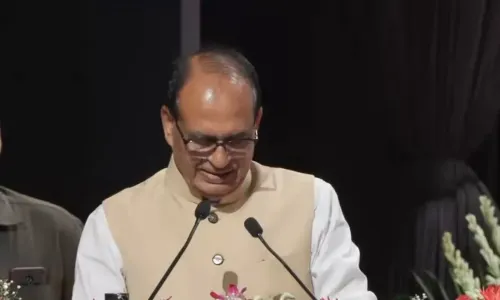
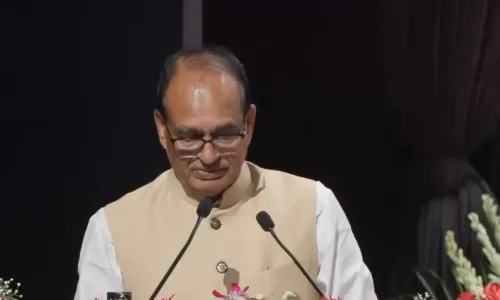
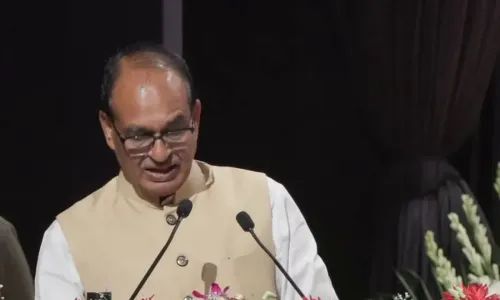
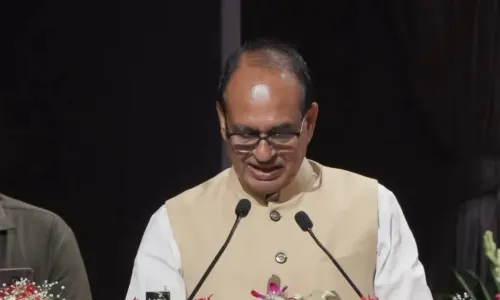
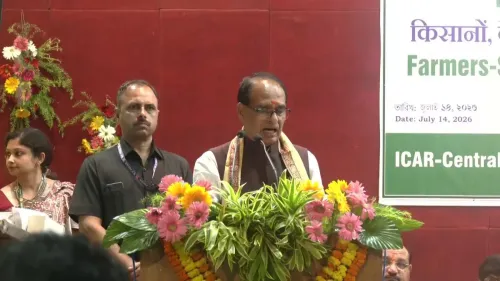
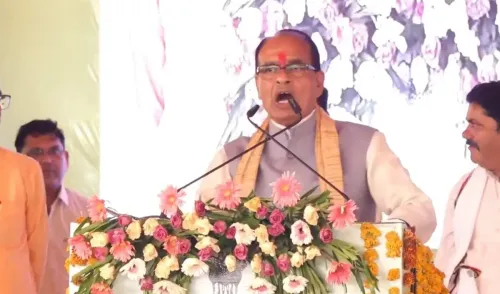
Shivraj Singh Chouhan urges states to act on ICAR-CRIDA farm contingency plans
Synopsis
Union Agriculture Minister Shivraj Singh Chouhan has announced that ICAR-CRIDA has completed district-level agricultural contingency plans for every district in India. He has called on state governments, agriculture departments, and district administrations to review, localise, and implement these plans immediately, particularly ahead of the 2026 kharif season.
Key Takeaways
ICAR-CRIDA has prepared agricultural contingency plans covering all districts of India, according to Union Agriculture Minister Shivraj Singh Chouhan .
The Minister urged state governments, agriculture departments, district administrations , and related agencies to review and update the plans to suit local conditions without delay.
ICAR-CRIDA began developing district-level contingency plans from 2009-10 to address monsoon variability in rainfed areas.
Over 60 per cent of India's cultivated area is rainfed, making district-specific climate adaptation planning critical for food security.
The initiative falls under the National Mission for Sustainable Agriculture , which promotes decentralised, district-level climate adaptation strategies.
Effective implementation before the 2026 kharif season is key to protecting farmers from weather-related crop losses.
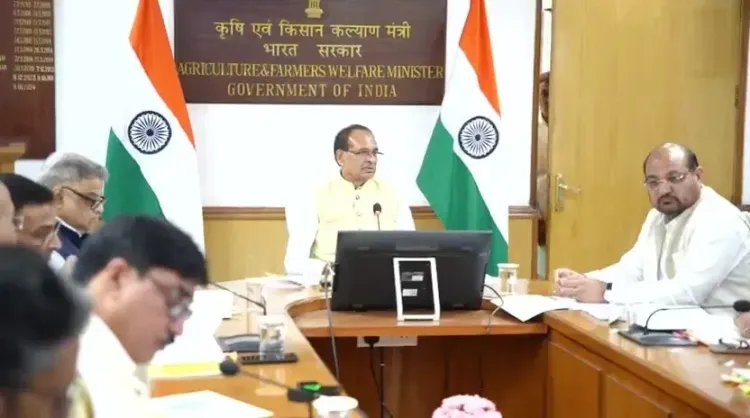
Union Agriculture Minister Shivraj Singh Chouhan on Tuesday, 23 June 2026 announced that ICAR-CRIDA has completed district-level agricultural contingency plans for every district in the country, and called on state governments, agriculture departments, district administrations, and related agencies to immediately review, localise, and implement these plans.
Posting on X, the Minister said: 'मुझे यह बताते हुए संतोष है कि ICAR-CRIDA ने देश के सभी जिलों के लिए आकस्मिक योजनाएं तैयार कर ली हैं' ('I am pleased to share that ICAR-CRIDA has prepared contingency plans for all districts of the country'). He urged stakeholders to review the District Agricultural Contingency Plans without delay and update them in line with local conditions before rolling them out effectively.
Context
The Central Research Institute for Dryland Agriculture (ICAR-CRIDA), headquartered in Hyderabad, is the nodal body under the Indian Council of Agricultural Research (ICAR) responsible for developing technologies and strategies for rainfed farming. It began preparing district-level agricultural contingency plans from 2009-10 onward, targeting regions most exposed to monsoon variability and extreme weather events.
These plans are designed to give farmers, extension workers, and district officials a ready reference for alternative cropping strategies, input substitution, and resource management when rainfall fails or arrives erratically. The announcement signals that the framework now covers the entire country at the district level.
Policy Backdrop
India's agricultural sector is structurally exposed to climate risk: more than 60 per cent of the country's cultivated area is rainfed and therefore directly dependent on monsoon performance. District-level contingency planning sits within the broader National Mission for Sustainable Agriculture (NMSA), one of the eight missions under India's National Action Plan on Climate Change.
The NMSA framework promotes decentralised adaptation — the idea that solutions must be tailored to the agro-climatic conditions of each district rather than applied uniformly from the Centre. Chouhan's call for states to update plans to reflect 'local conditions' is consistent with this philosophy and carries added urgency as the 2026 kharif season is now underway.
Stakeholders and Impact
The primary beneficiaries of effective contingency planning are farmers — particularly smallholders in rainfed belts of Madhya Pradesh, Rajasthan, Maharashtra, Odisha, Jharkhand, and other drought-prone states. When plans are localised and communicated in time, farmers can switch to short-duration or drought-tolerant crop varieties, adjust sowing windows, and access input support before losses mount.
State agriculture departments and district administrations are the critical implementation link. The Minister's direct appeal to these bodies underscores a recurring challenge: plans prepared at the national research level often remain under-utilised at the ground level due to gaps in awareness, capacity, or coordination. Bridging that gap is the stated objective of his intervention.
What's Next
The immediate test will be whether state governments convene reviews of the district plans ahead of the peak kharif sowing period. Any formal directive from the Ministry of Agriculture and Farmers Welfare to states, or related discussion in Parliament, will be closely watched by farm-sector observers.
With climate variability intensifying and the monsoon's spatial and temporal distribution becoming less predictable, the quality of localised contingency planning could directly shape crop-loss outcomes and the scale of relief expenditure this season and beyond.
Point of View
Agriculture departments, and district administrations by name, he is building a record of accountability at the Centre while shifting the implementation burden downstream. The move fits a pattern in Indian agricultural governance where national-level research outputs are well-developed but last-mile delivery remains the persistent weak link. Coming at the start of the kharif season, the timing is deliberate: it creates political pressure on states to act while there is still a window to influence sowing decisions. Whether the appeal translates into measurable on-ground action, or remains a directional statement, will depend on follow-through mechanisms that the Ministry has not yet publicly detailed.
NationPress
22 Sept 2026
Frequently Asked Questions
What are ICAR-CRIDA district agricultural contingency plans?
These are district-specific action plans prepared by the Central Research Institute for Dryland Agriculture (ICAR-CRIDA) that guide farmers, extension workers, and local officials on alternative cropping strategies, input management, and resource use when monsoon conditions deviate from normal. They have been in development since 2009-10 .
Why did Shivraj Singh Chouhan ask states to review contingency plans now?
The 2026 kharif sowing season is underway, making it the most critical window for farmers to adapt to any monsoon variability. Chouhan's appeal is aimed at ensuring plans are localised and activated before weather disruptions affect crop outcomes.
Which districts are covered by ICAR-CRIDA contingency plans?
According to the Minister's announcement on 23 June 2026 , ICAR-CRIDA has now prepared contingency plans for all districts of India, completing national coverage.
What is the National Mission for Sustainable Agriculture?
The National Mission for Sustainable Agriculture (NMSA) is one of eight national missions under India's National Action Plan on Climate Change. It promotes climate-resilient farming practices, including decentralised district-level contingency planning for rainfed areas.
How does rainfed farming make India vulnerable to monsoon failure?
More than 60 per cent of India's cultivated area relies on rainfall rather than irrigation, meaning any significant deviation in monsoon onset, distribution, or intensity can directly reduce yields and farm incomes across large parts of the country.