Shivraj Singh Chouhan Hails ICAR on 98th Foundation Day
Synopsis
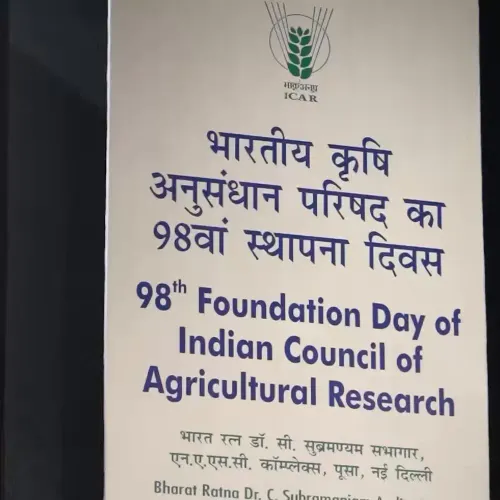
Union Agriculture Minister Shivraj Singh Chouhan marked ICAR's 98th Foundation Day on 16 July 2026, saluting the council's near-century of agricultural research, from Green Revolution seed varieties to climate-smart farming, and linking its work to PM Modi's Atmanirbhar Krishi and Viksit Bharat goals.
Key Takeaways
ICAR completes 98 years on 16 July 2026 , founded originally in 1929 as the Imperial Council of Agricultural Research.
Union Agriculture Minister Shivraj Singh Chouhan extended greetings to agricultural scientists and farmers across India on the occasion.
Chouhan highlighted ICAR's role in improved seed development and climate-adaptive farming techniques as landmark contributions.
The minister connected ICAR's research mandate to PM Narendra Modi 's goals of Atmanirbhar Krishi and Viksit Bharat by 2047 .
ICAR's Green Revolution-era research in the mid-1960s transformed India from a food-deficit to a food-surplus nation.
Upcoming focus areas include climate-resilient crop varieties and potential parliamentary discussion on agricultural research funding.
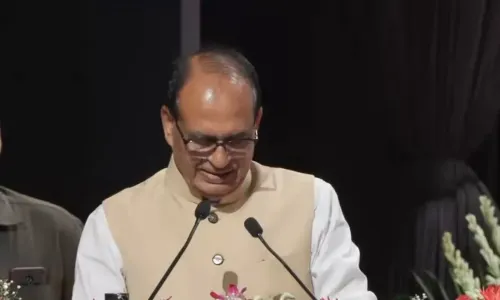
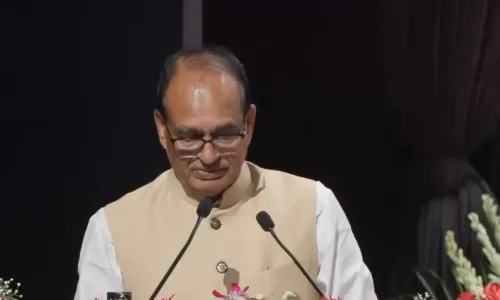
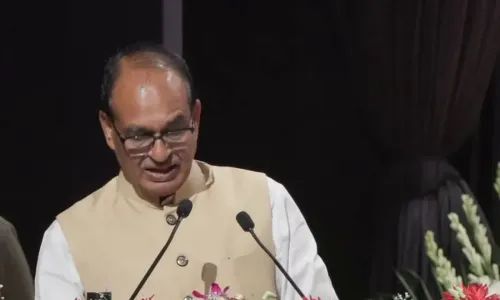
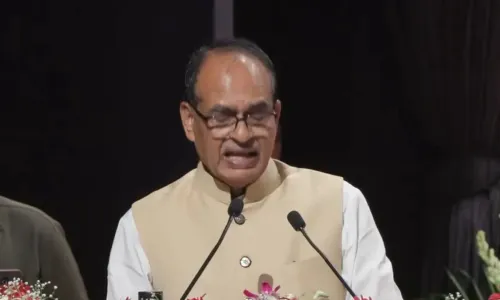
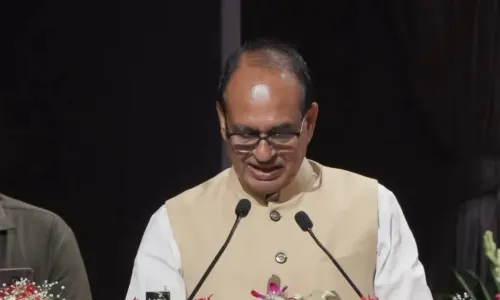
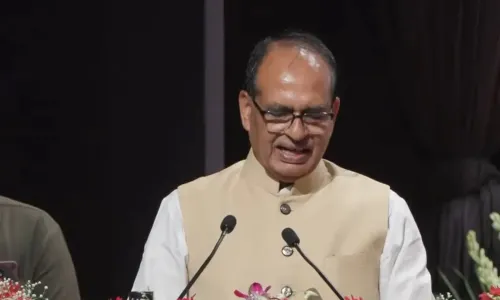
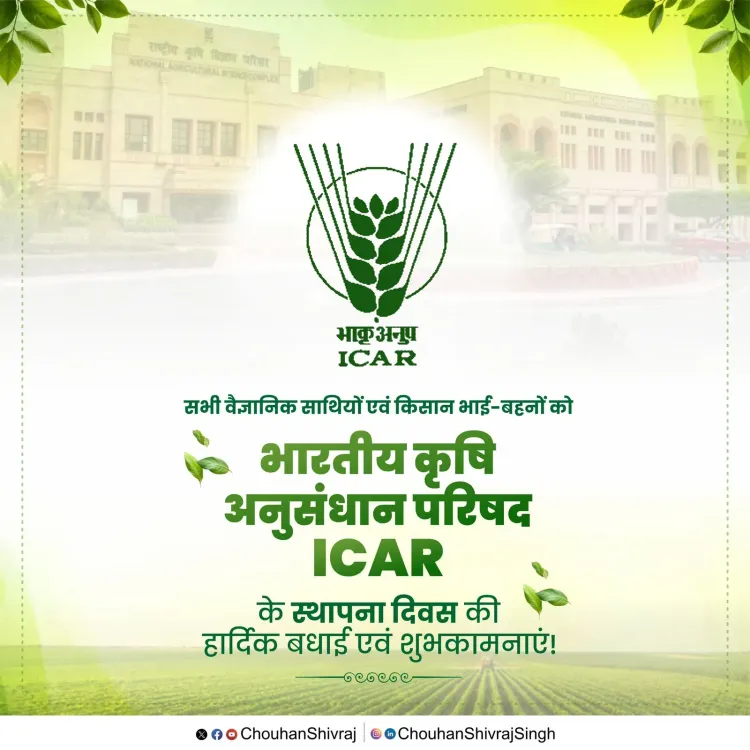
Union Agriculture Minister Shivraj Singh Chouhan on Thursday, 16 July 2026 extended greetings to agricultural scientists and farmers across the country on the occasion of the 98th Foundation Day of the Indian Council of Agricultural Research (ICAR), crediting the apex body with a historic role in reshaping Indian agriculture over nearly a century.
Context
Posting on X, the Minister opened with the rallying cry 'Jai Jawan, Jai Kisan, Jai Vigyan, Jai Anusandhan' ('Hail the soldier, hail the farmer, hail science, hail research') — a formulation that layers former Prime Minister Lal Bahadur Shastri's original slogan with the science-and-research addendum popularised by the current government. Chouhan described ICAR's 98-year journey as a 'glorious witness to unprecedented achievements,' offering 'heartfelt congratulations and best wishes' to every agricultural scientist and farmer.
The post was addressed jointly to the farming community — referred to as annadata bhai-behon ('food-provider brothers and sisters') — and to ICAR's scientific community, underscoring the minister's framing of research and farming as inseparable partners in national development.
Policy Backdrop
ICAR was established on 16 July 1929 as the Imperial Council of Agricultural Research to coordinate and expand agricultural science across British India. After independence it was reorganised and, by 1973–74, placed firmly at the apex of the National Agricultural Research System, overseeing a network of specialised institutes and state agricultural universities.
The council's most celebrated chapter remains its central role in the Green Revolution of the mid-1960s, when ICAR-supported research released high-yielding wheat and rice varieties that transformed India from a food-deficit nation into a food-surplus one. Chouhan's post specifically cited 'development of improved seeds' and 'climate-adaptive farming techniques' as markers of ICAR's continuing contribution — themes that directly echo the council's current research priorities around climate-smart agriculture and precision farming.
The minister linked ICAR's work to Prime Minister Narendra Modi's twin goals of Atmanirbhar Krishi (self-reliant agriculture) and Viksit Bharat (Developed India by 2047), stating that the country is 'moving rapidly' toward those targets under Modi's leadership, 'in which ICAR's contribution is significant.'
Stakeholders and Impact
India's agricultural research ecosystem encompasses tens of thousands of scientists, researchers and extension workers operating through ICAR's more than 100 institutes and national research centres. Their work feeds directly into the livelihoods of hundreds of millions of farmers who depend on publicly developed seed varieties, soil-health advisories and pest-management protocols.
Chouhan's message also carried a mobilisation note, calling on 'all of us together' to keep contributing toward 'empowering Indian agriculture further' and realising the vision of Viksit Krishi ke liye Viksit Bharat — 'a developed agriculture for a developed India.' The phrasing signals that the government sees ICAR's scientific output as a direct input into its broader 2047 development roadmap, tying agricultural productivity to the country's economic ambitions.
What's Next
Foundation Day events typically coincide with the release of ICAR's annual achievements report and the announcement of newly developed crop varieties or technologies. Observers will watch for any new climate-resilient or high-yield varieties cleared for release, as well as parliamentary debate on agricultural research allocations in the forthcoming budget session.
With India's farm sector facing mounting pressures from erratic monsoons and shifting global commodity markets, the government's continued emphasis on public-sector agricultural research through ICAR is likely to remain a central pillar of its rural-development and food-security strategy in the years ahead.
Point of View
But its framing is deliberate: by invoking Jai Anusandhan alongside the classic Jai Kisan, the BJP government continues to position science-led agriculture as a political priority rather than a bureaucratic function. Linking ICAR's century-long legacy directly to the Viksit Bharat 2047 roadmap is a consistent rhetorical strategy that ties inherited institutional credibility to the current administration's development narrative. For ICAR itself, the political attention translates into sustained budget visibility at a time when climate pressures are intensifying demands on public agricultural research. The broader pattern suggests that agricultural science will remain a contested but high-profile terrain as India approaches its centenary of independence.
NationPress
14 Oct 2026
Frequently Asked Questions
When was ICAR founded and what is its full form?
ICAR stands for the Indian Council of Agricultural Research. It was founded on 16 July 1929 as the Imperial Council of Agricultural Research to coordinate agricultural science across India, and was later renamed after independence.
What did Shivraj Singh Chouhan say on ICAR's 98th Foundation Day?
Union Agriculture Minister Shivraj Singh Chouhan posted greetings on X, congratulating agricultural scientists and farmers, crediting ICAR with historic contributions in seed development and climate-adaptive farming, and linking its work to PM Modi's Atmanirbhar Krishi and Viksit Bharat goals.
What role did ICAR play in India's Green Revolution?
ICAR-supported research was central to the Green Revolution of the mid-1960s, releasing high-yielding wheat and rice varieties that helped transform India from a food-deficit nation into a food-surplus one.
What is Atmanirbhar Krishi?
Atmanirbhar Krishi , or 'self-reliant agriculture,' is a policy goal of the Modi government aimed at reducing India's dependence on agricultural imports, raising farmer incomes, and boosting domestic food production through technology and research.
What is the significance of 'Jai Jawan Jai Kisan Jai Vigyan Jai Anusandhan'?
The slogan builds on Lal Bahadur Shastri 's original Jai Jawan, Jai Kisan ('Hail the soldier, hail the farmer'). Jai Vigyan ('Hail science') was added by former PM Atal Bihari Vajpayee , and Jai Anusandhan ('Hail research') was added by PM Narendra Modi , reflecting the current government's emphasis on research-driven development.