Shivraj Singh Chouhan Calls for Serious Work on Beneficial Insects
Synopsis
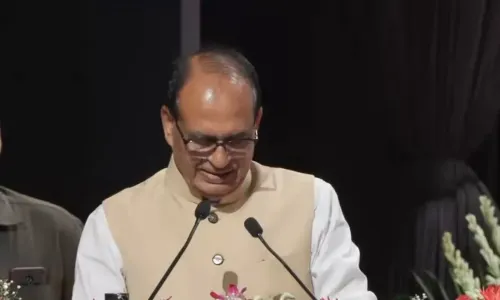
Union Agriculture Minister Shivraj Singh Chouhan on 28 May 2026 called for serious, sustained work on beneficial insects, pointing to global experiments as a model for India's shift toward ecology-based, chemical-free pest management.
Key Takeaways
Union Agriculture Minister Shivraj Singh Chouhan posted on 28 May 2026 calling for serious work on beneficial insects ( mitra keet ).
Beneficial insects such as parasitic wasps and lacewings are used in biological control to suppress crop pests without synthetic chemicals.
India adopted Integrated Pest Management (IPM) as national policy in the mid-1980s to reduce chemical pesticide dependence.
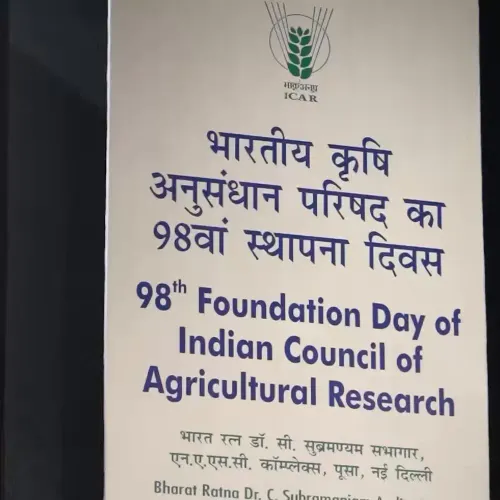
The National Bureau of Agricultural Insect Resources (NBAIR) in Bengaluru is India's apex institute for beneficial-insect research under ICAR .
The Paramparagat Krishi Vikas Yojana (2015) already supports bio-agent use in organic farming clusters across India.
The minister's call could influence the next ICAR budget and state-level agricultural extension programmes on biological control.
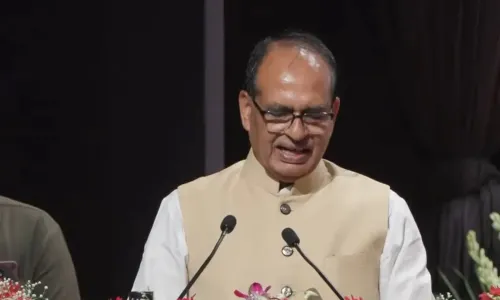
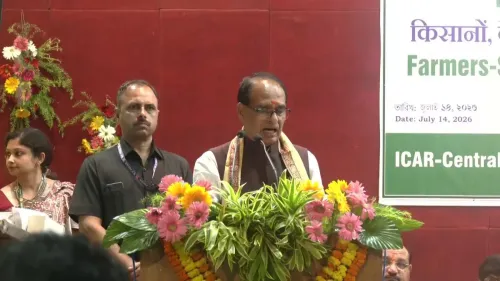
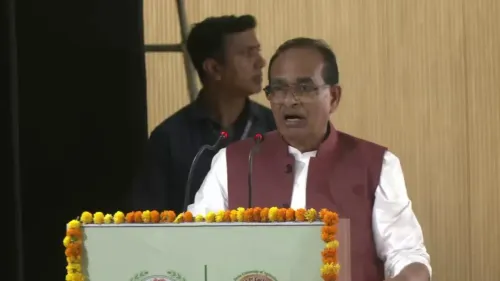
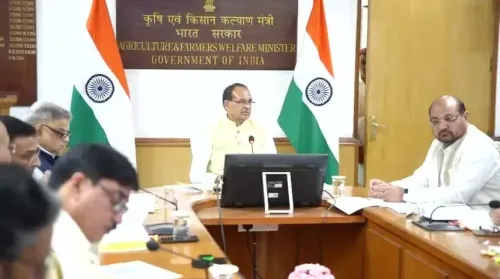
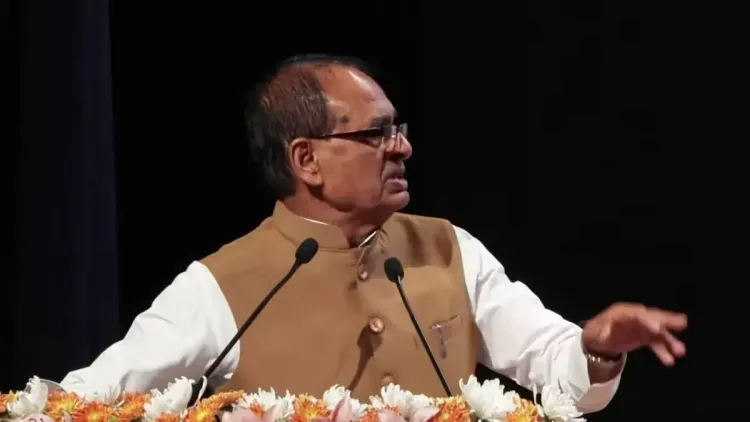
Union Agriculture Minister Shivraj Singh Chouhan on Thursday, 28 May 2026, called on India to seriously pursue research and application of beneficial insects, citing ongoing global experiments in the field as a model worth emulating. The minister made the appeal in a post on X, signalling a policy push toward ecology-based pest management.
In his post, Chouhan wrote: 'दुनिया में मित्र कीटों को लेकर जो प्रयोग हो रहे हैं, उन पर हमें गंभीरता से काम करना चाहिए।' — translated as, 'We must work seriously on the experiments being conducted around the world regarding beneficial insects.' The statement is brief but carries clear directional weight from a minister who oversees both agricultural research policy and rural development.
Context
The term 'beneficial insects' — or mitra keet (मित्र कीट) in Hindi — refers to predatory and parasitic insects such as ladybirds, lacewings, parasitic wasps, and trichogramma species that naturally suppress pest populations. Their use is a cornerstone of biological control, an alternative to synthetic chemical pesticides. Chouhan's invocation of global experiments suggests an awareness of accelerating international work in this domain, from mass-rearing of natural enemies to precision deployment using drones.
The minister's statement comes at a time when India faces mounting pressure to reduce pesticide residues in food exports and comply with international sustainability benchmarks. Farmer health concerns linked to chemical pesticide overuse have also renewed domestic urgency around safer alternatives.
Policy Backdrop
India formally adopted Integrated Pest Management (IPM) as national policy in the mid-1980s, establishing a framework to reduce chemical dependence by combining biological, cultural, and chemical tools in a phased manner. The Paramparagat Krishi Vikas Yojana, launched in 2015, further institutionalised organic and natural farming practices, including the use of bio-agents and beneficial insects, through cluster-based farmer groups.
The apex body for this work is the Indian Council of Agricultural Research (ICAR), whose dedicated institute — the National Bureau of Agricultural Insect Resources (NBAIR), based in Bengaluru — serves as India's nodal centre for research on beneficial insects and bio-control agents. NBAIR has been involved in identifying, mass-producing, and distributing bio-control agents to state agricultural departments for decades.
Stakeholders and Impact
The primary beneficiaries of a scaled-up beneficial-insect programme would be small and marginal farmers, who bear a disproportionate cost burden from chemical pesticides and are most exposed to their health risks. Wider adoption of biological control could reduce input costs, improve soil health, and open access to premium organic markets both domestically and abroad.
Agricultural researchers at ICAR institutes and state agricultural universities would also be directly affected, as any policy push from the ministry typically translates into revised research mandates and budget allocations. Extension workers and Krishi Vigyan Kendras would be on the front line of translating laboratory findings into farm-level practice.
What's Next
The minister's statement is likely to be watched closely in the context of the next ICAR budget cycle and the possible integration of beneficial-insect modules into state agricultural extension programmes. A formal policy directive or a dedicated scheme component could follow if the ministry decides to operationalise this call. The broader question is whether India can build the mass-rearing and supply-chain infrastructure needed to make biological control viable at scale — a challenge that has historically limited the reach of IPM despite decades of policy intent.
Point of View
IPM has existed as official doctrine without the budget or extension muscle to match the ambition. A minister-level nudge of this kind often precedes a revised scheme component or a research mandate to ICAR, making it worth tracking in the next budget cycle. At a deeper level, the framing — 'the world is already doing this' — reflects a strategic posture: India risks falling behind on sustainable agriculture unless it closes the gap with global practice on bio-inputs.
NationPress
11 Oct 2026
Frequently Asked Questions
What are beneficial insects in farming?
Beneficial insects, known as mitra keet in Hindi, are species such as parasitic wasps, ladybirds, and lacewings that naturally prey on or parasitise crop pests, reducing the need for chemical pesticides.
What did Agriculture Minister Shivraj Singh Chouhan say about beneficial insects?
On 28 May 2026 , Chouhan posted on X urging India to work seriously on experiments being conducted globally regarding beneficial insects, signalling a policy push toward biological pest control.
What is NBAIR and what does it do?
The National Bureau of Agricultural Insect Resources (NBAIR) in Bengaluru is India's nodal ICAR institute for research, mass-rearing, and distribution of beneficial insects and bio-control agents to state agricultural departments.
What is India's Integrated Pest Management policy?
India adopted Integrated Pest Management (IPM) as national policy in the mid-1980s , combining biological, cultural, and limited chemical tools to reduce farmer dependence on synthetic pesticides.
How does Paramparagat Krishi Vikas Yojana support beneficial insects?
The Paramparagat Krishi Vikas Yojana , launched in 2015 , promotes organic and natural farming in farmer clusters and explicitly supports the use of bio-agents including beneficial insects as alternatives to chemical inputs.